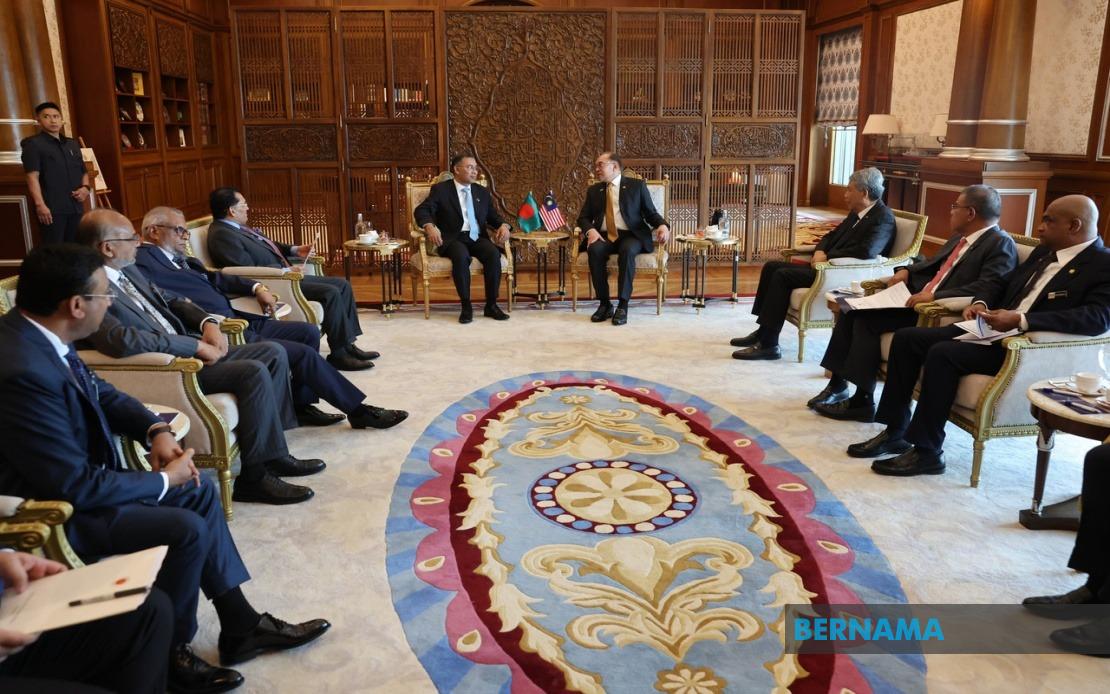
Prime Ministers Anwar Ibrahim and Tarique Rahman have committed their nations to working through ASEAN frameworks to address the protracted Rohingya refugee situation, signalling a renewed multilateral approach to one of Southeast Asia's most pressing humanitarian challenges. The commitment emerged during their joint press conference in Putrajaya, where the two leaders underscored their shared determination to facilitate a sustainable resolution to the displacement crisis affecting populations across both countries. The announcement reflects recognition that bilateral channels alone are insufficient to address a problem requiring coordinated regional pressure and dialogue with Myanmar's military leadership, which many nations hold responsible for driving the initial exodus.
The Rohingya refugee predicament has strained Bangladesh's resources and stretched Malaysia's capacity since mass displacement began in 2017. Bangladesh currently hosts nearly a million Rohingya in sprawling camps concentrated in Cox's Bazar, whilst Malaysia accommodates tens of thousands more in urban areas. Anwar emphasized that both nations would mobilise their respective foreign ministers and tap ASEAN's institutional mechanisms to engage Myanmar's authorities on repatriation possibilities and conditions necessary for safe return. This diplomatic pivot towards ASEAN suggests frustration with previous bilateral negotiations that have yielded limited progress on voluntary, dignified repatriation of the stateless minority from their current host countries.
Tarique, during his first bilateral official visit abroad since assuming office in February 2026, expressed grave humanitarian concerns about the Rohingya sheltered on Bangladeshi soil. His gratitude towards Malaysia's ongoing support indicated recognition of the burden-sharing principle increasingly necessary in managing large-scale displacement. The Bangladesh Prime Minister's emphasis on achieving "safe, dignified and sustainable repatriation" reflected international standards that demand restoration of citizenship rights, security guarantees, and reconstruction of destroyed communities before return becomes feasible. Such conditions remain largely unmet in Myanmar, where paramilitarism and sectarian tensions persist despite international pressure and International Criminal Court investigations into genocide allegations.
Beyond the refugee agenda, Anwar and Tarique explored expanding bilateral cooperation across multiple economic and strategic sectors during their formal talks. The two nations inked a Memorandum of Understanding covering cultural exchange, tacitly acknowledging that deepening people-to-people connections can reinforce diplomatic ties and mutual understanding. Additionally, they signed two Exchanges of Notes addressing counter-terrorism research collaboration and investment promotion—domains where both South and Southeast Asian nations face overlapping security challenges and development imperatives. These ancillary agreements demonstrate that whilst the Rohingya issue commands immediate political attention, Malaysia and Bangladesh recognise mutual interests extending across defence, commerce and societal dimensions.
Trade data underscores the economic foundation beneath this diplomatic engagement. In 2025, bilateral commerce reached RM12.18 billion, with Malaysian exports of petroleum products dominating the flow at RM10.08 billion, whilst Bangladesh supplied textiles, apparel and footwear valued at RM2.10 billion. Bangladesh has climbed to become Malaysia's 28th largest global trading partner and its second most important partner within South Asia after India, reflecting deepening economic integration. For Bangladesh, access to Malaysian energy supplies and investment capital represents crucial inputs for its manufacturing economy, whilst Malaysia values Bangladesh's growing consumer market and textile production base. The trade relationship thus creates structural incentives for both governments to maintain cordial relations and resolve contentious issues through dialogue rather than confrontation.
ASEAN's potential role in mediating the Rohingya impasse remains contested among member states due to Myanmar's contested seat and the organisation's non-interference doctrine. However, the Anwar-Tarique initiative suggests Malaysia at least believes ASEAN platforms can facilitate dialogue without directly interfering in Myanmar's internal affairs—a delicate distinction that allows engagement whilst respecting the principle of sovereignty to which Myanmar's de facto rulers cling. The effectiveness of this approach depends on whether ASEAN can persuade Myanmar that repatriation aligns with its own stability interests, and whether Myanmar's leadership perceives sufficient international incentives to modify the security environment within Rakhine State.
For Malaysian policymakers, the convergence with Bangladesh on Rohingya advocacy reflects domestic political considerations alongside humanitarian concerns. Malaysia's Muslim-majority population and leadership have invested considerable rhetorical capital in defending Rohingya rights, making the issue resonant within civil society and religious constituencies. By demonstrating diplomatic movement and regional coordination, Anwar's government signals responsiveness to these constituencies whilst avoiding unilateral actions that might provoke Myanmar or strain ASEAN cohesion. The emphasis on working through established regional institutions rather than mobilising unilateral pressure thus balances moral commitment with pragmatic acknowledgment of geopolitical constraints.
Bangladesh's position remains more precarious. Hosting such a vast refugee population indefinitely imposes enormous costs on a developing nation already vulnerable to climate change and cyclical natural disasters. The Cox's Bazar camps have become semi-permanent settlements where a generation of Rohingya children have grown up without citizenship or documented status. Tarique's visit to Malaysia and his public statements reflect Bangladesh's strategic interest in positioning itself as a responsible international actor managing a crisis it did not create, whilst pressing regional powers to take ownership of the solution. By securing Malaysian backing and framing the issue through ASEAN mechanisms, Bangladesh potentially strengthens its negotiating hand when demanding greater international burden-sharing and development assistance.
The timing of this diplomatic initiative also matters regionally. ASEAN faces credibility questions regarding Myanmar after years of dialogue producing minimal humanitarian improvements. A renewed Malaysia-Bangladesh initiative on the refugee issue tests whether the organisation can generate meaningful pressure on member states, particularly on humanitarian matters affecting civilian populations. Success would enhance ASEAN's relevance; failure would further expose the limits of consensus-based regionalism when confronting powerful state interests and competing humanitarian obligations. For Southeast Asian nations, especially those hosting refugee populations, the outcome signals whether multilateral mechanisms can deliver protection or whether burden-sharing will remain inadequately distributed.
Looking ahead, translating rhetorical commitments into tangible refugee returns requires both structural changes within Myanmar and sustained regional diplomatic pressure. The Anwar-Tarique understanding represents a significant political signal, yet implementation depends on whether ASEAN can coordinate messaging, whether Myanmar perceives sufficient incentives for repatriation, and whether international donors commit resources for community reconstruction. Malaysia's willingness to anchor its position to Bangladesh and to channel efforts through ASEAN rather than pursuing isolated national interests suggests a maturation of regional diplomacy on this intractable challenge, even if durability and efficacy remain uncertain.

