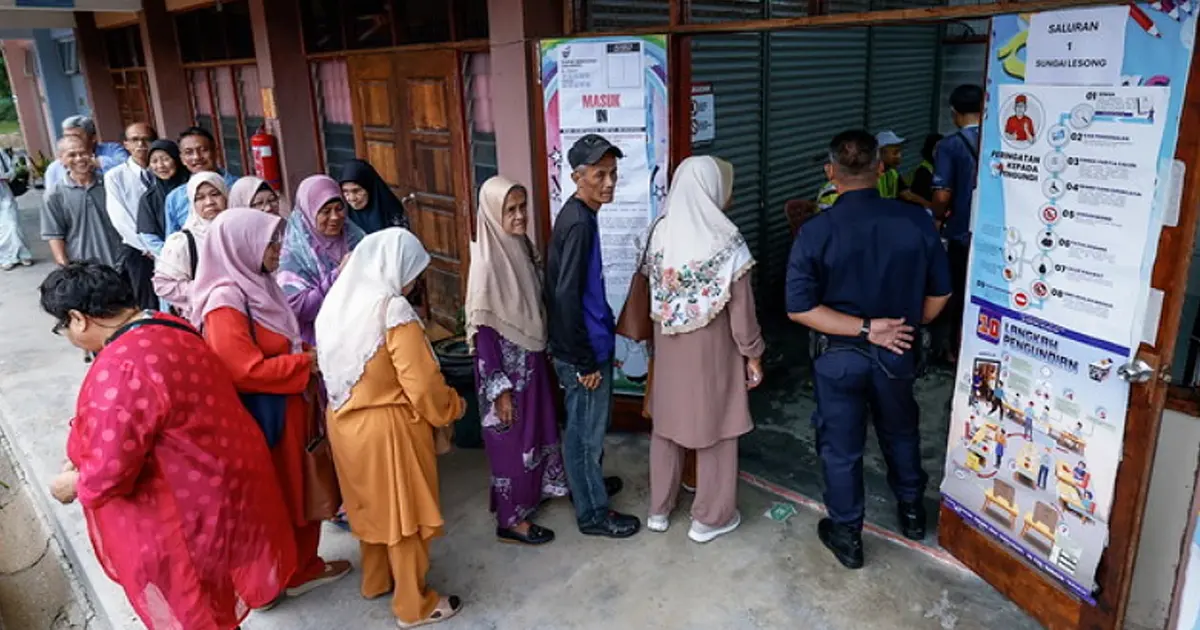
Malaysia's political landscape faces an emerging challenge as the persistent focus on 3R issues—Religion, Royalty, and Race—threatens to induce what analysts describe as "emotional fatigue" among Malay voters, fundamentally altering how electoral support is likely to be distributed in future contests. According to Awang Azman Pawi of Universiti Malaya, this phenomenon represents a significant shift in voter psychology, where the continuous amplification of sensitive cultural and religious matters may paradoxically diminish their electoral potency.
The three Rs have traditionally dominated Malaysian political discourse, serving as powerful rallying points for parties seeking to consolidate support among the Malay-Muslim majority. However, Awang Azman's analysis suggests this strategy carries inherent limitations. When political actors repeatedly invoke the same themes without delivering corresponding material improvements to voters' daily lives, the cumulative effect becomes counterproductive. Voters exposed to relentless messaging on these topics gradually develop resistance, much as individuals become desensitised to repeated stimuli. This psychological phenomenon poses a fundamental challenge to established political playbooks.
The analyst emphasises that political parties will ultimately face judgment not on their rhetoric surrounding identity issues, but on demonstrable performance in addressing concrete concerns affecting ordinary Malaysians. This represents a critical recalibration of electoral logic. Parties that rely excessively on 3R narratives while failing to deliver results on bread-and-butter issues risk losing credibility and voter confidence. The electorate increasingly appears to demand that promises translate into tangible improvements in their circumstances.
Cost of living emerges as perhaps the most significant area where this shift manifests. Malaysians across all demographic groups struggle with escalating expenses—from food and transportation to housing and utilities. A household that cannot afford basic necessities is unlikely to be mobilised primarily by appeals to cultural identity, regardless of how emotionally resonant such appeals might be. Instead, voters increasingly evaluate which political party or leader can effectively manage inflation, maintain employment, and preserve purchasing power. This economic primacy fundamentally reshapes electoral competition.
For Malay voters specifically, this transition carries particular weight. As the demographic group at the core of Malaysia's political system, their electoral behaviour has long been predicted and influenced through appeals to the 3Rs. Yet if Awang Azman's analysis is correct, this constituency is experiencing a gradual but profound shift in priorities. Malay voters are not abandoning concern for religion or race, but rather insisting that political parties simultaneously address their economic welfare. The two demands are no longer perceived as mutually exclusive but rather as complementary expectations.
The implications for Malaysian political parties are substantial. Those relying primarily on 3R messaging without substantive economic programmes risk alienating voters who feel their material concerns are being dismissed or trivialised. Conversely, parties that integrate credible economic platforms with culturally resonant messaging position themselves more favourably with voters navigating competing priorities. This suggests a maturing electorate that refuses false choices between cultural identity and economic security.
Emotional fatigue also reflects broader patterns visible across democracies where political polarisation has reached saturation point. When every election cycle intensifies already-charged debates on divisive issues, voters eventually experience burnout. The constant state of heightened alertness and emotional activation becomes exhausting. In such conditions, voters often respond by either withdrawing from political engagement or by shifting attention to issues perceived as more immediate and personally consequential. Malaysia's Malay electorate appears to be experiencing precisely this phenomenon.
The regional context further illuminates this trend. Across Southeast Asia, voters in maturing democracies have increasingly demanded that political parties justify their claims through performance rather than identity appeals alone. Thailand, Indonesia, and the Philippines have all witnessed electoral dynamics shift when populations prioritised economic management over traditional divisive narratives. Malaysia's trajectory suggests similar patterns emerging, as a growing middle class with higher expectations for governance quality begins asserting influence over electoral outcomes.
For policymakers and political strategists, the message is unambiguous: sustained electoral success requires moving beyond reliance on 3R issues as primary mobilisation tools. Parties must demonstrate capacity to generate economic growth, control inflation, improve public services, and create opportunity. These achievements then become the foundation upon which cultural and religious credentials acquire genuine political value. Without tangible improvements in living standards, even masterfully articulated appeals to identity increasingly fall on fatigued ears.
The phenomenon of emotional fatigue among Malay voters ultimately signals a democratic maturation that demands political sophistication. Rather than viewing 3R issues and economic governance as competing priorities, successful political actors will recognise them as interconnected dimensions of effective leadership. This represents not a rejection of the 3Rs but rather a repositioning where these issues retain importance within a broader framework where economic competence is equally, if not increasingly, essential to earning voter support.

