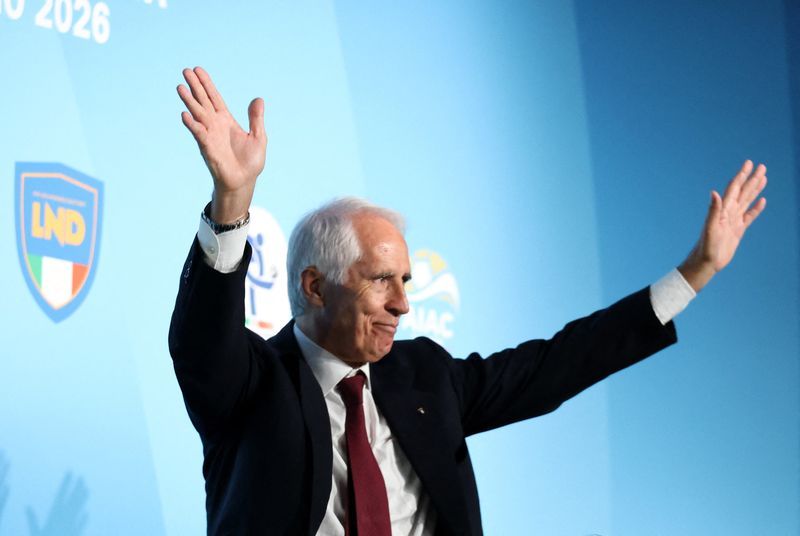
Giovanni Malago, a 67-year-old businessman and former head of Italy's Olympic committee, has assumed the presidency of the Italian Football Federation following a landslide election victory that handed him 68.58% of the vote at the FIGC assembly in Rome on Monday. His appointment arrives at one of the most turbulent periods in modern Italian football, with the national team having suffered the ignominy of missing a third consecutive World Cup tournament after a painful playoff elimination against Bosnia & Herzegovina in April. The crisis has left Italian football reeling, prompting the resignation of previous federation president Gabriele Gravina and raising urgent questions about the future direction of the sport in a country that won four World Cup titles and once dominated international competition.
Malago's credentials are grounded in organizational leadership rather than football administration. He recently concluded his tenure as head of the organizing committee for the Milano Cortina Winter Olympics in February, where his stewardship of the Games earned widespread recognition for efficiency and smooth execution. That track record convinced federation voters that he possessed the administrative acumen necessary to navigate Italian football through its deepest institutional crisis in decades. His opponent, Giancarlo Abete, was unable to mount a serious challenge, indicating the scale of the mandate Malago received to implement sweeping reforms.
The sheer magnitude of the challenge before Malago cannot be overstated. Beyond the World Cup qualification failure, Italian clubs have also suffered embarrassing exits from European competitions, leaving the nation's football ecosystem at its lowest point in four decades. The cascading failures have triggered outrage among supporters and political figures alike, with prominent former players including legend Roberto Baggio publicly warning that Italy's youth development system has become obsolete and uncompetitive by international standards. This systemic breakdown suggests that the problems plaguing Italian football extend far beyond tactical or personnel decisions at the senior level.
Acknowledging the weight of expectations placed upon him, Malago has articulated an ambitious vision that extends beyond mere damage control. He has emphasized that the Football Federation must function as an institution of inspiration for Italian society rather than simply administering the sport's technical operations. Drawing on his background in Olympic administration, he has invoked a philosophy of unity and collective purpose, declaring that "alone I can do nothing, together we can do everything" immediately after his election. This emphasis on collaboration signals recognition that restoring Italian football requires buy-in from multiple stakeholders across the federation's complex organizational structure.
Malago's immediate agenda includes the recruitment of a new men's national team head coach, a position left vacant following Gennaro Gattuso's resignation in the wake of April's playoff defeat to Bosnia & Herzegovina. The coaching appointment carries symbolic and practical significance, representing the federation's first major opportunity to demonstrate decisive action and strategic direction. Beyond the senior team, Malago has identified youth development overhaul as a critical priority, directly addressing the structural weaknesses that prominent figures like Baggio have highlighted as fundamental to Italy's competitive decline. These are not quick fixes but foundational reforms that will require sustained investment and organizational will over multiple years.
Complicating the federation's rebuilding efforts is the necessity of preparing for the 2032 European Championship, which Italy will co-host alongside Turkey. This tournament provides both opportunity and accountability—a chance to showcase Italian football's resurgence on home soil, but also a clear deadline by which the federation's reforms must yield tangible results in competitive terms. The hosting role carries significant prestige and commercial implications, placing additional pressure on Malago to demonstrate progress within a defined timeframe.
Malago's framing of Italian football's historical achievements as potential sources of inspiration rather than burdensome nostalgia represents a subtle but important philosophical reorientation. He has argued that Italy's status as a four-time World Cup champion should motivate ambitious improvement rather than breed complacency or excuse current failures. This psychological repositioning is essential for a federation operating in a country where football occupies an almost sacred place in the national consciousness. For Malaysian readers and Southeast Asian observers, the parallels are instructive: nations with storied football histories often struggle to reconcile past glories with present underperformance, requiring confident leadership that neither denies historical context nor becomes imprisoned by it.
The fall of Gabriele Gravina, who had led the federation since 2018, underscores how quickly institutional credibility can evaporate when performance falters. Gravina himself acknowledged to reporters that he should have departed earlier, suggesting internal recognition that his leadership had become untenable well before his formal resignation. This candid admission highlights the corrosive effect of sustained failure on institutional morale and authority, a dynamic that Malago must actively counter through decisive action and clear communication of strategic direction.
For Italian football's standing in Europe and globally, the transition to new leadership represents both a humbling moment and a potential inflection point. The federation's difficulties contrast sharply with the performance of other traditional football powerhouses, many of which have successfully navigated generational transitions while maintaining competitive standards. Italy's experience serves as a cautionary tale about the dangers of allowing youth development systems to atrophy and administrative structures to become disconnected from grassroots realities. Malago's appointment reflects hope that external expertise in organizational management can help bridge this gap, though whether administrative skill alone can remedy deep-rooted competitive problems remains an open question.
The appointment also occurs within the context of broader shifts in European football's competitive landscape, where traditionally dominant nations increasingly face challenges from emerging footballing nations with more modern training methodologies and infrastructure investments. Italy's struggles are not merely institutional failures but also reflect international competitive pressures that have intensified significantly in recent years. As Malago begins his tenure, he inherits not only the immediate crisis but also the broader challenge of ensuring Italian football remains competitive in an increasingly demanding global environment.

