The Malaysian government has reinforced its commitment to sustaining the Ziarah Kasih initiative, a targeted welfare programme designed to provide immediate relief to financially strained households and vulnerable populations throughout the country. Abdullah Izhar Mohamed Yusof, political secretary to the Communications Minister, made the declaration during a community engagement session in Mersing, emphasising that the scheme represents a cornerstone of the government's broader Malaysia MADANI vision centred on elevating living standards and safeguarding citizen welfare.
At its foundation, Ziarah Kasih operates as a systematic outreach mechanism that identifies eligible recipients through collaborative efforts between the Department of Information and Komuniti MADANI. The programme extends beyond symbolic gestures, delivering concrete material support and essential healthcare resources to households grappling with acute financial constraints. By centralising identification and distribution processes, the government aims to ensure that assistance reaches those most severely impacted by economic hardship, rather than being dispersed indiscriminately. This targeted approach reflects a policy shift towards evidence-based welfare delivery in Malaysia's social protection architecture.
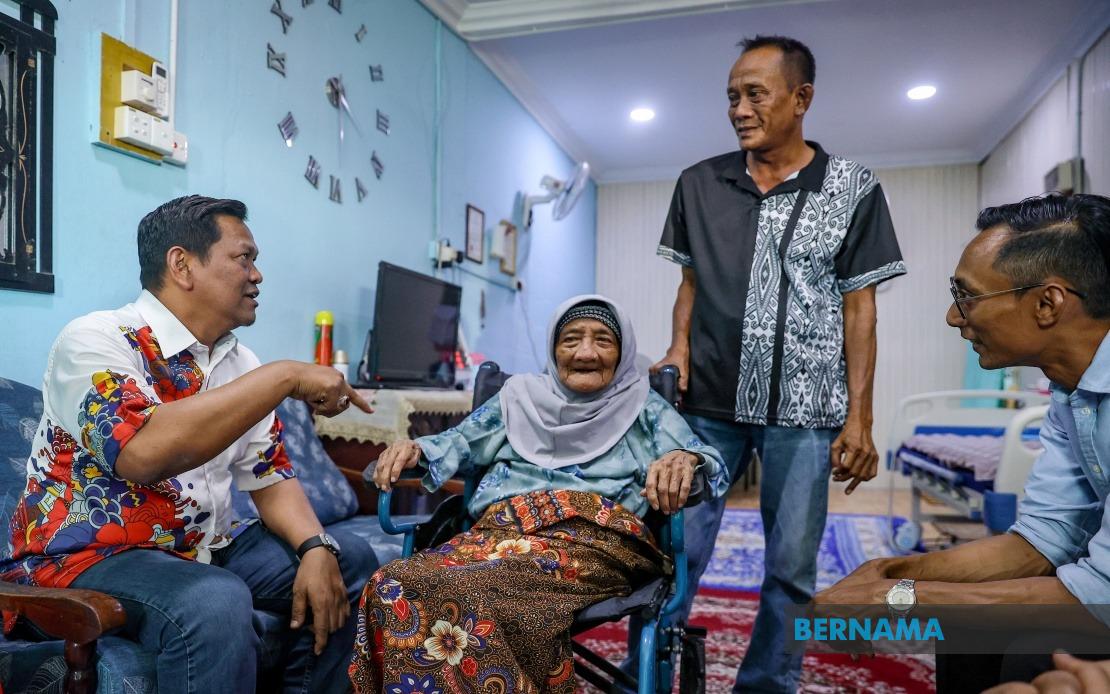
During the Jiwa@Komuniti MADANI Sembang Santai World Cup Edition programme held in Endau, Abdullah Izhar conducted a series of home visits to elderly beneficiaries, presenting financial contributions and medical equipment tailored to individual circumstances. These direct interactions serve multiple purposes: they authenticate the government's engagement with grassroots communities, provide policymakers with first-hand understanding of beneficiary circumstances, and offer recipients recognition and dignity that often accompanies government-level attention. The visible presence of officials in residential settings reinforces the narrative that Malaysia's leaders remain attentive to conditions facing ordinary citizens.
One striking case involved Hamdan Abd Latif, a 71-year-old bedridden resident requiring round-the-clock care from his wife, Meriam Abd Wahab, aged 66. Hamdan's medical history encapsulates the cascade of health crises that can devastate household economics in Malaysia. A retired firefighter, he suffered a catastrophic workplace-related fall in 2011 while engaged in supplementary livelihood activities, just weeks before his scheduled pension commencement. Subsequent medical investigations revealed a brain tumour, necessitating surgical intervention. Although the initial tumour was successfully removed, the underlying illness progressively compromised his health, ultimately culminating in a stroke triggered by a bathroom accident in the preceding year.
Meriam's testimony illuminates the secondary burden borne by caregivers, particularly women managing unpaid domestic labour within resource-constrained households. She abandoned her own income-generating activities—sewing work that had furnished the family with modest supplementary earnings—to provide full-time care for her incapacitated husband. This situation mirrors a broader Malaysian demographic reality: an ageing population increasingly requiring intensive care, coupled with inadequate institutional support infrastructure, places extraordinary emotional and economic strain on family units. The Ziarah Kasih assistance helps offset some costs associated with Hamdan's condition, enabling the family to allocate limited resources more strategically.
Another beneficiary, Zainon Ibrahim at 91 years old, represents the growing cohort of extreme-aged citizens requiring intensive dependent care. Her son, Jamaluddin Ismail, made the difficult decision approximately two years prior to terminate his own employment, transforming himself into a full-time caregiver for his elderly mother. Although his siblings contribute to his mother's maintenance, Jamaluddin bears the primary responsibility and lost income opportunity associated with this arrangement. As a former supervisor, his withdrawal from the workforce represents not merely financial loss but also the sacrifice of professional status, workplace social networks, and future pension contributions. Jamaluddin characterised the government assistance as instrumental in bridging gaps in Zainon's daily expenses, acknowledging that without external support, the family's capacity to sustain her care would be substantially diminished.
The persistence of such cases underscores a critical policy imperative facing Malaysia as it navigates demographic transition. The ageing population is expanding rapidly, with projections indicating that citizens aged 60 and above will constitute an increasingly significant portion of the total population within coming decades. Simultaneously, traditional extended-family care structures are fragmenting under pressures of urban migration, declining fertility rates, and dual-income household necessities. Government welfare programmes like Ziarah Kasih function as supplementary mechanisms that acknowledge these systemic transformations while providing temporary relief, though observers contend that long-term solutions require comprehensive institutional frameworks encompassing aged-care facilities, caregiver support services, and sustainable financing mechanisms.
The programme's regular implementation schedule signals governmental intention to establish Ziarah Kasih as a permanent institutional feature rather than an episodic initiative. This consistency matters significantly for vulnerable households that rely on predictable assistance patterns for household budgeting and planning. Additionally, embedding community engagement within cultural frameworks—such as the Sembang Santai community dialogue sessions—situates welfare delivery within broader narratives of national solidarity and mutual responsibility. For Malaysian communities, particularly in rural constituencies like Mersing, such visible government presence carries symbolic weight beyond the material assistance provided.
Regional observers note that Malaysia's approach to targeted welfare through initiatives like Ziarah Kasih offers instructive lessons for Southeast Asian peers navigating similar demographic and economic pressures. The programme's emphasis on identification mechanisms and household-level customisation contrasts with more universal distribution approaches employed elsewhere in the region. However, sceptics question whether such targeted schemes can adequately scale to meet the magnitude of need across Malaysia's diverse and geographically dispersed vulnerable populations. The interplay between programme ambition and implementation capacity will likely shape the initiative's long-term effectiveness in advancing the Malaysia MADANI agenda.

