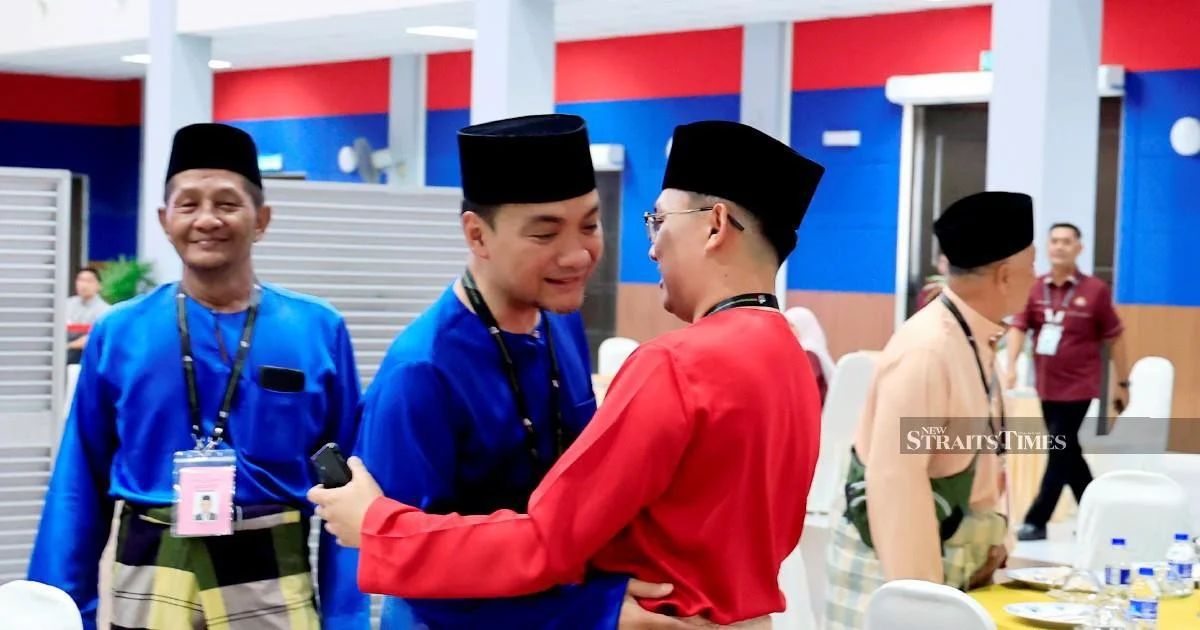
The Machap state constituency in Johor will contest as a straight fight between the Barisan Nasional and Pakatan Harapan, the two major political coalitions preparing for the state election. This arrangement pits caretaker Menteri Besar Datuk Onn Hafiz Ghazi, representing BN, against Nur Hafiz, the Pakatan challenger, in a direct electoral battle that will see no third candidate splitting the contest.
Onn Hafiz, who currently leads the Johor state government in a caretaker capacity, will attempt to retain the Machap seat that he has previously held. His political standing rests on BN's performance in the broader state election, yet his personal mandate in Machap will be tested directly against the opposition's choice candidate. The straight contest format eliminates the possibility of a fragmented vote that might benefit either side through vote-splitting mechanics.
The confirmation of Machap as a two-way race reflects negotiations and agreements between BN and PH, the two dominant coalitions in Malaysian politics. Such arrangements are increasingly common at state and federal levels, where the major blocs recognise mutual benefit in avoiding three-cornered contests that historically scattered votes across multiple candidates. By presenting voters with a clear binary choice, both coalitions seek to maximise their respective turnout.
For PH, fielding Nur Hafiz against an incumbent caretaker Menteri Besar signals serious intent to challenge BN's control of Johor. The opposition must consider whether Nur Hafiz has sufficient grassroots appeal and party machinery to overcome Onn Hafiz's incumbency advantages. Johor has remained a BN stronghold for decades, making any breach of this fortress politically significant for the Pakatan coalition and its aspirations across Malaysia.
Onn Hafiz's status as caretaker Menteri Besar grants him substantial institutional resources during the campaign period. He controls state apparatus, can highlight government projects, and benefits from the gravitational pull of executive authority. However, caretaker conventions theoretically limit his ability to make new policy announcements or announcements that might be seen as using state resources for electoral advantage, creating a delicate balance in his campaign strategy.
The Johor election carries national implications beyond the state's boundaries. As one of Malaysia's most populous and economically significant states, Johor's outcome influences broader calculations about which coalition possesses stronger momentum heading toward potential federal elections. A strong BN showing in Johor consolidates the coalition's position, while any PH gains signal potential shifts in the political landscape that ripple through the peninsula.
Johor's electoral dynamics have evolved considerably over recent years. While BN traditionally dominated the state with supermajorities, the 2018 general election and subsequent state politics injected greater complexity into local contests. Machap's status as a straight fight suggests both coalitions view it as genuinely competitive rather than a foregone conclusion either way, indicating shifting voter preferences in certain constituencies.
Machap voters will face a straightforward choice between two visions of state governance. They must weigh the incumbent's experience and track record against the opposition's promises and alternative direction. In a straight contest, the campaign will likely intensify as both candidates target the same undecided middle, the swing voters who determine outcomes in closely balanced constituencies. Fundraising, ground operations, and media presence become more concentrated when focused on a single opponent.
The confirmation of this arrangement also reflects pragmatic politics among Malaysian political parties. Instead of allowing splinter candidates or smaller parties to contest Machap independently, the major coalitions have secured the seat as part of their respective nominations, demonstrating the consolidation of Malaysian politics around two dominant blocs. This reduces unpredictability but may also concern voters who feel their choices are narrowing to established power structures.
For Onn Hafiz personally, the straight contest places his political future on clearer grounds. He cannot blame defeat on vote-splitting or claim that a third candidate spoiled his chances. Victory will be attributed fully to his competence and appeal, while defeat would similarly be unambiguous. This heightened accountability applies equally to Nur Hafiz, making the contest a revealing test of each candidate's actual support in their respective partisan bases and among persuadable voters.
The broader Johor election campaign will unfold with this Machap contest as a significant subplot. Media coverage of the race will track whether Onn Hafiz maintains his seat and with what margin, signalling either consolidation or erosion of BN support in the state. Local and national observers will interpret Machap's result as a bellwether for trends across Johor, particularly regarding the caretaker leader's personal standing and the effectiveness of each coalition's mobilisation efforts.
Voters in Machap should expect intense campaigning from both camps in the coming weeks, with both Onn Hafiz and Nur Hafiz making their cases directly to constituents. The straight fight format ensures clear messaging without dilution across multiple candidates, giving voters transparent options and both campaigns maximum efficiency in deploying their resources toward persuading the electorate.

