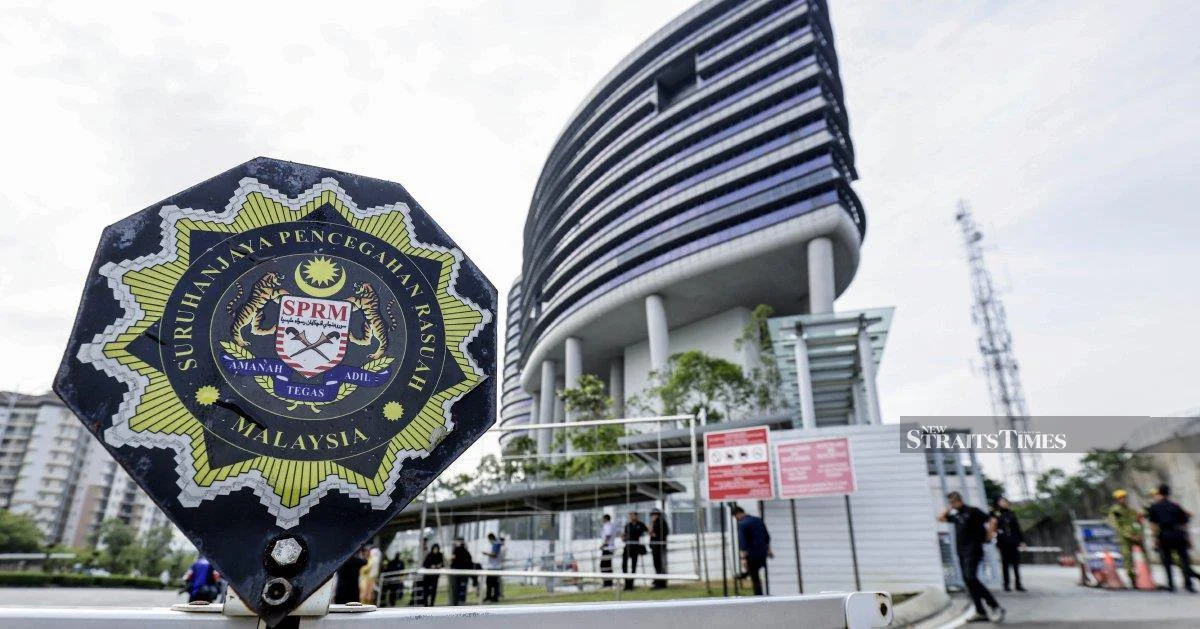
The Malaysian Anti-Corruption Commission has signalled its intention to conduct a comprehensive examination of governance and procedural deficiencies within the Daya Kerjaya 2.0 employment incentive scheme, with the agency's investigation centring on suspected fraudulent claims totalling RM9 million.
The scheme, designed to stimulate job creation and workforce development across the country, has come under official scrutiny following revelations of irregularities in how applications were processed and approved. The scale of the suspected fraud—running into millions of ringgit—underscores the potential vulnerability of Malaysia's social and economic support programmes to misuse and malfeasance, raising broader questions about internal controls and oversight mechanisms across government-administered initiatives.
The MACC's decision to examine systemic governance weaknesses rather than focusing solely on individual perpetrators reflects a more holistic approach to anti-corruption work. By investigating how the programme's internal processes functioned, the commission aims to identify structural gaps that may have enabled fraudulent submissions to slip through approval stages. This methodology recognises that large-scale corruption often exploits procedural loopholes or insufficient verification protocols rather than occurring in isolation.
For Malaysian policymakers and administrators, the investigation carries significant implications. Employment incentive schemes like Daya Kerjaya 2.0 serve as important fiscal instruments, particularly during periods of economic uncertainty when private sector hiring slows. If governance weaknesses have allowed substantial fraud to occur, public confidence in such programmes diminishes, potentially affecting participation rates among legitimate beneficiaries who may view the system as compromised or unreliable.
The RM9 million in suspected fraudulent claims represents a direct loss to public funds that could otherwise support genuine job seekers or worker upskilling initiatives. In the Malaysian context, where government budgets compete across numerous priorities—from infrastructure to healthcare to education—every ringgit misappropriated through fraud effectively reduces resources available for legitimate social and economic programmes. The opportunity cost extends beyond the immediate financial loss.
Proceducing integrity issues within employment schemes also carry broader economic consequences for Southeast Asia's competitive positioning. Malaysia's ability to attract foreign investment and develop its workforce rests partly on the perception that government programmes operate transparently and effectively. When large-scale fraud emerges, it can reinforce negative perceptions about governance standards, potentially influencing corporate decisions regarding regional operations and investment.
The MACC's investigation will likely examine multiple procedural layers: how initial applications were vetted, what documentation was required to verify claims, who held approval authority at different stages, and whether adequate cross-checking mechanisms existed between relevant agencies. Employment schemes often involve collaboration between the human resources ministry, financial institutions, and corporate partners, multiplying the points where oversight could falter or where individuals might exploit gaps in inter-agency coordination.
For individuals or organisations implicated in the fraudulent submissions, the investigation carries serious legal consequences. Malaysia's anti-corruption legal framework provides substantial penalties for those convicted of submitting false claims or manipulating government assistance programmes. The MACC's work on this matter will likely conclude with referrals to the Attorney General's office for prosecution consideration, potentially resulting in criminal charges against identified perpetrators.
Beyond the immediate investigation, this episode prompts reflection on how Malaysia can strengthen governance across its expanding portfolio of employment and economic support initiatives. The government has rolled out various schemes in recent years—from wage subsidies to entrepreneurship grants—each requiring robust administrative frameworks to prevent misuse. Learning from the Daya Kerjaya 2.0 situation and implementing recommended improvements could serve as a preventive measure across the broader landscape of such programmes.
The timing of the MACC investigation also reflects the anti-corruption agency's evolving priorities. Rather than limiting its mandate to high-profile corruption cases involving senior officials, the commission increasingly scrutinises mid-level administrative programmes and processes. This approach recognises that corruption exists across all governmental strata and that systematic integrity issues affecting multiple beneficiaries can aggregate into substantial losses requiring investigative attention.
For businesses and workers participating in or considering the Daya Kerjaya 2.0 scheme, the investigation may introduce temporary procedural delays as the MACC conducts interviews and reviews documentation. However, the commission's involvement should ultimately strengthen the programme's integrity, potentially leading to enhanced verification processes that reassure legitimate participants that the scheme operates fairly and that approved benefits genuinely support actual employment creation.
The investigation's outcome will provide valuable lessons for policymakers designing future economic support initiatives. Integrating stronger governance frameworks from inception—including robust identity verification, cross-agency data-sharing protocols, and periodic compliance audits—can significantly reduce vulnerability to fraudulent exploitation. Malaysia's experience with Daya Kerjaya 2.0 contributes to a growing body of evidence about how government employment schemes must balance accessibility for legitimate beneficiaries with stringent safeguards against misuse.