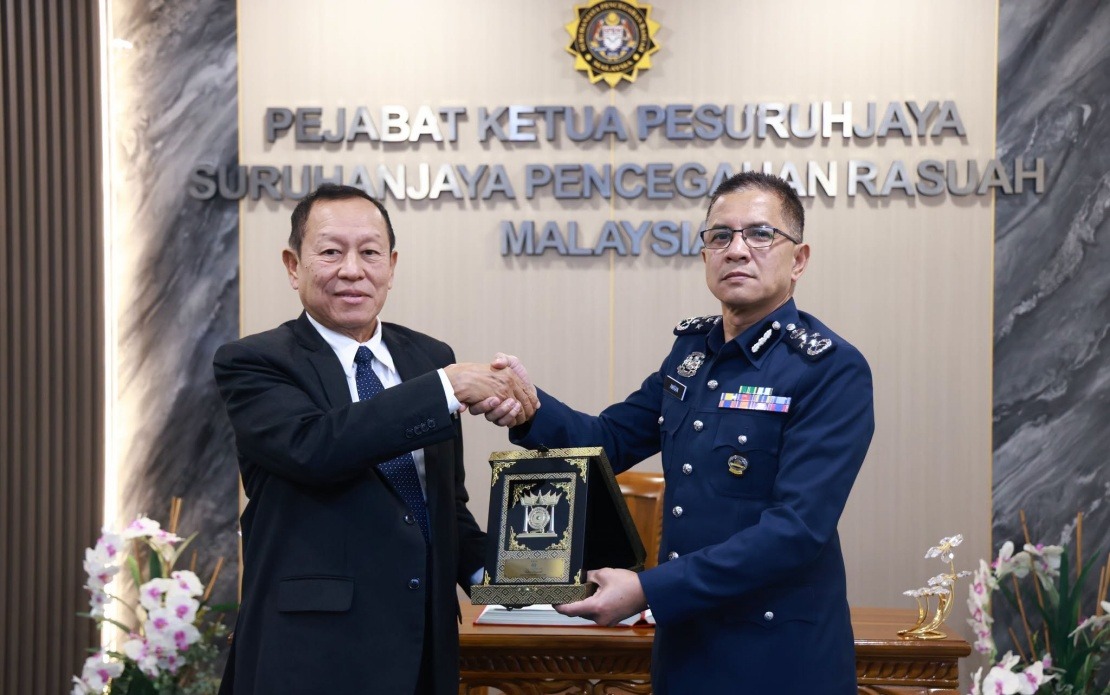
Malaysia's two key enforcement agencies have joined forces to tackle deepening vulnerabilities at the nation's ports, announcing plans for a specialised task force to monitor customs operations and tax collection across strategic maritime hubs. The Malaysian Anti-Corruption Commission (MACC) and the Royal Malaysian Customs Department (JKDM) formalised their collaboration following a high-level meeting at MACC headquarters in Putrajaya, signalling growing concern about the scale and sophistication of evasion schemes targeting port operations.
The announcement reflects mounting pressure on both agencies to address what officials describe as systemic leakages in container management and revenue collection. During the one-hour strategic engagement, MACC chief commissioner Datuk Seri Abd Halim Aman and JKDM director-general Datuk Amran Ahmad reviewed shared operational challenges and explored mechanisms to strengthen coordination. The task force represents an acknowledgment that neither agency alone possesses sufficient visibility into the complex networks and procedures that smugglers exploit at Malaysia's busiest entry points.
JKDM has identified increasingly sophisticated methods used by syndicates to circumvent customs procedures and evade tax obligations. These tactics extend beyond conventional smuggling to include the deliberate falsification of shipping documents, fraudulent cargo declarations, and the provision of false information across multiple approval channels. The department's findings underline how organised groups now operate with detailed knowledge of customs workflows, timing, and personnel vulnerabilities, creating coordinated challenges that single-agency responses struggle to contain.
Particularly concerning to JKDM investigators is the emergence of a specific modus operandi targeting currency enforcement rules. Individuals and groups have been detected systematically declaring substantially lower amounts of cash upon entering the country than the actual quantities they are transporting. This scheme directly undermines Malaysia's ability to monitor illicit financial flows and detect money laundering operations that use port corridors for rapid capital movement. The practice suggests organised elements have developed reliable methods to move funds across Malaysia's borders with minimal detection risk.
The collaboration also addresses what both agencies characterise as procedural and institutional impediments to effective enforcement. Beyond technical smuggling methods, customs officials and MACC investigators point to bureaucratic constraints that inadvertently create windows for evasion. The meeting included detailed discussions on how inspection procedures themselves can be streamlined without compromising thoroughness, and how information-sharing between JKDM divisions and external agencies can accelerate investigations without creating bottlenecks that delay legitimate commerce.
For Malaysian readers, the port enforcement challenge carries direct implications. Compromised customs procedures inflate costs for legitimate traders, distort domestic markets, and channel tax revenue away from public services. Smuggled goods—whether counterfeit products, undeclared electronics, or controlled substances—undermine consumer safety, devalue legitimate businesses, and fund transnational criminal networks. The revenue lost to tax evasion schemes also has a ripple effect through the economy, as government agencies must either reduce services or increase charges on legitimate activity to compensate.
The MACC's involvement in the initiative also signals a strategic shift in how Malaysia's anti-corruption machinery addresses port-level corruption. Rather than limiting its focus to individual bribery or embezzlement cases, the commission is now engaging with systemic vulnerabilities that enable large-scale, organised evasion. This broader approach recognises that port corruption operates across multiple layers—from document falsifiers and bent officials to specialist logistics networks—and that effective intervention requires integrated intelligence and coordinated enforcement action.
JKDM's explicit welcoming of MACC's capacity-building role in promoting integrity culture among customs personnel suggests the agencies view personnel training and professional standards as central to the solution. Syndicates often exploit individual officials through coercion, personal financial pressure, or gradual normalisation of rule-bending. By embedding anti-corruption messaging and ethics discussions into customs operations, MACC and JKDM hope to strengthen institutional resistance to these recruitment and corruption tactics at ground level.
The establishment of the task force also reflects regional considerations. Southeast Asian ports have become increasingly attractive to global smuggling networks, partly because maritime enforcement capacity varies significantly across the region. Malaysia, with its position along crucial shipping routes and its substantial container traffic, has become a focal point for transshipment of contraband. A more coordinated domestic enforcement response strengthens Malaysia's standing in regional maritime security discussions and enhances its capacity to work with counterpart agencies in Singapore, Thailand, and Indonesia on cross-border smuggling cases.
Operationally, the task force will likely focus on high-risk cargo profiles, container routing patterns, and suspicious declaration patterns that current systems flag inconsistently. Data analytics and information-sharing between MACC and JKDM systems could enable faster detection of repeat offenders, syndicate networks, and emerging evasion methodologies. The collaboration may also create new investigation protocols for cases that span both corruption and customs violations, reducing jurisdictional ambiguity that offenders currently exploit.
The timing of this initiative also reflects ongoing efforts by Malaysia to enhance its international reputation for enforcement. Global financial systems and trading partners increasingly conduct due diligence on jurisdictions where border controls are perceived as weak or compromised. By demonstrating coordinated, intelligence-led enforcement at ports, Malaysia strengthens its position in international trade negotiations and reduces pressure from partner nations to implement stricter controls on Malaysian-origin cargo.
Moving forward, the task force's effectiveness will depend on sustained resource allocation, genuine information-sharing between agencies that have historically operated in separate silos, and political will to pursue cases involving politically connected traders or corrupt officials. The agencies must also balance enhanced security with legitimate trade facilitation, ensuring that ports remain competitive hubs rather than becoming bottlenecks that push legitimate commerce to neighbouring countries. Success will ultimately be measured not just in seizures and prosecutions, but in whether smuggling networks find Malaysia less attractive as a transshipment destination.

