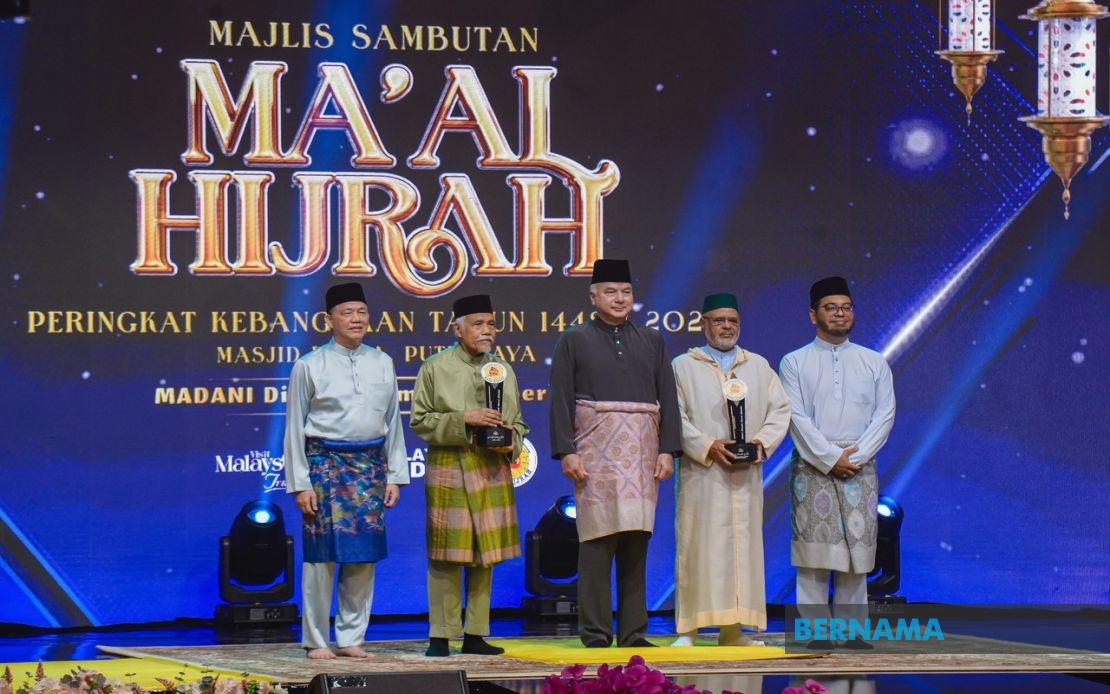
The concept of hijrah—spiritual migration and positive transformation—took centre stage across Malaysia as communities observed Maal Hijrah 1448H on June 17, underscoring how this Islamic principle extends beyond historical significance to inform contemporary values of reform and collective progress. The nationwide celebrations reflected a deliberate emphasis on channelling the essence of hijrah into modern leadership practices and social cohesion, with religious and civil authorities converging to articulate how this timeless concept remains relevant to Malaysia's developmental aspirations.
This year's observance, anchored by the theme "MADANI Dihayati, Ummah Diberkati" (MADANI Internalised, Ummah Blessed), positioned hijrah not merely as a commemorative occasion but as an active framework for institutional and personal renewal. The alignment with Malaysia's MADANI development framework demonstrates how Islamic principles are being integrated into governance narratives, particularly in emphasising equitable public benefit and civilisational advancement. This thematic coherence suggests a deliberate strategy to connect religious observance with the broader national agenda of ethical governance and inclusive prosperity.
Key government figures shaped the occasion's trajectory. Deputy Prime Minister Datuk Seri Fadillah Yusof and Minister in the Prime Minister's Department (Religious Affairs) Dr Zulkifli Hasan participated in ceremonies that drew approximately 5,000 attendees, signalling the state's investment in these observances as occasions for articulating values and institutional priorities. Their presence elevated the celebration beyond community ritual into formal government messaging about the compatibility between Islamic values and administrative effectiveness, a positioning increasingly important in Malaysia's pluralistic context.
The conferment of prestigious awards provided tangible recognition of individuals embodying hijrah principles. Sultan Nazrin, Sultan of Perak, presented the National Tokoh Maal Hijrah Award to Prof Emeritus Datuk Dr Osman Bakar, rector of International Islamic University Malaysia (IIUM), honouring both institutional leadership in Islamic higher education and scholarly contribution to Muslim thought. This recognition underscores how hijrah conceptually encompasses intellectual migration and the advancement of knowledge systems that serve broader Muslim civilisational objectives.
International recognition also featured prominently through the award to Moroccan Islamic jurisprudence scholar Dr Ahmad Al-Raysuni, reflecting Malaysia's positioning within broader Islamic intellectual networks and its aspiration to host dialogues that transcend national boundaries. Such recognition strategies serve multiple purposes: they validate Malaysia's role as a hub for Islamic scholarship, demonstrate openness to diverse Muslim traditions, and position the nation as intellectually engaged with contemporary Islamic jurisprudential debates relevant to governance and social questions.
Parallel ceremonies in Sabah engaged different community strata in this reflection on spiritual transformation. Tun Musa's attendance, welcomed by Chief Minister Datuk Seri Hajiji Noor and committee chairman Datuk Dr Mohd Arifin Mohd Arif, illustrated how the occasion operates as a gathering point for state-level leadership and civil society. The involvement of approximately 1,000 participants in Sabah's observance demonstrates how Maal Hijrah celebrations maintain geographic reach across Malaysia's diverse regions.
Community recognition formed a crucial component of these celebrations. Datuk Ag Sharin Alimin, community activist and former director of the Sabah Islamic Religious Affairs Department, received the male category award, while Datuk Masnah Matsalleh, former Sabah deputy state secretary, was honoured in the female category. These selections indicate deliberate diversification of awardees beyond religious scholars to encompass administrative professionals and civil society actors, suggesting an understanding of hijrah as applying across professional and social domains rather than exclusively within religious institutions.
The recognition of Jusoh @ Muda Ismail, a 95-year-old Quranic teacher and student of renowned scholar Tuan Guru Haji Mat Lintar, highlighted the continuity of Islamic knowledge transmission across generations and the valuing of traditional scholarly lineages within modern governance frameworks. Such recognition preserves institutional memory of Islamic scholarship's historical development in Malaysia while affirming the enduring relevance of classical Islamic education methods. The honouring of someone maintaining this pedagogical tradition signals commitment to preserving knowledge systems that predate institutional modernisation.
These celebrations occur within a broader Southeast Asian context where Muslim-majority nations increasingly utilise religious observances as vehicles for articulating governance philosophies and national values. For Malaysian readers and regional observers, Maal Hijrah's thematic positioning around leadership quality and communal unity addresses contemporary anxieties about institutional integrity and social fragmentation. The emphasis on hijrah as transformation and renewal implicitly acknowledges that societies require periodic recalibration of values and priorities.
The integration of MADANI framework rhetoric with Islamic commemorative occasions demonstrates deliberate institutional messaging that secular development and Islamic principles are compatible rather than antagonistic. This framing carries significance for Malaysian pluralism, suggesting that Islamic values can constitute the philosophical foundation for inclusive governance benefiting all citizens. For majority-Muslim Southeast Asia, Malaysia's approach offers a model of state engagement with Islamic observance that emphasises ethical dimensions and institutional application rather than sectarian expression.
These celebrations also affirm the role of civil society leadership in articulating religious meaning. The prominence of former government officials, community activists, and scholars receiving recognition indicates that hijrah principles are understood as requiring translation into practical administrative and social action. This approach prevents Islamic commemoration from remaining confined to spiritual domains, instead positioning it as relevant to questions of public service quality, professional ethics, and institutional accountability.