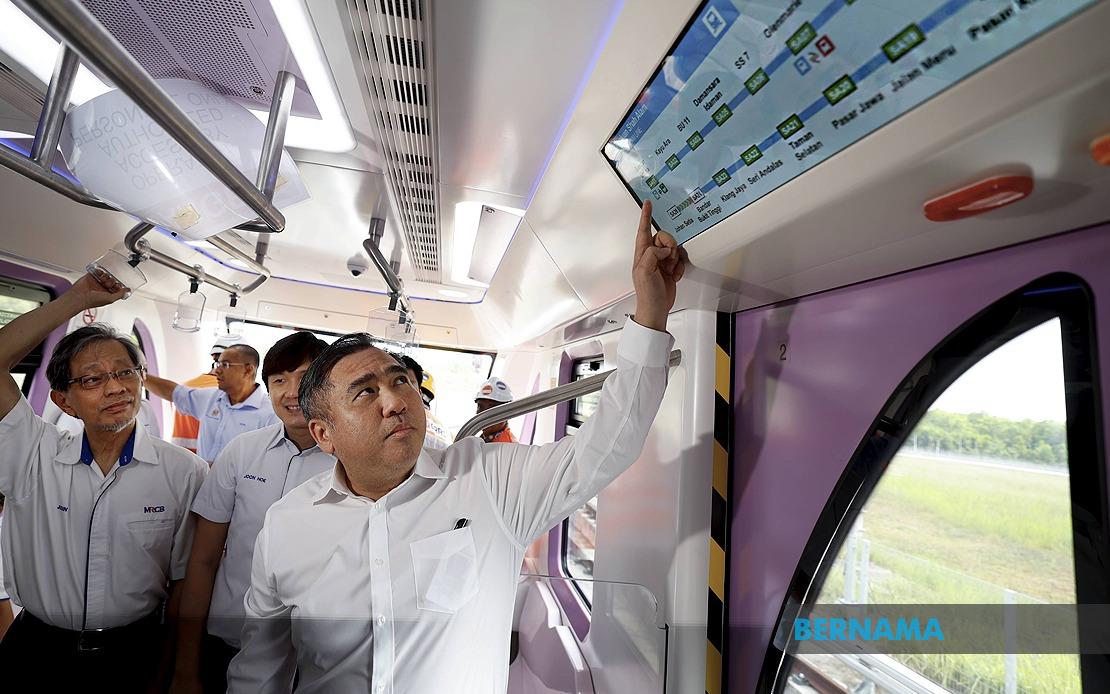
Malaysia's newest rapid transit line is set to transform urban mobility in the Klang Valley starting next week. The Light Rail Transit 3 (LRT3) service will officially begin operations on Monday, June 29, with Transport Minister Anthony Loke confirming the launch timeline during a public engagement on Saturday. The announcement comes as the country continues its significant investment in mass rapid transit infrastructure aimed at reducing road congestion and improving commuter experiences in the greater Kuala Lumpur region.
Prime Minister Datuk Seri Anwar Ibrahim will officiate the official launch ceremony on Sunday, June 28, before the line becomes operational to the public the following day. Loke disclosed these plans while opening a new Road Transport Department branch at Terminal Bersepadu Selatan, emphasizing the government's commitment to streamlining both transport regulation and infrastructure development. The ceremonial launch represents a milestone in the country's long-term strategy to develop comprehensive public transportation networks that can support rapid urbanization and reduce private vehicle dependency.
The LRT3 line stretches across 37.8 kilometres, linking Bandar Utama to Johan Setia in Selangor state. This routing was specifically designed to address connectivity challenges along the western corridor of the Klang Valley, a region characterized by intense traffic congestion during peak hours. The geographic scope of the new line encompasses multiple residential clusters, commercial districts, and industrial zones, making it integral to the daily movement of workers, consumers, and business operators across this economically significant area.
Projected to serve approximately two million residents, the LRT3 represents one of the most consequential public transport additions to the region in recent years. The scale of potential ridership underscores the acute transportation needs across western Selangor and surrounding metropolitan areas. For residents currently reliant on private vehicles or congested bus networks, the new line offers a faster, more reliable alternative for daily commuting, potentially transforming travel patterns across the corridor.
Beyond immediate commuter benefits, the LRT3 carries broader implications for urban development and property value patterns in the Klang Valley. Historical precedent from previous LRT expansions in Malaysia demonstrates that new rail connections typically stimulate residential and commercial growth around station areas. Property developers have likely been anticipating this launch, with potential for increased investment in mixed-use developments near key stations. This ripple effect extends job creation and economic activity throughout the affected districts.
The line's design specifically targets improvement of connectivity across multiple sectors. By linking residential neighbourhoods with commercial and industrial clusters, the LRT3 facilitates workforce mobility and supports economic productivity. Manufacturing facilities, warehouses, and distribution centres in Johan Setia and surrounding industrial estates will gain improved access to residential labour pools. Simultaneously, residents benefit from closer proximity to employment opportunities without requiring private transportation.
For Malaysia's broader transport policy objectives, the LRT3 launch represents progress toward reducing traffic congestion and air pollution in the Klang Valley. Increased public transport usage directly reduces vehicle emissions and alleviates pressure on already-strained road networks. The government's emphasis on mass rapid transit aligns with regional and global sustainability commitments, positioning the country as serious about addressing urban environmental challenges through infrastructure investment.
The timing of the LRT3 opening comes amid ongoing discussions about transportation equity and accessibility across Malaysian cities. While Kuala Lumpur and surrounding federal territories have benefited from multiple rail lines, expanding coverage to outer Selangor areas acknowledges that congestion and mobility challenges extend beyond the capital's traditional boundaries. This geographical expansion of transit infrastructure reflects evolving urban planning philosophy that prioritizes integrated metropolitan development rather than centre-focused growth.
Operational success will depend on coordination with other transport modes and effective first-mile-last-mile connectivity. Integration with existing bus networks, feeder services, and pedestrian infrastructure around stations will determine whether the LRT3 achieves its potential ridership projections. The Road Transport Department's presence alongside this infrastructure expansion suggests government recognition that comprehensive transport planning requires coordination across multiple agencies and service providers.
For commuters in the Klang Valley, the June 29 opening date marks a significant quality-of-life improvement. Reduced travel times, increased reliability, and lower transportation costs for regular commuters represent tangible benefits. Early weeks of operation will likely attract heavy ridership from residents eager to experience the new service, with passenger feedback helping identify operational adjustments needed during the initial phase.
The LRT3 launch also carries strategic implications for future transport infrastructure planning. Success metrics from this line will inform government decisions regarding additional rail expansion, potentially supporting proposals for further LRT extensions into underserved areas. Investment in mass rapid transit infrastructure increasingly shapes Malaysian cities' competitiveness in attracting talent, businesses, and investments compared with regional counterparts.

