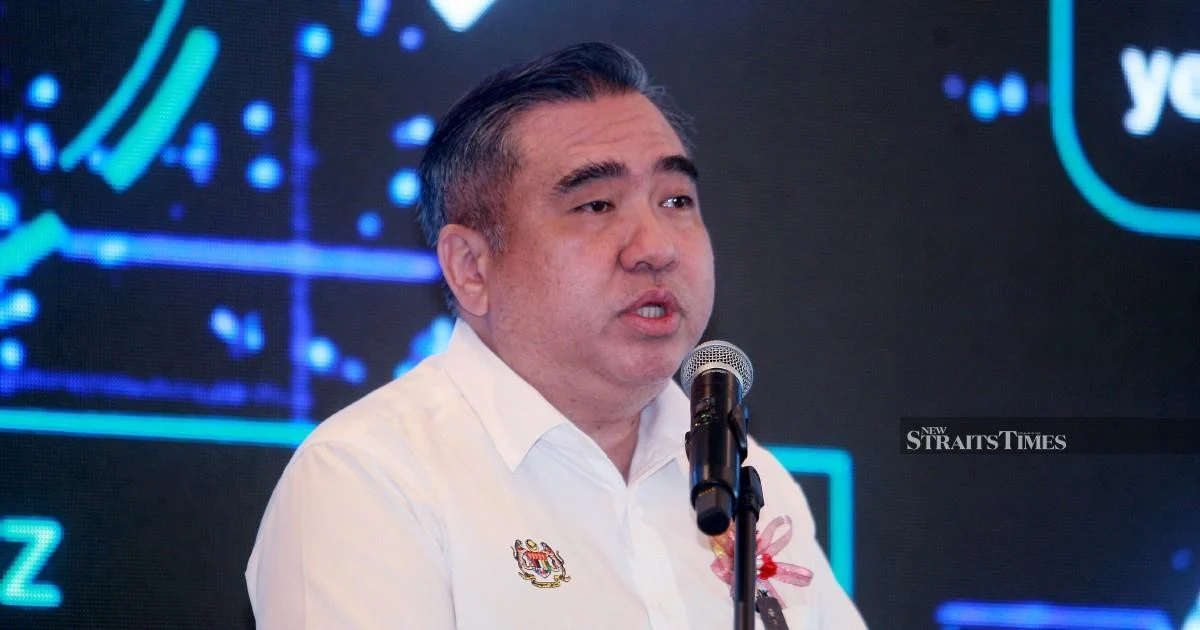
Transport Minister Anthony Loke's recent statement that motorists using removable sunshades will not be subject to enforcement measures has inadvertently highlighted a broader problem: the absence of consistent, detailed guidance on how road safety regulations will actually be implemented across Malaysia's diverse traffic environments. While the clarification ostensibly provides relief to the millions of drivers who rely on sunshades to protect vehicle interiors from the country's intense tropical heat, it has generated substantial ambiguity about what constitutes acceptable use and when—if ever—enforcement might still occur.
The minister's intervention follows growing frustration among the driving public, who found themselves caught between competing interests over sunshade regulations. Vehicle owners have long viewed removable sunshades as essential equipment in Malaysia's climate, where interior temperatures can soar to dangerous levels within minutes of parking. Yet traffic enforcement agencies have periodically targeted these devices under regulations designed to ensure driver visibility and road safety. Loke's clarification attempts to resolve this tension by signaling a shift toward greater leniency, but the language employed and the lack of comprehensive follow-up guidelines have instead created fresh uncertainties.
A fundamental issue lies in the distinction between different types of sunshade products and their installation methods. Not all removable sunshades are identical; some are lightweight, collapsible designs that can be quickly removed, whilst others are more elaborate accordion-style or foldable structures that occupy significant space within the vehicle. The regulatory framework has historically grouped these varied products together, yet drivers are now uncertain whether Loke's clarification applies uniformly across all variants or only to certain categories that meet unspecified standards. This ambiguity becomes particularly problematic for enforcement officers stationed at roadside checkpoints, who must make judgment calls without clear written directives to reference.
The practical implications of this unclear messaging extend beyond individual motorists. Insurance companies, vehicle inspection centers, and corporate fleet operators managing thousands of vehicles now struggle to establish consistent policies regarding sunshade usage among their drivers and vehicles. Some fleet managers worry that allowing employees or contractors to use sunshades without clear regulatory assurance could expose their organizations to unexpected enforcement action and associated fines. Insurance adjusters, meanwhile, face potential complications if claims involve vehicles equipped with sunshades, as the liability implications remain murky.
Regional variations in enforcement interpretation compound the confusion further. Malaysia's decentralized traffic enforcement structure means that different states and cities may implement sunshade regulations inconsistently, with some authorities adopting Loke's permissive stance more readily whilst others maintain stricter interpretations. Drivers traversing multiple jurisdictions—commuters between Selangor and Kuala Lumpur, for instance, or those traveling the length of the peninsula—cannot reasonably be expected to navigate such patchwork enforcement patterns. This regional inconsistency fundamentally undermines the rule of law principle that regulations should be applied fairly and uniformly.
The technical specifications question also remains unresolved. A comprehensive enforcement framework would typically specify permissible dimensions, materials, and positioning of sunshade devices. Should sunshades obstruct no more than a certain percentage of window area? Must they be removable within a specific timeframe? Are there different rules for driver-side windows versus passenger-side protection? Without such technical parameters published in official gazette notices or ministry circulars, both drivers and enforcers lack objective standards against which to measure compliance.
Transport safety advocates have pointed out that Loke's clarification, whilst well-intentioned, sidesteps the underlying policy question about whether sunshades genuinely compromise road safety. If they do impair visibility or pose genuine hazards, then enforcement represents appropriate regulatory action and the government should maintain it consistently. Conversely, if sunshades present minimal safety risks—a position that Loke's leniency appears to suggest—then regulations should be formally amended rather than selectively enforced at enforcement officers' discretion. The current approach risks devolving into arbitrary application based on individual officer judgment.
International experience offers instructive examples. Several countries have resolved this tension by establishing specific vehicle window tinting and sunshade regulations that balance driver comfort with visibility requirements, typically permitting certain light-transmission percentages and exempting vehicles with tinted or specialized windows from sunshade restrictions. Australia and several European nations have detailed technical standards governing such devices, reducing ambiguity considerably.
The minister's office has not yet announced plans for formal guideline documentation, supplementary enforcement training, or stakeholder consultation processes that would normally accompany such policy shifts. Without these supporting mechanisms, Loke's clarification functions more as a temporary policy signal than as a settled regulatory position. This interim status creates particular hardship for motorists who face potential enforcement contradictions between different checkpoints and different times.
Moving forward, Malaysia's transport authorities should capitalize on this moment to establish comprehensive, transparent sunshade regulations that explicitly detail what devices are permitted, under what conditions they may be used, and what specific enforcement criteria officers should apply. Such regulation should be published in accessible formats and made available to drivers through standard vehicle documentation processes. Training programs for enforcement personnel would ensure consistent application across all jurisdictions, whilst clear exemption provisions could address legitimate climate control requirements specific to tropical driving conditions.
The broader lesson emerging from this episode concerns the importance of regulatory clarity in building public confidence and ensuring equitable enforcement. When government officials issue clarifications without accompanying detailed guidance, they often amplify confusion rather than resolving it. As Malaysia continues modernizing its transportation regulatory framework, closer attention to implementation details and stakeholder communication will prove essential in preventing future episodes where intended relief measures instead generate uncertainty and frustration among the driving public.

