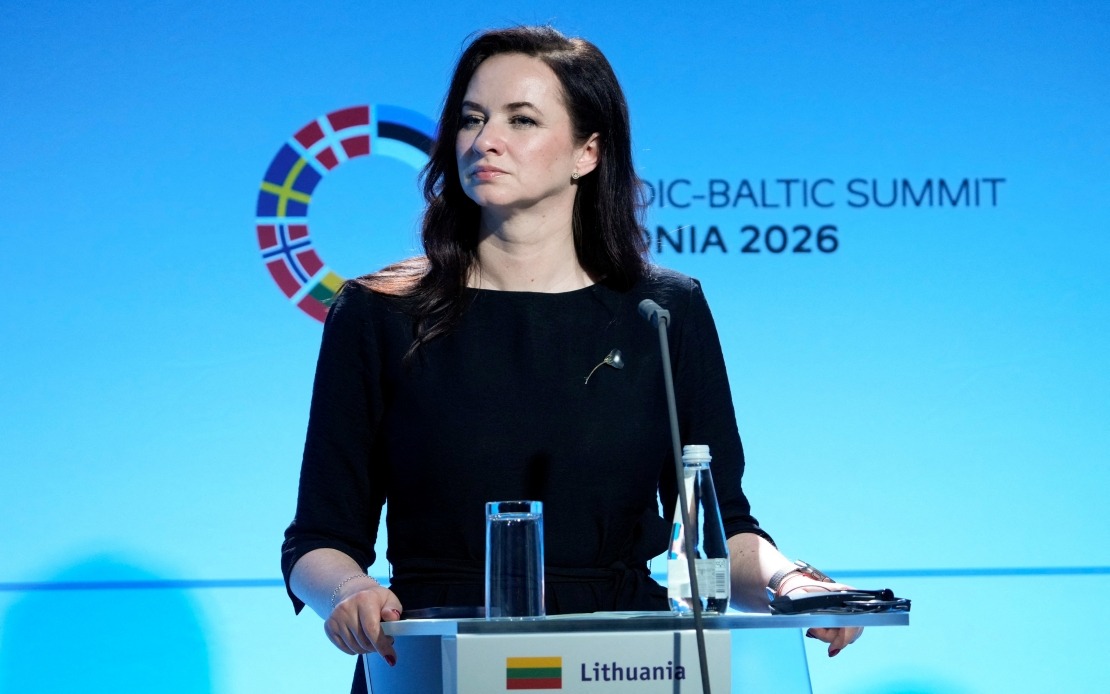
Lithuanian Prime Minister Inga Ruginiene announced the resignation of her government on Tuesday, setting in motion a formal transition of power that reflects shifting dynamics within the ruling coalition. The announcement marks another significant reconfiguration of Lithuania's political leadership structure, coming less than a year after the previous administration took office. President Gitanas Nauseda has formally accepted the resignation and directed the outgoing Cabinet to continue operating in a caretaker capacity to ensure government continuity throughout the transition period.
The constitutional framework governing Lithuania's leadership change provides a structured timeline for establishing the new administration. The president has fifteen days to nominate a prime ministerial candidate, who must subsequently obtain approval from the Seimas, the country's parliament. Following parliamentary confirmation, the designated prime minister receives an additional fifteen days to assemble a Cabinet and outline the government's policy agenda. A further fifteen-day window is then allotted for submission of the complete ministerial lineup for final parliamentary endorsement. This deliberate sequencing ensures legislative scrutiny at each stage of government formation.
Mindaugas Sinkevicius, chairman of the ruling Lithuanian Social Democratic Party, stands as the frontrunner to receive the presidential nomination. Political observers and analysts across the Baltic region anticipate his elevation to the premiership, contingent upon securing parliamentary backing. Should Sinkevicius achieve confirmation, he would inherit responsibility for guiding Lithuania's domestic agenda and international relations during a period of considerable geopolitical significance for the Baltic state and its NATO and European Union memberships.
The incoming administration will represent the third governing coalition assembled by the Social Democratic Party since parliamentary elections concluded in late 2024. This succession of coalitions underscores the complex interplay between competing political interests and legislative mathematics that characterise contemporary Lithuanian governance. The frequency of coalition reconfiguration within a relatively compressed timeframe suggests underlying tensions within the ruling bloc regarding policy priorities or resource allocation among coalition partners.
Ruginiene's government, which assumed office in August following the departure of former Prime Minister Gintautas Paluckas, convened for its final session on Tuesday morning. The Cabinet unanimously endorsed a resolution formalizing its resignation, affirming collective agreement on the decision to step aside. During the closing meeting, Ruginiene reflected on the outgoing administration's tenure, acknowledging both accomplishments and the considerable obstacles the government had navigated. Her remarks provided a diplomatic capstone to the administration's service, even as she prepared to relinquish executive authority.
The resignation mechanism itself reflects Lithuania's parliamentary system, wherein coalition stability depends fundamentally on maintaining majorities and consensus among member parties. Coalition governments in parliamentary democracies face inherent fragility when policy divergences emerge or when political calculations shift among partners. The Lithuanian Social Democrats' ability to form successive coalitions in quick succession suggests they retain sufficient parliamentary strength and political legitimacy to lead, despite evident coalition tensions.
For Malaysia and Southeast Asian observers, Lithuania's governmental transitions offer instructive parallels regarding coalition management in parliamentary systems. While the specific political contexts differ substantially, the challenges of maintaining legislative coalitions and managing leadership succession within ruling alliances resonate across democratic jurisdictions. The Baltic nation's experience demonstrates how structural parliamentary mechanics shape the duration and stability of governing arrangements, lessons relevant to contemporary Malaysian political discourse.
The incoming Sinkevicius-led government will inherit Lithuania's engagement with NATO defense commitments, European Union policy coordination, and its particular strategic relationship with Poland and other Baltic neighbours navigating Russia's proximate security threat. These external imperatives provide some continuity and constraint on radical policy departures. The new administration's composition and policy platform will likely reflect negotiations among coalition partners balancing competing interests while maintaining sufficient coherence to govern effectively.
Lithuania's political transition occurs within the broader context of Baltic regional dynamics, where security considerations, European integration, and domestic economic management intersect. The efficiency with which Lithuanian institutions manage governmental succession reflects the maturity of its democratic institutions, which have evolved substantially since Lithuania's independence from the Soviet Union. The predictability and constitutional orderliness of the transition process contrasts with governmental instability observed in some other post-communist democracies.
The formation of new governments represents routine democratic practice in parliamentary systems, yet each transition carries significance for policy continuity and implementation of legislative agendas. The fifteen-day intervals mandated for each stage of Lithuania's government formation process compress the transition period while allowing adequate time for consultation and preparation. This structured approach prevents prolonged uncertainty while preserving opportunities for democratic input through parliamentary confirmation procedures.
Stakeholders across Lithuania's political spectrum will scrutinize Sinkevicius's cabinet appointments and policy programme announcement as indicators of the new government's priorities and coalition character. The ministerial lineup and policy emphasis will reveal whether the incoming administration emphasises continuity with previous Social Democratic governance or charts a modestly different course reflecting the particular coalition composition. These details will emerge during the formal stages of government formation prescribed by Lithuania's constitutional framework.

