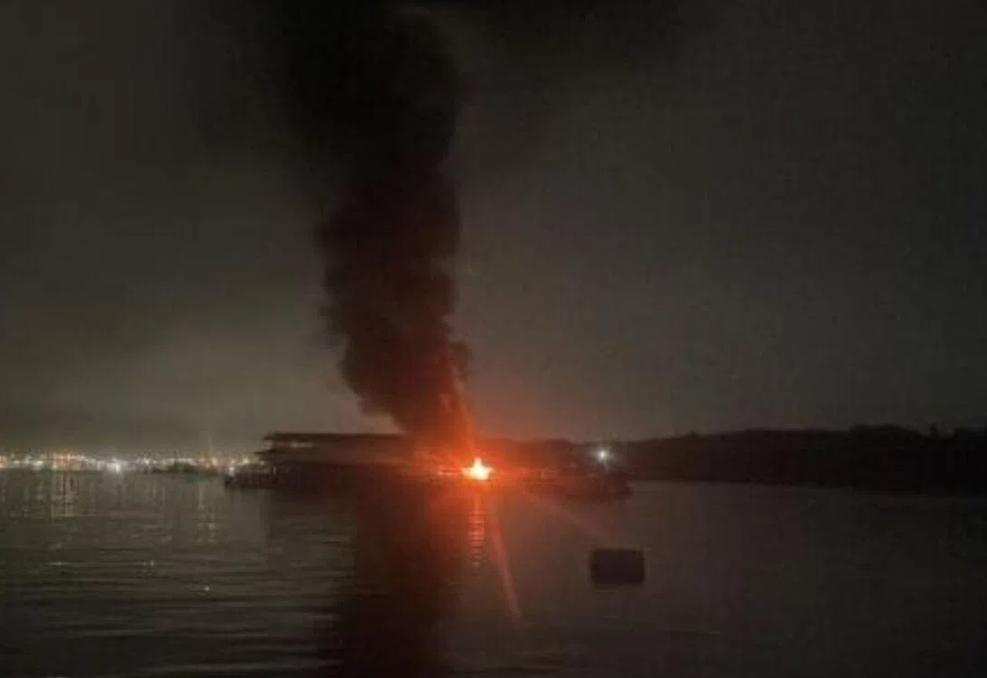
A fire engulfed at least two floating fish farms near Pulau Ubin on the evening of June 24, triggering an urgent response from Singapore's emergency services and neighbouring farm operators. The Singapore Civil Defence Force received the alert shortly after 8.10pm and deployed marine vessels from the Maritime and Port Authority of Singapore and Airport Emergency Service to combat the flames. The operation stretched several hours as firefighters worked to contain the blaze and prevent it from spreading further across the densely packed aquaculture installations in the area.
The incident appears to have originated at a single farm before jumping to adjacent operations, a pattern common in tight-knit aquaculture communities where vessels are moored in close proximity. Preliminary investigations suggest that a lightning strike during a storm targeted the farm's solar panel installation, igniting the fire that subsequently ravaged multiple neighbouring operations. According to Chinese daily Lianhe Zaobao, this electrical discharge proved catastrophic for infrastructure that had previously suffered similar damage without triggering major incidents.
The fish farms are positioned off the Lorong Halus jetty in the Pasir Ris area, strategically located between Pulau Ubin and Pulau Ketam, two small islands that form part of Singapore's important aquaculture zone. This region has long served as a hub for traditional and semi-intensive fish farming, with operators relying on both conventional methods and increasingly on renewable energy sources like solar power to reduce operational costs and environmental impact. The proximity to these islands and the surrounding waters makes the area particularly vulnerable to sudden weather events and electrical storms that can sweep across the Johor Strait.
One farm owner whose operation sustained severe damage estimated losses at approximately S$120,000, a figure that underscores the economic vulnerability of small to medium-sized aquaculture businesses to environmental hazards. Beyond the direct financial toll, this operator revealed a significant constraint affecting recovery prospects: insurance cover does not extend to fire damage at these floating installations. This gap in coverage highlights a broader challenge within Southeast Asia's aquaculture sector, where insurance products have struggled to keep pace with the operational realities and risk profiles of marine-based fish farming.
The destroyed or damaged assets enumerated by the affected owner paint a stark picture of the facility's comprehensive loss. Fish feed stocks, essential generators that power aeration and feeding systems, extensive lengths of fishing nets, solar panels, a working fishing boat, and at least three fish traps were all consumed or rendered useless by the fire. Perhaps most concerning for operational continuity, approximately half of the farm's living fish stock escaped through damaged containment systems, representing both an immediate loss of inventory and a potential ecological consequence if these farmed species establish themselves in local waters.
The farm owner's reflection on previous lightning incidents reveals an important safety dimension often overlooked in discussions of aquaculture infrastructure. Earlier episodes of lightning damage to the solar panels had been detected and managed swiftly because workers were present on-site or nearby, allowing them to respond to emerging fires before conditions became critical. On this occasion, the absence of personnel during the evening hours meant that the initial strike and subsequent fire progression went unobserved until the blaze had already spread to neighbouring farms, amplifying the scale of destruction and complicating suppression efforts.
The broader community response demonstrated the interdependence characteristic of Singapore's fish farming clusters. Operators from nearby farms immediately mobilised to assist in containment and firefighting efforts, working alongside official marine response teams. This collaborative approach, born from practical necessity and shared economic interests, proved instrumental in preventing the fire from consuming additional installations. The involvement of multiple agencies—including the SCDF, maritime authorities, and airport emergency services—reflected the complexity of managing emergencies in Singapore's crowded and strategically important coastal zones.
For Malaysian aquaculture stakeholders and observers, this incident carries several instructive implications. It underscores the vulnerability of floating farm infrastructure to extreme weather events and the inadequacy of current insurance frameworks across the region. It also highlights the operational risks associated with evening and night-time periods when staffing levels are typically reduced. The incident raises questions about whether solar panel installations on fish farms require enhanced lightning protection systems, particularly in equatorial regions prone to severe thunderstorms during monsoon seasons.
The economic impact extends beyond the immediate losses to affected operators. Fire damage necessitates facility reconstruction, equipment replacement, and restocking—processes that drain capital and disrupt supply chains feeding into Singapore's food systems. For a city-state that relies significantly on imported aquaculture products and maintains a small but strategic domestic production capacity, disruptions to local production have ripple effects throughout food supply and retail networks.
Regulatory and safety discussions are likely to follow, with the Fish Farmers Association of Singapore and Singapore Food Agency now examining the incident's circumstances and implications. Questions regarding building codes for floating installations, mandatory safety equipment standards, emergency response protocols specific to marine-based facilities, and insurance product development will probably feature in these conversations. Malaysian authorities overseeing aquaculture in Johor and Selangor, where similar floating farm operations exist, may similarly use this incident as a catalyst for reviewing their own regulatory frameworks and emergency preparedness measures.

