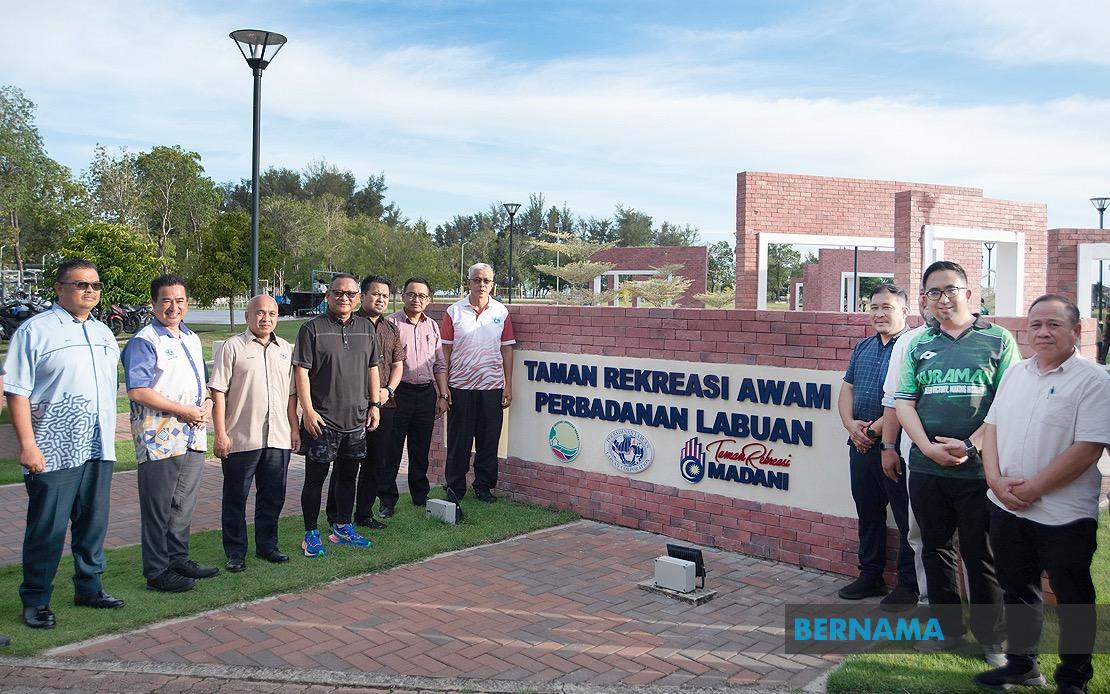
The federal territory of Labuan has taken a significant step toward improving public health infrastructure by unveiling its newly upgraded Public Recreation Park at Tanjung Purun, marking a tangible commitment to fostering more active and engaged communities. The project, which involved an investment of RM495,382 and was executed under the Madani Recreation Park initiative, represents a broader national effort to transform underutilised urban spaces into vibrant hubs for physical activity and social interaction.
Labuan Corporation's chief executive, Rithuan Ismail, articulated the vision behind the initiative during the opening ceremony on June 24, emphasising that the park serves as a comprehensive public amenity designed to welcome residents across all age groups. The leadership framed the development as integral to Labuan's strategic direction, aiming not merely to provide exercise facilities but to cultivate spaces where families and individuals can strengthen their connections to one another while adopting healthier lifestyle patterns. This approach aligns with broader public health initiatives across Malaysia that recognise the critical role community infrastructure plays in disease prevention and wellness promotion.
The transformation of the site demonstrates thoughtful urban planning on the part of local authorities. Originally known as the LDA Field, the location had suffered from years of underutilisation despite its advantageous position in Labuan's downtown core. The deteriorating state of the facility—characterised by inadequate illumination, ageing casuarina trees that created safety hazards, and a general lack of recreational infrastructure—had rendered it an underperforming asset in one of the most accessible parts of town. Rithuan highlighted that planners deliberately selected this venue because of its central location, unencumbered land ownership status, appropriate dimensions, and straightforward access via existing road networks.
The financial backing came from the National Landscape Department under the Ministry of Housing and Local Government in 2024, representing a coordinated funding mechanism that demonstrates how federal resources can be deployed to improve local amenities. This funding structure is particularly relevant for Malaysian municipalities seeking to upgrade public spaces, as it illustrates pathways through which communities can access development capital by aligning projects with national recreational and landscaping priorities. For other towns and cities in the region, the Labuan experience offers a practical template for securing resources for similar infrastructure improvements.
The renovated facility now incorporates a thoughtfully designed array of amenities that cater to diverse recreational needs and preferences. An 800-metre jogging track provides a dedicated space for running and power walking, addressing the growing fitness consciousness among Malaysian urban populations. Complementing the track are outdoor fitness gymnasium stations equipped with modern equipment, concrete seating areas for rest and socialisation, and welcoming landscaping elements including a dedicated garden space. These features collectively transform what was formerly a neglected field into a contemporary recreational destination, particularly attractive during evening hours when residents seek to escape daytime heat.
One of the most notable aspects of the project's design is its emphasis on inclusivity and accessibility. By incorporating multiple activity options—from jogging to strength training to casual seating—the park accommodates individuals with varying fitness levels, ages, and recreational preferences. This inclusive approach reflects evolving international best practices in public space design, where modern parks serve not as specialised facilities for athletes but as true community commons where sedentary retirees, young families, and serious fitness enthusiasts coexist productively.
Looking beyond the current offerings, Labuan Corporation has signalled its intention to further enhance the facility with additional recreational infrastructure. Three open-air courts designated for pickleball and sepak takraw are slated for completion by the end of 2024, expanding the sports and activity options available to residents. Pickleball, a paddle sport that has surged in popularity across Asia and North America, appeals particularly to older adults, while sepak takraw, a traditional Southeast Asian sport combining volleyball and martial arts elements, maintains strong cultural resonance in Malaysia. The dual provision suggests authorities are consciously trying to bridge recreational traditions with contemporary fitness trends.
The successful rollout of the Tanjung Purun facility reflects a recognition within Labuan Corporation that modern urban governance requires investment in quality-of-life infrastructure beyond basic municipal services. Rithuan's public appeal to residents to maintain the facilities underscores a critical partnership dynamic: government provides the infrastructure, but sustained community involvement determines whether such spaces thrive or deteriorate. This collaborative stewardship model has proven effective in other jurisdictions and positions the park's long-term success on shared responsibility rather than government-only maintenance cycles.
For the broader Southeast Asian context, the Labuan project exemplifies how mid-sized urban centres in the region are increasingly prioritising accessible recreation as both a public health intervention and a community development tool. Rising rates of obesity, sedentary behaviour, and lifestyle-related diseases have prompted municipal leaders to reconsider park investment not as amenity but as essential health infrastructure. The relatively modest investment by Malaysian standards—RM495,382—demonstrates that substantial improvements in public recreational capacity need not require enormous capital outlays, making the model potentially replicable across smaller towns and cities facing similar resource constraints.
The timing of the park's opening also reflects Malaysia's broader Madani governance framework, which emphasises people-centric development and social cohesion. By dedicating resources to inclusive public spaces, authorities are investing indirectly in community resilience, social bonding, and mental health outcomes—benefits that often escape traditional economic accounting but significantly influence overall population wellbeing. For residents of Labuan, the park represents a tangible manifestation of government commitment to their quality of life beyond economic development and commercial activity.
Looking forward, the success of Tanjung Purun may influence recreational planning across other Malaysian federal territories and municipalities. As urbanisation accelerates and public health challenges intensify, the imperative to create accessible, well-designed recreational spaces grows correspondingly more urgent. Labuan's experience—showing how a previously neglected urban site can be strategically revitalised into a thriving community asset—provides a compelling demonstration of what is possible when planning, funding, and execution align around clear public benefit objectives. The coming months will reveal whether the facility achieves its ambition of becoming Labuan's preferred evening destination and whether the envisioned sports courts successfully attract diverse participant communities.

