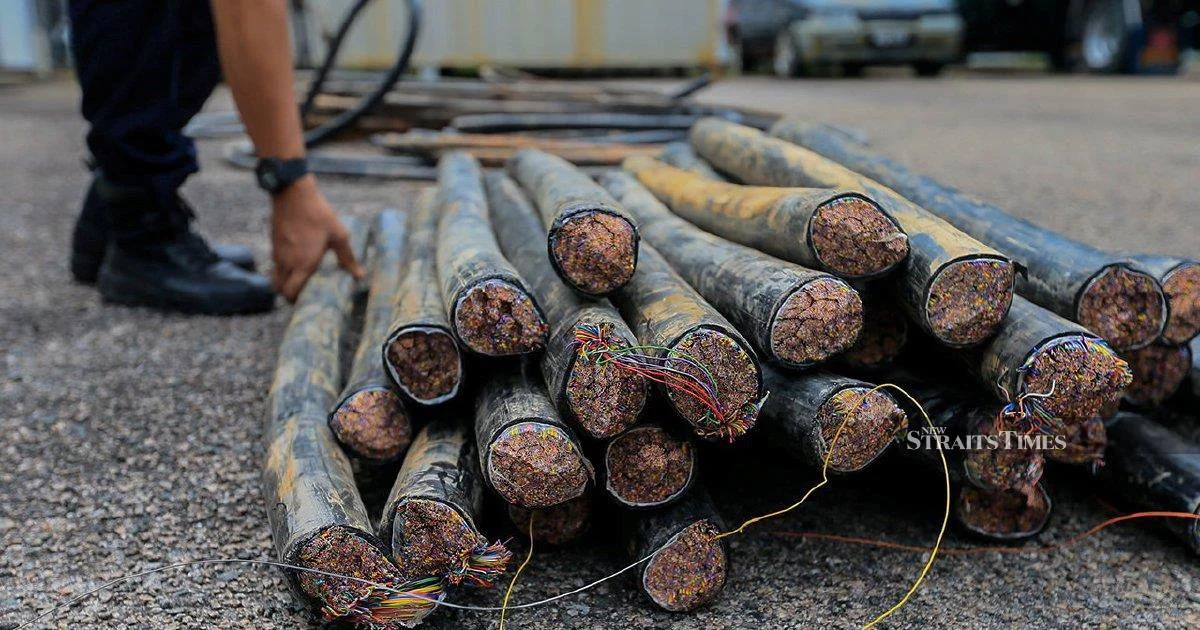
Kuala Lumpur's police force has recorded a marked decline in cable theft incidents during the opening months of 2025, signalling potential success in enforcement efforts against a crime that has plagued the capital's infrastructure for years. Between January and May alone, authorities documented 71 cases involving the theft of cables, a dramatic reduction when measured against the 205 incidents that occurred throughout the entirety of 2024. The improvement reflects intensified police operations and coordination between law enforcement and utility companies struggling to protect critical infrastructure from organised criminal networks.
The shift represents a turning point in tackling cable theft, which has historically disrupted telecommunications services, electricity supply, and internet connectivity across greater Kuala Lumpur. These crimes impose substantial costs on utility providers, forcing emergency repairs and service restorations that cascade into economic losses across the broader economy. Residents and businesses have frequently experienced service outages lasting hours or even days when thieves strip copper and aluminium cables from underground conduits and overhead lines. The reduction in theft cases therefore carries implications extending well beyond mere crime statistics into service reliability and consumer satisfaction.
Police have arrested 85 suspects so far in 2025, indicating that enforcement activity has intensified alongside preventive measures. These arrests suggest authorities have moved beyond reactive responses to stolen cable reports and are proactively targeting organised theft rings responsible for repeated incidents. The surge in apprehensions relative to previous years suggests improved intelligence gathering, surveillance operations, and coordination with informants within communities where theft rings operate. Such targeted enforcement against organised crime networks proves more effective than responding to individual incidents after damage has already occurred.
The cable theft phenomenon emerged partly from the accessibility of valuable metals within telecommunications and electrical infrastructure. Copper and aluminium command ready markets among scrap metal dealers, providing thieves with quick cash conversion of stolen materials. Organised syndicates have exploited this market demand by orchestrating systematic theft campaigns across multiple districts simultaneously, sometimes employing lookouts and securing routes to minimise apprehension risks. Breaking these supply chains—from theft through to sales at scrap yards—requires coordination across multiple police units and commercial sector partners.
Utility companies operating in the Federal Territory have ramped up their own security measures in response to persistent theft. Enhanced surveillance systems, increased patrols, and improved fencing around vulnerable infrastructure have created deterrents that complement police enforcement. Some service providers have invested in cable markers and tracking systems that make stolen materials harder to sell profitably. These combined private and public sector responses appear to have shifted the risk-reward calculation that encourages theft, persuading potential offenders to pursue alternative criminal enterprises.
The improved figures come at a time when Malaysian law enforcement has strengthened focus on infrastructure crimes affecting economic activity. Cables represent essential conduits for modern commerce, and their loss disrupts everything from financial transactions to healthcare services dependent on continuous power supply. Hospitals, banking centres, and data facilities within Kuala Lumpur depend on robust electrical and telecommunications networks that cable theft threatens to undermine. Authorities recognise therefore that prevention of infrastructure crime supports broader economic stability.
However, the reduction from 205 cases to a projected figure around 170 for 2025 still indicates substantial ongoing criminal activity. Cable theft has not been eliminated but rather suppressed to lower levels through concentrated enforcement. Vigilance remains essential because organised crime networks demonstrate adaptability, shifting theft targets or methods when police pressure increases in particular areas. Sustaining the current progress requires maintaining police deployment levels and continued coordination with utility companies and community informants.
The decline may also reflect seasonal patterns, as weather conditions, festival periods, and economic activity fluctuate throughout the year. January through May encompasses the Chinese New Year period and early monsoon season when cable theft patterns sometimes shift. Full-year comparisons will prove more reliable than early-period snapshots for determining whether lasting improvement has taken root. Nevertheless, current figures suggest that 2025 may deliver substantially fewer cable theft incidents than 2024 across Kuala Lumpur's sprawling urban landscape.
Looking forward, police and utility providers face the challenge of consolidating gains while addressing root causes attracting offenders to cable theft. Poverty, unemployment, and lack of alternative income sources drive some individuals toward theft-related crimes, suggesting that comprehensive solutions require economic development components alongside enforcement. Training and employment programmes targeting communities most affected by cable theft crime could reduce offender recruitment pools. Simultaneously, strengthening scrapping industry regulation and requiring sellers of copper and aluminium to document sources could reduce the downstream market demand motivating theft.
For Malaysian cities beyond Kuala Lumpur struggling with similar cable theft challenges, the capital's experience offers instructive lessons about coordinated enforcement, utility sector partnership, and sustained police commitment yielding measurable results. Cable theft prevention requires persistence and willingness to maintain high-profile operations even when dramatic incident reductions create perceptions that the problem has been solved. The 71 cases recorded in just five months of 2025 remind authorities and communities that vigilance must continue to prevent organised crime from regaining lost ground.

