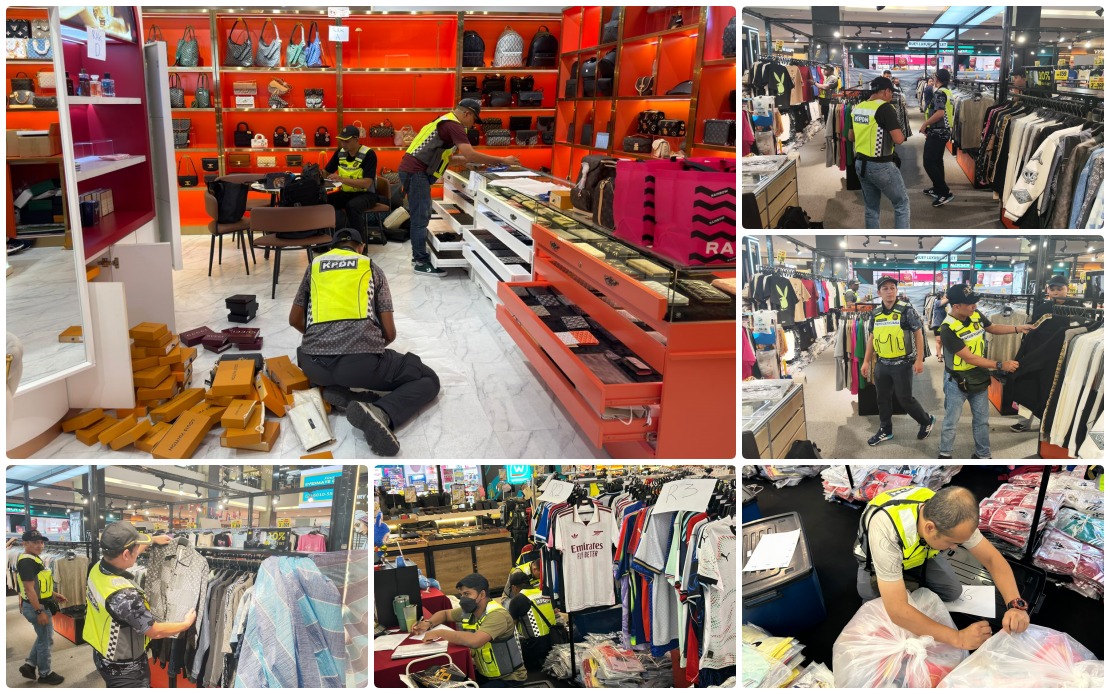
The Ministry of Domestic Trade and Cost of Living (KPDN) has moved decisively against a suspected counterfeiting network, conducting coordinated raids on three premises in Johor Bahru on Monday, June 15, and confiscating merchandise with an estimated value of RM600,000. The enforcement action represents a significant blow to organised trademark infringement in the state and underscores the ministry's commitment to protecting both consumer interests and intellectual property rights in an era when counterfeit goods increasingly penetrate mainstream retail channels.
According to KPDN's enforcement director-general Datuk Azman Adam, the operation culminated weeks of careful intelligence gathering targeting traders who had established distribution networks across major supermarkets and smaller retail outlets. The investigation revealed a sophisticated operation with multiple layers, suggesting the suspects were not merely retailers but potentially central distributors supplying counterfeit inventory to other merchants across the region. This structure indicates the operation had achieved a level of market penetration that warranted the coordinated multi-site response.
The seized items encompassed a diverse range of luxury goods categories, including clothing, handbags, wallets, belts, and fragrances, all bearing trademark symbols applied without authorisation from legitimate brand owners. The breadth of product categories seized indicates these were not opportunistic sellers dabbling in counterfeits but rather specialists operating with sufficient scale to maintain inventory across multiple product lines. Supporting documents recovered during the raids further suggest systematic business operations designed to sustain ongoing distribution rather than temporary street-level hawking.
Investigators determined that reasonable grounds existed to proceed under Section 102(1)(c) of the Trademark Act 2019, the statute governing possession of goods bearing wrongfully applied trademarks for trading purposes. This legislation represents Malaysia's primary legal framework for combating counterfeiting at the point of possession and distribution. The threshold for triggering these provisions is deliberately broad, capturing not only manufacturers and primary distributors but also secondary dealers who knowingly handle counterfeit merchandise, thereby expanding enforcement reach across supply chains.
Authorities have detained four individuals including the premises owner and a caretaker to facilitate the investigation. Their cooperation—or lack thereof—will likely prove crucial in determining the operational scope of the network and identifying upstream sources of the counterfeit goods. The inclusion of custodial staff suggests investigators are examining the day-to-day management of the operation, potentially seeking information about supplier relationships, payment arrangements, and customer networks that could lead to dismantling the broader criminal enterprise.
The penalty framework for trademark offences in Malaysia reflects escalating seriousness depending on offender type and recidivism. Individual offenders face maximum penalties of RM10,000 per item or three years imprisonment for first offences, with penalties doubling to RM20,000 per item and five years imprisonment for subsequent violations. Corporate entities confront significantly steeper fines, with maximums of RM15,000 per item escalating to RM30,000 per item for repeat offences. These tiered penalties are designed to deter large-scale commercial operations while still holding individual perpetrators accountable.
For Malaysian consumers and legitimate businesses, counterfeit merchandise presents multifaceted risks that extend beyond mere financial loss. Fake luxury goods often employ substandard materials and manufacturing processes that compromise durability and safety, particularly concerning in categories such as cosmetics and fragrances where chemical composition directly affects consumer wellbeing. Additionally, counterfeit networks generate revenue streams that frequently finance broader criminal activities, creating systemic economic costs invisible to the individual purchaser but measurable at the national level through lost tax revenue and enforcement expenditures.
KPDN's intensified focus on counterfeit distribution reflects recognition that retail-level enforcement must evolve to address organised trafficking networks. Traditional street vendor approaches prove inadequate against sophisticated operators maintaining relationships with major retail chains, suggesting the agency has adapted its intelligence and operational capabilities to track distribution patterns across larger commercial entities. The recovery of business documentation during these raids indicates investigators are pursuing documentary evidence that could establish knowledge, intent, and commercial scale—elements often proving decisive in prosecutions.
The Southeast Asian context amplifies the significance of this enforcement action. The region has long served as a transshipment hub for counterfeit goods destined for regional markets, with Malaysia's geographic position and port infrastructure making it a natural convergence point for illicit trade flows. Crackdowns targeting distribution hubs therefore generate deterrent effects extending beyond individual cases, signalling to transnational trafficking networks that Malaysia maintains active enforcement presence. This is particularly important given the region's expanding middle class and growing consumer appetite for branded goods, conditions that create substantial market demand that unscrupulous traders readily exploit.
The case also highlights evolving criminal sophistication in counterfeiting operations. Rather than manufacturing counterfeit items domestically, many contemporary networks source finished products from jurisdictions with weaker enforcement and simply manage distribution and retail relationships locally. This model reduces operational complexity and capital requirements while concentrating prosecutorial challenges on the distribution phase. Malaysia's focus on retailer-level enforcement represents a rational response to this structural reality, though long-term solutions require international cooperation targeting manufacturing sources and transnational supply chains.
KPDN has signalled its determination to maintain sustained enforcement momentum against trademark infringement, noting that operations will continue intensifying to protect intellectual property rights and consumer interests. This commitment matters considerably for the business environment, as trademark protection correlates directly with investment in branded goods distribution and retail sector confidence. Malaysian companies building legitimate brand equity require assurance that counterfeit competition will face vigorous enforcement, otherwise incentives to invest in authentic distribution networks diminish relative to illicit alternatives.
The broader implications extend to consumer protection frameworks in Malaysia. When counterfeit goods penetrate major retail chains, they undermine the trust consumers place in established distribution channels and quality assurances associated with supermarket purchasing. Public awareness of enforcement successes like this Johor operation helps restore confidence in retail environments while educating consumers about the safety and authenticity risks associated with counterfeit merchandise. The visibility of the RM600,000 seizure value also demonstrates tangible returns on enforcement investment, justifying continued agency resourcing and legislative support.

