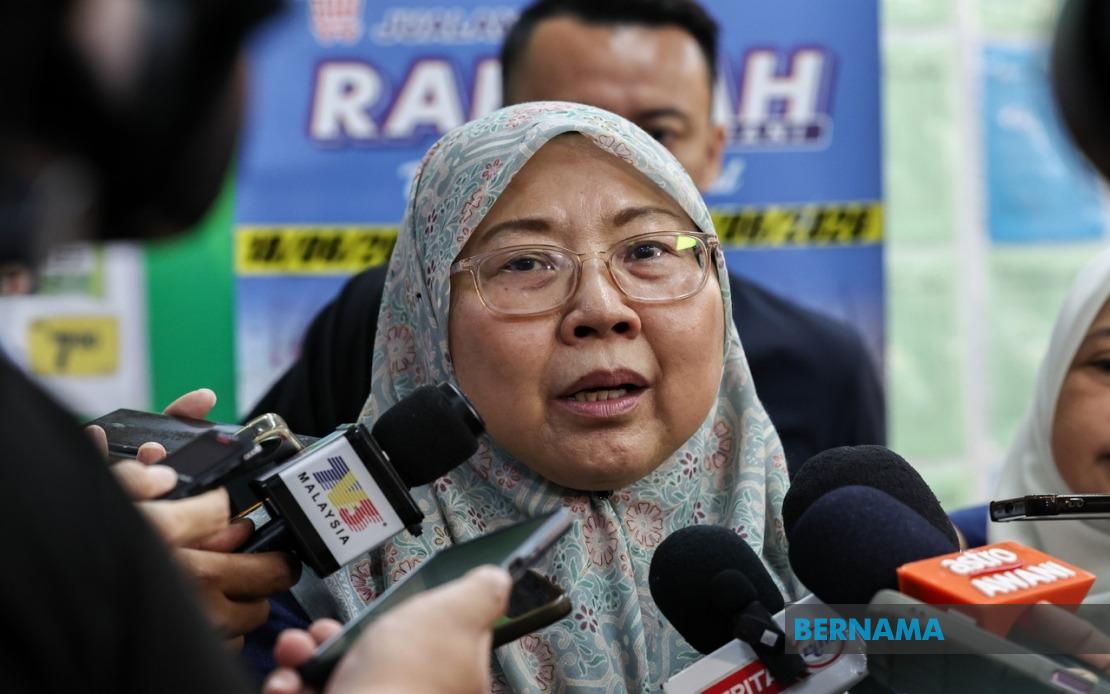
The Ministry of Domestic Trade and Cost of Living (KPDN) has moved to quell concerns about potential shortages of everyday necessities in Johor and Negeri Sembilan as voters prepare for imminent state elections, declaring that current inventory levels remain robust despite headwinds from international supply chain disruptions linked to conflicts in West Asia.
Deputy Minister Datuk Dr Fuziah Salleh outlined a comprehensive framework of preventive measures designed to forestall disruptions to critical supplies in the lead-up to the July 11 Johor poll, when an influx of officials and visitors from other states is expected to create additional demand pressure. The timing of her assurances reflects the government's recognition that election periods can strain retail networks and testing public confidence in affordability during periods of heightened economic sensitivity.
At the heart of the ministry's supply strategy lies a streamlined distribution channel for subsidised cooking oil that bypasses traditional wholesaler networks entirely. Under this revised system, packaging entities now transport their products directly to retail points of sale, a structural change intended to reduce handling steps, minimise delays, and eliminate intermediaries who might otherwise create bottlenecks. This operational redesign represents a substantive departure from conventional supply chains and underscores mounting government focus on efficiency.
Johor's monthly allocation of cooking oil stands at approximately 3,000 metric tonnes, flowing through a network of 18 repackers and funnelling into 95 different points of sale spanning supermarket chains including Econsave. The scale of this infrastructure—coordinating nearly two dozen repackers across more than nine dozen retail locations—reveals the complexity of maintaining subsidised commodity availability across a large state. Dr Fuziah's on-site verification at Econsave Taman Daya documented that stock levels remain consistent, with roughly 100 cartons arriving daily to service neighbourhood consumption patterns.
To prevent diversion of these price-controlled goods to unintended beneficiaries, the ministry has enforced rigorous verification protocols at checkout stations. Customers must now scan mobile applications or produce identity documents to confirm Malaysian citizenship before purchasing subsidised cooking oil, a measure designed to block potential leakages to non-citizens or informal resellers. Such checkpoint controls reflect deepening official concern about leakage in targeted subsidy schemes, a recurring issue that threatens both budget efficiency and equity.
Beyond cooking oil, the broader government subsidy initiative known as the Rahmah MADANI Sales Programme (PJRM) has expanded dramatically across the nation. Between the beginning of January and mid-June 2026, the programme executed roughly 13,692 activation events nationwide, reaching unprecedented scale. Within Johor alone, the initiative deployed 920 separate sessions spanning all 56 state constituencies, attracting 2.3 million visitor interactions and recording in excess of 1.46 million individual transactions across the state.
These participation figures carry political weight beyond their raw numerical import. The sheer frequency of these events and their saturation across all state constituencies suggests an administration committed to maintaining visible cost-of-living relief during an election cycle. For ordinary Malaysians wrestling with inflation and economic uncertainty, such programmes offer tangible price relief and signal governmental attentiveness to household budgetary pressures—messaging particularly potent during electoral campaigns.
The timing of these measures reflects a broader pattern in Malaysian governance whereby election periods trigger heightened attention to consumer affordability. Rising international shipping costs and regional instability in West Asia create genuine logistical headwinds that could translate into retail shortages or price spikes. By proactively demonstrating supply readiness and subsidised-goods accessibility, the government seeks to stabilise public expectations and prevent panic buying that would worsen perceived scarcity.
Johor's position as Malaysia's second-largest state by population and economy makes its electoral calendar particularly significant. The state holds 56 constituencies and attracts migration flows from neighbouring regions, making it sensitive to both local and national economic cycles. A smooth election period with adequate consumer goods availability would support the incumbent coalition's narrative of competent economic stewardship, while any shortage incidents would invite opposition critiques of mismanagement.
The Johor election schedule itself runs compressed. Candidate nominations fall on June 27, early voting occurs on July 7, and the main polling day arrives on July 11. This condensed timeline leaves minimal room for correcting supply disruptions should they emerge during the campaign period, underscoring the ministry's emphasis on advance preparation and system redundancy. The direct-to-retail distribution channel for cooking oil may serve partly as insurance against last-minute logistical failures.
Southeast Asia's economic context amplifies these domestic considerations. Regional supply chains remain vulnerable to Middle Eastern tensions, port congestion in key transit routes, and volatile shipping costs that can fluctuate dramatically month to month. Malaysian policymakers, acutely aware that rising import costs ultimately ripple through to consumer prices, have invested in buffer systems and distribution innovations designed to absorb external shocks while maintaining price stability for price-sensitive households.
The PJRM programme's scale and reach also reflect attempts to address inequality in subsidy access. By distributing events across all state constituencies and executing nearly 14,000 sessions nationwide, the government aims to ensure that urban and rural populations alike enjoy comparable access to discounted essentials, a challenge that plagued earlier subsidy schemes concentrated in major cities. The programme's penetration into all 56 Johor constituencies signals attention to this equity dimension.
Looking ahead to the July 11 election and beyond, the ministry's supply assurances will face practical validation. Any shortage episodes, long checkout queues, or rationing incidents would undermine government credibility on the cost-of-living issue—a perennial priority for Malaysian households. Conversely, smooth supply flow and stable prices during the election period would reinforce official messaging about economic management capability, a narrative advantage during campaign periods when voters reassess their electoral preferences.

