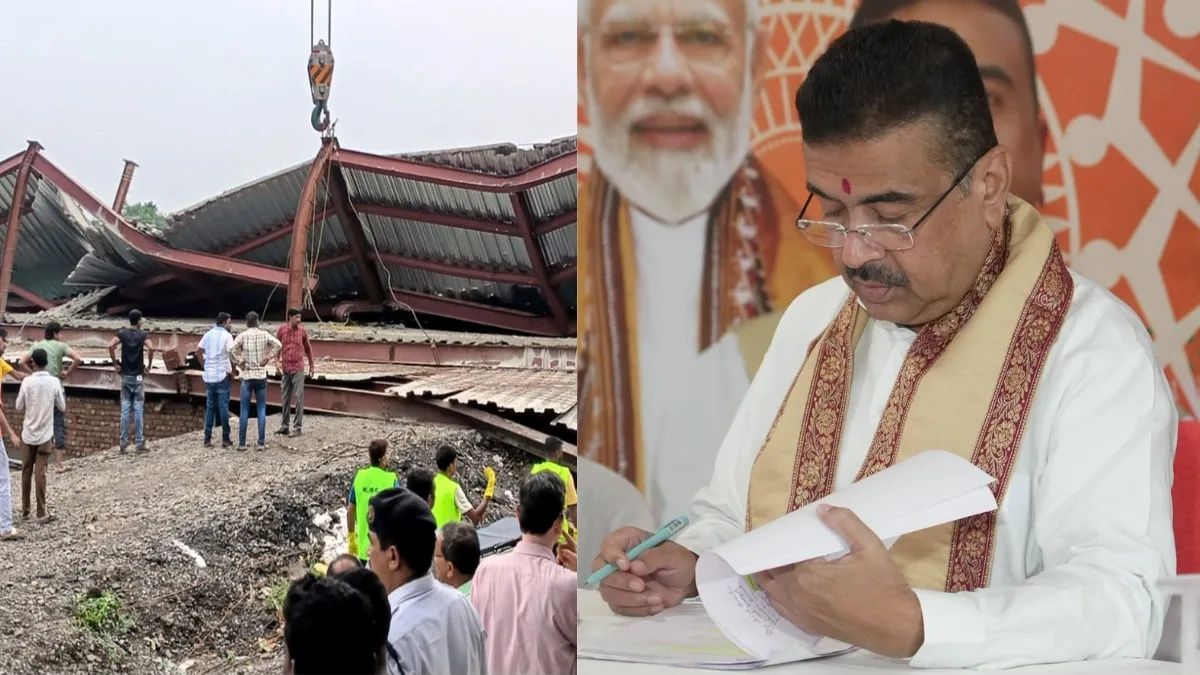
The grim recovery effort at a collapsed warehouse in the Taratala area of Kolkata entered its second day with rescue teams continuing to search for survivors amongst the rubble, as confirmed death tolls reached 11 on Thursday afternoon when another body was recovered at SSKM Hospital's Trauma Care Centre. The mounting casualty figures underscore the gravity of the structural failure that has shocked the eastern Indian metropolis and reignited concerns about building safety standards in one of India's most densely populated cities.
The disaster has triggered an unprecedented government response that goes well beyond conventional emergency management, signalling the determination of West Bengal authorities to prevent similar incidents. Personnel deployed from the Indian Army, the National Disaster Response Force (NDRF), and allied agencies maintained their presence at the collapse site throughout Thursday, though officials acknowledged that numerous workers remained unaccounted for and likely trapped beneath tons of debris. The seamless coordination between central government agencies and state authorities demonstrated the crisis's significance within India's administrative hierarchy, transforming an industrial accident into a matter of interstate governance.
During a critical address to the state assembly, West Bengal Chief Minister Suvendu Adhikari launched a comprehensive indictment of the previous Trinamool Congress administration of the Kolkata Municipal Corporation, attributing the disaster to systematic regulatory failures accumulated over years of mismanagement. Adhikari presented documentary evidence showing that the Taratala warehouse had received municipal approval despite containing fundamental architectural deficiencies that should have triggered immediate rejection. By displaying official records bearing signatures of the former KMC Mayor Firhad Hakim, Adhikari established a direct chain of responsibility linking the catastrophe to decisions made during TMC's tenure running the city's municipal affairs, transforming the accident from purely technical failure into a politically charged accountability crisis.
The Chief Minister's allegations extended beyond mere negligence, suggesting that institutional corruption had festered within the municipal approval machinery. He characterised the pattern of approving structurally flawed buildings as symptomatic of a broader culture where "cut money"—a colloquial term for informal payments and bribes—had become normalised within the approval process. These accusations pointed to systemic breakdown rather than isolated lapses, implying that multiple officials across different administrative tiers had collaborated to rubber-stamp dangerous construction projects in exchange for personal financial benefit. The scale and consistency of such allegations suggested that the warehouse collapse represented not an aberration but rather the inevitable consequence of corrupted building governance.
Investigative action moved swiftly, with five individuals already arrested within hours of the structural failure. Those detained included the construction company's site supervisor, the contractor responsible for fabricating the warehouse's iron framework, the individual who had leased the land, a labour supply agent affiliated with Trimex contracting services, and a broker implicated in facilitating the building plan's approval through KMC channels. The arrest of this diverse group—spanning supervisory, technical, contractual, and administrative roles—reflected authorities' determination to pursue accountability across the entire construction and approval ecosystem rather than scapegoating individual workers or lower-ranking staff members. However, the primary accused, identified as Azgar, remained at large, prompting an active manhunt.
Recognising the systemic nature of the crisis, the Chief Minister announced a radical four-week moratorium on all construction activity throughout Kolkata Municipal Corporation's jurisdiction and extending across surrounding municipalities including Rajarhat-New Town, Maheshtala, Budge Budge, Pujali, Bishnupur, Sonarpur, and Baruipur. This sweeping prohibition exempted only essential services infrastructure, effectively halting hundreds of active construction projects across the broader Kolkata metropolitan region. The suspension period would serve dual purposes: providing immediate relief from further accident risks while creating time and administrative space for comprehensive safety reviews.
During this construction hiatus, authorities would conduct an exhaustive audit of all previously approved building plans across the affected municipalities. This unprecedented examination represented a fundamental questioning of past regulatory decisions, implicitly acknowledging that the warehouse collapse was symptomatic of endemic defects within the approval framework rather than an isolated oversight. The scope of the audit suggested that scores or potentially hundreds of buildings constructed under previous administrations might warrant recertification or structural reassessment, pointing to the potential scale of the underlying regulatory failure.
To oversee this monumental task, the Chief Minister established a high-level multidisciplinary committee chaired by Additional Chief Secretary Rajesh Pandey. The committee's composition reflected sophisticated recognition that building safety requires expertise beyond municipal administration, incorporating senior civil service officials alongside technical specialists from India's premier engineering institutions and agencies. The inclusion of IIT Kharagpur—India's premier engineering school—alongside Rail India Technical and Economic Service (RITES) and Indian Railway Construction Limited (IRCON) suggested the government would leverage railway sector expertise, which had developed sophisticated safety protocols through managing high-risk infrastructure. The Fire Services Department and Public Works Department contributed their specialised knowledge of structural integrity and building systems.
The Chief Minister delivered an unambiguous warning regarding consequences for those found culpable, pledging that convicted individuals would face imprisonment supplemented by asset confiscation. He indicated that government might utilise seized property to generate compensation funds for disaster victims and their families, essentially conscripting the guilty parties' personal wealth toward victim remediation. This threat of enhanced punitive measures—moving beyond standard sentencing—communicated the government's intent to make catastrophic building failures extraordinarily costly for perpetrators, potentially serving as deterrent against future regulatory corruption.
For Malaysia and broader Southeast Asia, the Kolkata warehouse collapse carries sobering implications. Rapid urbanisation across the region has frequently prioritised construction speed over regulatory rigour, particularly in rapidly developing metropolitan areas where construction approvals sometimes occur within opaque administrative processes vulnerable to informal payment mechanisms. The incident demonstrates how regulatory shortcuts and institutional corruption can transform into mass casualty events, validating concerns held by urban safety advocates across Southeast Asia. The swift government response—including construction moratoriums, institutional audits, and cross-agency oversight—offers a model for crisis management, though implementing such measures requires political will that transcends partisan calculations and genuine commitment to public safety over developmental expediency.

