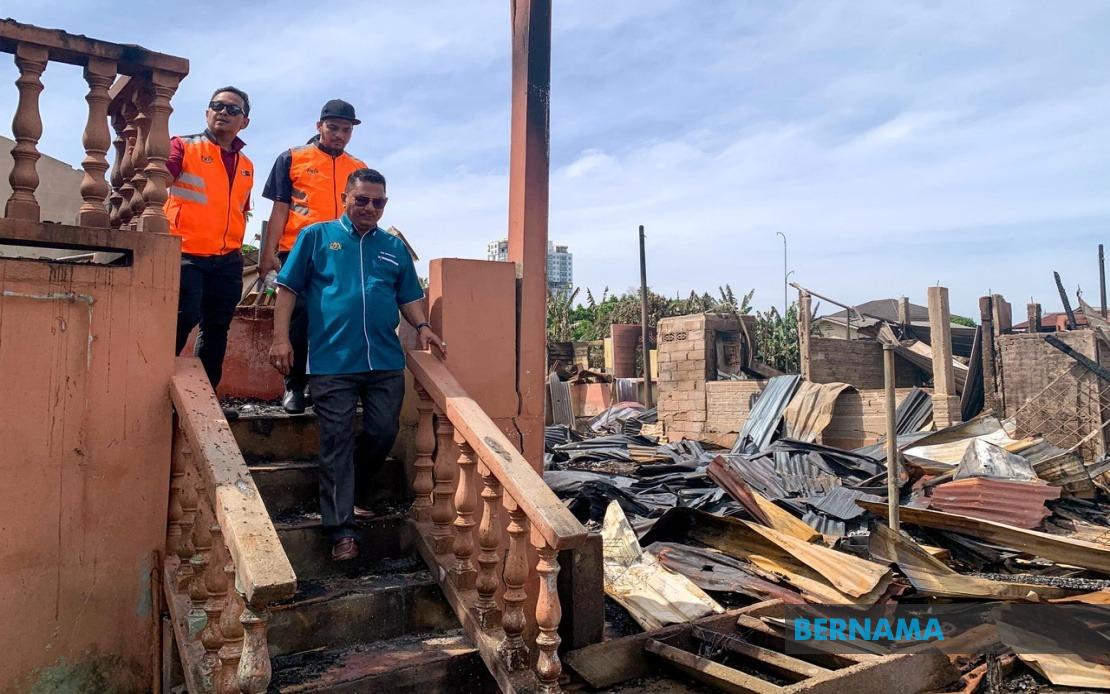
The devastating fire that consumed 27 houses in Kampung Gok Kapur, Kota Bharu on June 8 has been traced back to a seemingly mundane household activity—the burning of a pile of papers in a kitchen using an open flame. The Kelantan Fire and Rescue Department's forensic investigation team has concluded that the incident resulted from direct application of a gas lighter to papers being burned in the kitchen area of one of the affected residences, a finding that underscores the serious risks posed by open-flame burning practices within homes.
Kelantan JBPM director Farhan Sufyan Borhan explained that physical evidence and witness statements gathered during the investigation confirmed the exact sequence of events. The open flame from the gas lighter ignited the paper pile, which then caused surrounding flammable materials in the kitchen to catch fire. What began as a localized kitchen incident rapidly escalated, spreading through the structure of the initial house and subsequently jumping to neighbouring properties with alarming speed.
The investigation determined that negligence played a central role in the incident. While burning papers may have been intentional, the manner in which it was conducted—using an uncontrolled open flame indoors in close proximity to residential structures—violated basic fire safety practices and demonstrated a lack of awareness regarding household fire hazards. Such investigations often reveal that residents underestimate how quickly fires can spread in residential areas where houses are typically built close together.
This incident has proven particularly significant for Malaysia's fire safety discourse. In many parts of the country, including rural areas of Kelantan, residents continue to practise open burning for waste disposal, often without fully appreciating the consequences when done near or within residential zones. The Kampung Gok Kapur disaster serves as a stark reminder that fire risk management must extend beyond commercial and industrial settings into everyday household practices.
The human toll of the fire extended far beyond property damage. A total of 110 villagers were rendered homeless as a result of the blaze, forcing them to seek temporary shelter at the Mukim Banggol Mosque, which was hastily converted into an evacuation centre. While fortunately no fatalities were reported in the incident, the displacement of over a hundred residents highlights the cascading social and economic impacts that uncontrolled fires can inflict on tight-knit rural communities where many residents may lack adequate insurance coverage.
The fire investigation report, upon completion, will be forwarded to police and other relevant authorities to determine whether further action is warranted. Such referrals typically examine whether criminal negligence charges might apply or whether civil liability can be established. The process ensures that accountability mechanisms function properly and that findings contribute to broader public safety improvements.
Authorities have seized the moment to issue widespread warnings to the public about the dangers of open-flame burning, particularly in residential and peridomestic areas. The Kelantan JBPM explicitly advised residents to exercise extreme caution when using any open flame sources and to completely avoid burning activities near homes. This guidance reflects international best practices in fire prevention, which consistently identify residential areas as zones where open burning should be prohibited due to concentration of combustible materials and proximity of properties.
For Malaysian readers, the Kampung Gok Kapur incident carries particular relevance given similar settlement patterns across rural states in Peninsular Malaysia and East Malaysia. Many communities continue relying on open burning for waste management due to limited access to waste collection services. Such practices, while perhaps economically rational in the absence of alternatives, carry substantial fire risk that can be mitigated through simple awareness and behaviour modification.
The incident also raises questions about fire prevention infrastructure and public education in rural Malaysia. While urban areas typically benefit from better-resourced fire departments and more intensive public awareness campaigns, rural communities sometimes receive less attention despite potentially facing comparable or greater fire risks due to building density and construction materials. Improving fire literacy—basic knowledge about ignition sources, fire spread, and prevention—could significantly reduce incident frequency in vulnerable areas.
From a Southeast Asian perspective, the case illustrates broader challenges facing the region. Rapid urbanization and infrastructure development have not always kept pace with traditional settlement patterns in rural areas, creating pockets where fire risk remains elevated. Countries throughout Southeast Asia continue grappling with similar issues, particularly in informal or semi-formal housing areas where population density, building construction, and proximity of properties combine to create conditions conducive to rapid fire spread.
The investigation's findings also underscore the importance of professional forensic capabilities within fire services. Malaysia's JBPM, equipped with dedicated forensic units, was able to determine the precise cause and contributing factors. However, ensuring that all fire departments across the country maintain similar capacity remains an ongoing challenge, particularly in smaller or less-resourced jurisdictions.

