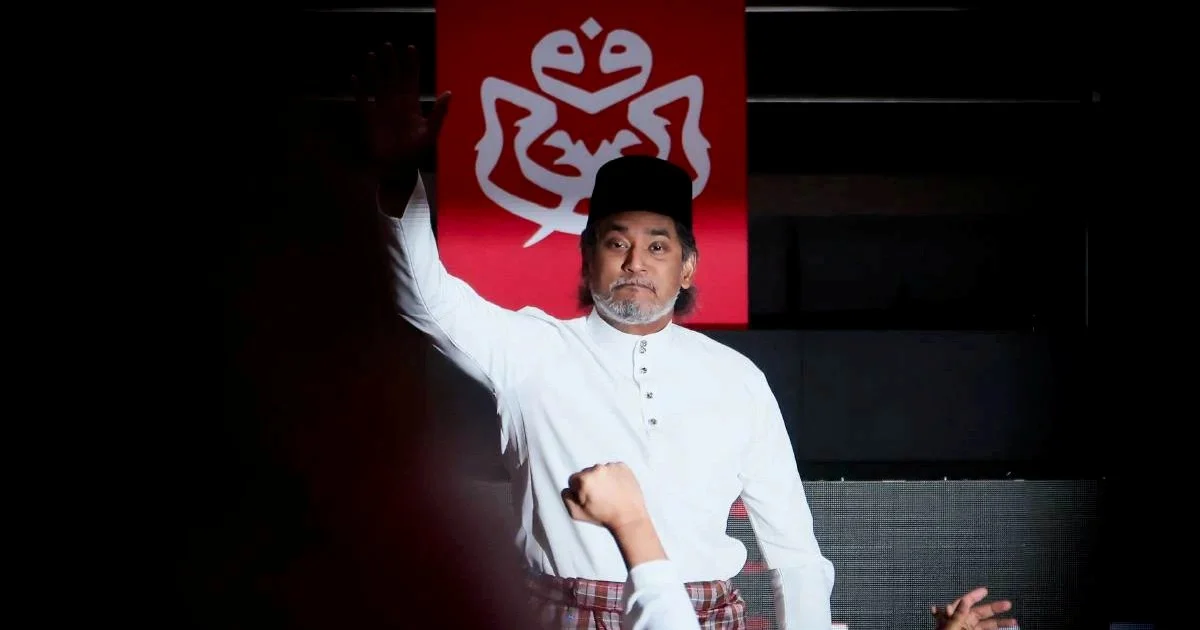
Former Rembau member of parliament Khairy Jamaluddin has handed the decision over to Umno's central leadership regarding his potential candidacy in the Negri Sembilan state election scheduled for August 1. The move signals a departure from his previous parliamentary tenure and reflects the fluid nature of candidate selection processes within the ruling coalition as the state gears up for electoral contests.
Khairy's approach to the matter highlights a pragmatic political stance, whereby senior party members increasingly defer to institutional party machinery rather than making unilateral decisions about their electoral participation. This reflects broader shifts within Umno following recent organisational restructuring and the consolidation of decision-making authority at the apex of party administration. By positioning himself as amenable to whatever the party determines, Khairy has effectively insulated himself from criticism regardless of the outcome, while simultaneously signalling his continued relevance to party deliberations.
The Negri Sembilan state election represents a significant test for Barisan Nasional's continued dominance in the state, particularly given the competitive landscape across Malaysia's central region. Umno, as the largest component party within the coalition, faces the task of fielding candidates who can appeal to diverse constituencies while maintaining party cohesion. The state's political dynamics have shifted considerably since Khairy's tenure as Rembau MP, reflecting changes in voter sentiment and demographic transitions across constituencies.
Khairy's previous work as Rembau's representative provided him with a substantial voter base and established political infrastructure, yet his willingness to cede candidacy decisions to the party suggests either confidence in favourable treatment or a strategic retreat from frontline electoral competition. This calculus differs markedly from the assertive positioning many MPs adopted during candidate selection processes following the 2022 general election, indicating possible shifts in how influential party members approach nomination discussions.
The timing of this deferment comes amid broader jockeying for position within Umno ahead of crucial elections. Negri Sembilan has historically been a Barisan stronghold, yet recent years have witnessed tighter contest margins and shifting demographic preferences that command increased attention from party strategists. The selection of candidates therefore carries implications extending beyond individual ambitions, touching upon party strategy and resource allocation across competitive seats.
For Malaysian political observers, Khairy's restraint in the candidacy question underscores how party hierarchies have reasserted control over nomination processes after the tumultuous 2020-2022 period. While individual MPs previously exercised considerable autonomy in deciding whether to recontest, the current environment appears to emphasise centralised decision-making that grants party leaders greater latitude in tactical positioning. This structural shift potentially enhances coordination across campaigns but may simultaneously constrain candidate diversity and independent initiative.
The former youth and sports minister maintains considerable influence within Umno circles, particularly among younger party members and those advocating for organisational modernisation. His deference to party leadership, therefore, should not be interpreted as political diminishment but rather as sophisticated navigation of contemporary intra-party dynamics. Such positioning preserves his options while avoiding confrontation with senior figures responsible for candidate selections.
Negri Sembilan's electoral significance extends beyond state-level governance, as results influence perceptions of Barisan Nasional's national standing and Umno's capacity to retain its traditional strongholds. The state encompasses diverse constituencies ranging from urban centres to rural agricultural regions, each presenting distinct electoral challenges and requiring tailored campaign approaches. Candidate selection thus reflects careful consideration of local dynamics and national strategic imperatives.
The August 1 election date provides compressed timeframes for campaigning compared to typical general election cycles, placing additional pressure on parties to deploy experienced candidates capable of rapid mobilisation. Khairy's availability, should party leadership determine his candidacy beneficial, would provide established political machinery and voter recognition. Conversely, the party may opt for fresh candidates perceived as better aligned with contemporary voter priorities or representing generational transitions within the party structure.
Umno's approach to nominations in Negri Sembilan will inevitably influence broader coalition dynamics, as other Barisan component parties make their own candidate determinations. The coordination challenges facing multi-party coalitions require careful balance between individual member aspirations and collective strategic objectives, a tension that becomes particularly acute during contested elections where seat allocations carry significant consequences.
Khairy's decision to await party guidance rather than independently announcing candidacy reflects evolved norms within Malaysian political parties, where institutional loyalty increasingly trumps individual prerogatives. This represents a departure from earlier eras when established MPs could assume renomination as default outcomes. The contemporary environment demands explicit endorsement from party hierarchies, signifying their maintenance of control over candidate processes and party direction.
As Umno leadership deliberates on Negri Sembilan candidacies over coming weeks, their determinations will signal priorities regarding youth representation, geographical balance, and competitive capacity in individual constituencies. Whether Khairy emerges as the selected candidate remains contingent upon calculations extending well beyond his previous parliamentary performance, encompassing party renewal objectives and electoral strategy assessments across the state's diverse districts.

