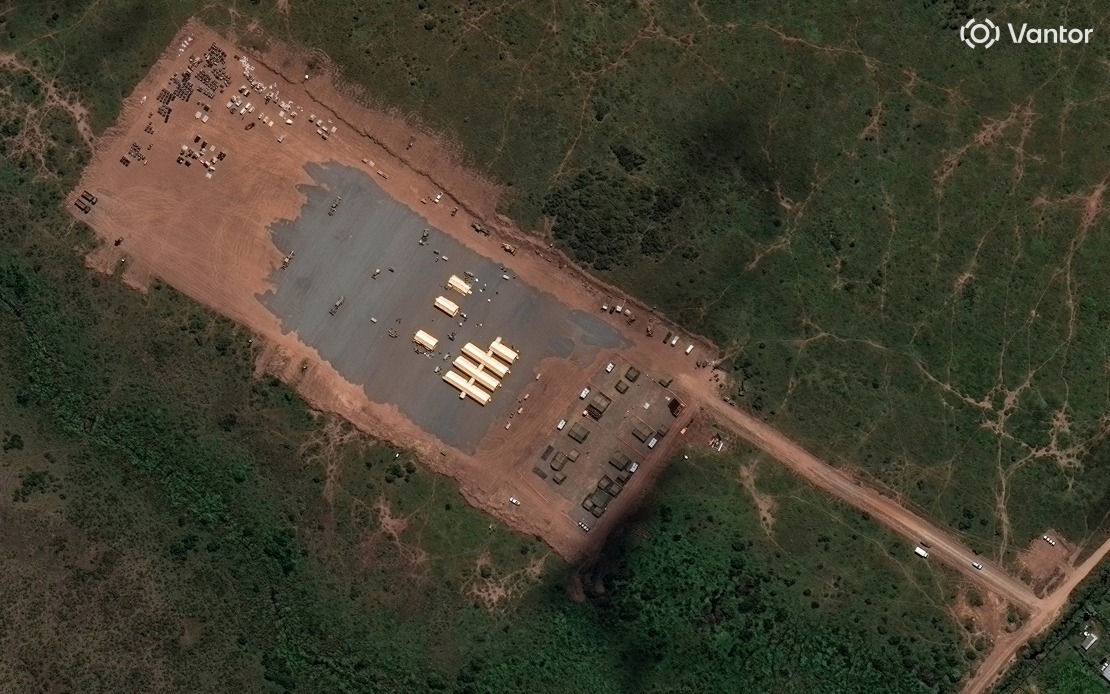
A Kenyan High Court has found the nation's Health Minister in contempt for proceeding with construction of a contentious American-backed Ebola isolation facility despite explicit judicial orders to halt the project. Judge Patricia Nyaundi's ruling on Monday marks an escalation in a dispute that has divided the country along constitutional, public health and diplomatic lines, and threatens to deepen tensions between Kenya's executive and judiciary.
The contempt finding centres on Health Minister Aden Duale's continued oversight of activities at Laikipia Air Base, where a 50-bed quarantine and isolation complex is being erected roughly 8 kilometres from the town of Nanyuki in Laikipia County, approximately 200 kilometres north of Nairobi. The facility is ostensibly designed to house American personnel who may have been exposed to Ebola during humanitarian response operations linked to outbreaks in the Democratic Republic of the Congo and neighbouring African countries. Duale was ordered to appear before the court the following day for mitigation arguments and sentencing determinations.
What began as a straightforward health infrastructure project has evolved into one of Kenya's most polarising public initiatives, attracting legal petitions, street protests and political condemnation. The Katiba Institute, a constitutional rights advocacy organisation, successfully challenged the project's legality, persuading the court that the government had bypassed essential requirements including transparent public consultation, proper environmental and health impact assessments, and compliance with Kenya's constitutional framework governing major public health interventions.
The controversy intensified when President William Ruto revealed that he had personally approved the facility following a direct request from United States President Donald Trump. Ruto characterised the arrangement as an extension of long-standing bilateral health cooperation between the two nations, a disclosure that transformed the project from a technical public health matter into a question about Kenya's sovereignty and the appropriate limits of foreign influence over domestic policy. The presidential endorsement appeared designed to legitimise the project, yet paradoxically amplified suspicions among critics that Kenya was subordinating its own constitutional processes to American geopolitical interests.
Kenya's government has maintained that the facility represents a prudent component of the nation's Ebola preparedness infrastructure. Officials argue that Kenya's status as East Africa's primary regional hub for transport, diplomacy and commerce creates heightened epidemiological vulnerability, requiring sophisticated isolation and containment capabilities. This rationale reflects genuine health concerns, given that major airports and shipping centres have historically served as nodes for disease transmission across borders. The government has also suggested that hosting such facilities demonstrates Kenya's commitment to regional health security and positions the country as a responsible partner in combating transnational disease threats.
The United States Embassy in Nairobi has similarly sought to defuse concerns by issuing statements asserting that the facility poses no public health danger to surrounding communities and constitutes merely one element of broader capacity-building efforts aimed at strengthening East African capabilities to detect, isolate and manage Ebola cases. Embassy officials have characterised opposition as driven by misinformation and have emphasised the facility's purely defensive purpose—isolation rather than research or experimentation.
Yet these assurances have failed to persuade a substantial portion of the Kenyan public, particularly residents of Laikipia County who view themselves as bearing disproportionate risk from the project. Sustained demonstrations have erupted across the region, with protesters both rejecting the government's health rationale and denouncing what they perceive as official disrespect for court rulings. The courts had suspended the project in May and reaffirmed that suspension in early June, yet construction activities continued regardless—a fact that prompted the contempt finding.
The human cost of the standoff has become apparent in reported casualties. Police, eyewitnesses and human rights monitors have documented at least three deaths during confrontations linked to anti-facility protests, suggesting that the dispute has deteriorated into a public order crisis with tragic consequences. These deaths underscore how abstract legal and diplomatic disputes can translate into violence when communities perceive that their genuine concerns are being dismissed by distant authorities and foreign powers.
The case now hinges partly on whether the Health Minister will offer explanations or excuses that might persuade the court to exercise leniency during sentencing. However, the broader trajectory of the controversy appears to reflect deeper institutional tensions within Kenya's governance architecture. The judiciary's willingness to suspend and ultimately hold the executive in contempt signals that Kenya's courts retain genuine independence to enforce constitutional constraints on executive power. Conversely, the government's apparent willingness to proceed despite judicial orders raises questions about whether executive deference to international partners may be eroding institutional respect for domestic legal processes.
For Malaysia and other Southeast Asian nations navigating similar pressures from major powers to host health infrastructure or security facilities on their territory, Kenya's experience offers cautionary lessons. The Kenyan case demonstrates that public legitimacy for such projects cannot be manufactured through top-down executive decision-making, particularly when decisions appear to reflect foreign requests rather than transparent domestic deliberation. It also illustrates how failure to observe constitutional process—even for projects with genuine public health merit—can transform technical matters into sovereignty questions that mobilise political opposition across the country.
As Kenya's courts and government attempt to resolve this impasse, the underlying challenge remains unchanged: reconciling legitimate national security and health interests with constitutional governance requirements and meaningful public participation. The Health Minister's contempt finding may prove consequential not only for his own legal jeopardy but also for establishing whether Kenya's judiciary can enforce institutional boundaries against executive overreach, regardless of the international partners involved or the nominal justifications offered.

