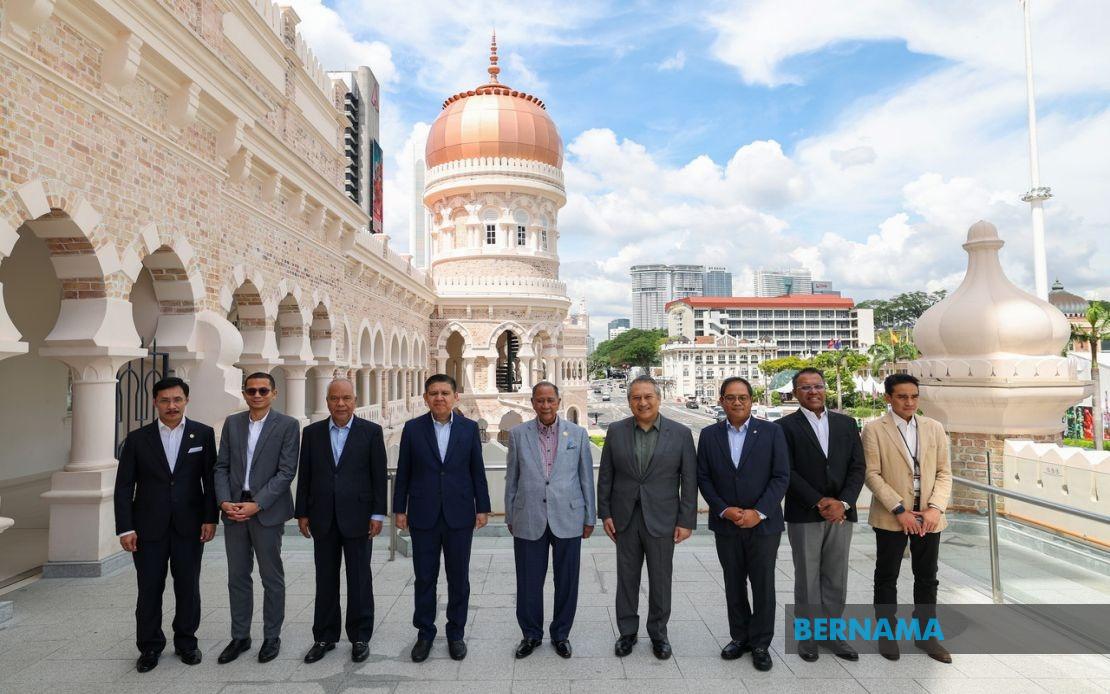
The Sultan of Kedah, Al Aminul Karim Sultan Sallehuddin Sultan Badlishah, paid a formal visit to the Sultan Abdul Samad Building in Kuala Lumpur on June 24, inspecting the heritage landmark that stands as one of Malaysia's most recognisable symbols of national governance and historical significance. The royal visit underscores the importance placed by Malaysian institutions on preserving and celebrating the country's architectural and political heritage.
Arriving at approximately 10:30 am, His Royal Highness was formally received by Khazanah Nasional managing director Datuk Amirul Feisal Wan Zahir, alongside Khazanah Nasional chief corporate officer and general legal adviser Datuk Mohamed Nasri Sallehuddin and Selvendran Katheerayson, who heads the real assets division. The presence of senior Khazanah officials reflected the significance of the occasion and the organization's commitment to heritage conservation as a national priority.
During his comprehensive tour of the building, the Sultan examined the Confluence Hall, which contains an exhibition dedicated to exploring the historical origins and gradual development of Kuala Lumpur. Think City senior manager Mariana Isa provided detailed briefings on the exhibits, offering context on how the capital evolved from a tin-mining settlement into Malaysia's commercial and administrative centre. This hall serves as an educational space connecting visitors to the city's transformation over more than a century.
The royal inspection continued through the Visionary Hall, which showcases architectural models and interactive multimedia presentations illustrating future developmental trajectories and past planning initiatives for the nation's capital. The Sultan also ascended to the balcony overlooking the Porte Cochere, the iconic covered entrance that has witnessed countless state ceremonies and official proceedings since the building's completion in 1897. These vantage points provide visitors with both architectural perspectives and historical context.
Following the building tour, His Royal Highness visited the School of Hard Knocks, an operational facility managed by Royal Selangor that provides vocational training and employment opportunities. This component of the visit highlighted how heritage buildings can serve contemporary social purposes beyond mere conservation. The Sultan then attended a light luncheon before departing the premises at approximately 1:15 pm.
Amirul Feisal acknowledged the royal visit as a meaningful validation of Khazanah Nasional's broader conservation strategy. He emphasised that the organisation's mandate encompasses more than structural restoration; it involves interpreting and communicating Malaysia's developmental narrative to present and future generations. The Sultan Abdul Samad Building, he noted, represents a tangible connection to the nation's formative moments and continues to hold profound significance for Malaysian society and the institution of monarchy.
Since its public reopening on February 2, the building has welcomed approximately 200,000 visitors, indicating strong public interest in experiencing this restored heritage site. These visitor numbers suggest that Malaysians and tourists recognise the building's cultural importance and appreciate the accessibility provided by the restoration project. The figure demonstrates that heritage preservation investments can generate meaningful public engagement and educational impact.
The building's historical resonance extends to independence itself. Originally constructed as the Secretariat Building, it functioned as the epicentre of British colonial administration in Malaya before transitioning to serve the newly independent Federation of Malaya in 1957. The building witnessed the momentous lowering of the Union Jack and the simultaneous raising of the Federation of Malaya flag—a symbolic transformation marking Malaysia's emergence as a sovereign nation and the end of colonial rule.
The restoration project itself represents a significant governmental commitment to heritage preservation. On January 31, His Majesty Sultan Ibrahim, King of Malaysia, officially inaugurated the completion of Phase One restoration works following eleven months of intensive conservation work funded through the Khazanah Heritage Fund programme. This phased approach indicates that additional restoration phases may follow, suggesting a long-term institutional commitment to maintaining the building's structural integrity and historical authenticity.
For Southeast Asian observers, the Sultan Abdul Samad Building symbolises a broader regional trend of viewing heritage conservation as integral to national identity and modern governance. Many Southeast Asian nations have undertaken similar projects to preserve colonial-era administrative buildings, recognising their dual significance as historical artifacts and functioning public spaces. Malaysia's approach demonstrates how heritage preservation can merge historical education, institutional pride, and contemporary social utility.
The royal visit carries particular significance given the Sultan of Kedah's position within Malaysia's constitutional monarchy system. Visits by individual sultans to national heritage sites affirm the interconnectedness between Malaysia's various states and the shared national narrative embodied in Kuala Lumpur's most iconic structures. Such visits reinforce the symbolic unity of Malaysia's federal system while celebrating the capital's role in the nation's political and developmental journey.
Looking forward, the building's success in attracting visitors and the sustained royal patronage suggest that heritage tourism and conservation remain priorities for Malaysian policymakers. The integration of commercial activities like Royal Selangor's training facility alongside exhibition spaces demonstrates innovative approaches to heritage site management—balancing preservation with contemporary economic and social functions. This model may inform similar projects across Southeast Asia as nations seek to maintain historical buildings while ensuring their relevance and financial sustainability in the twenty-first century.

