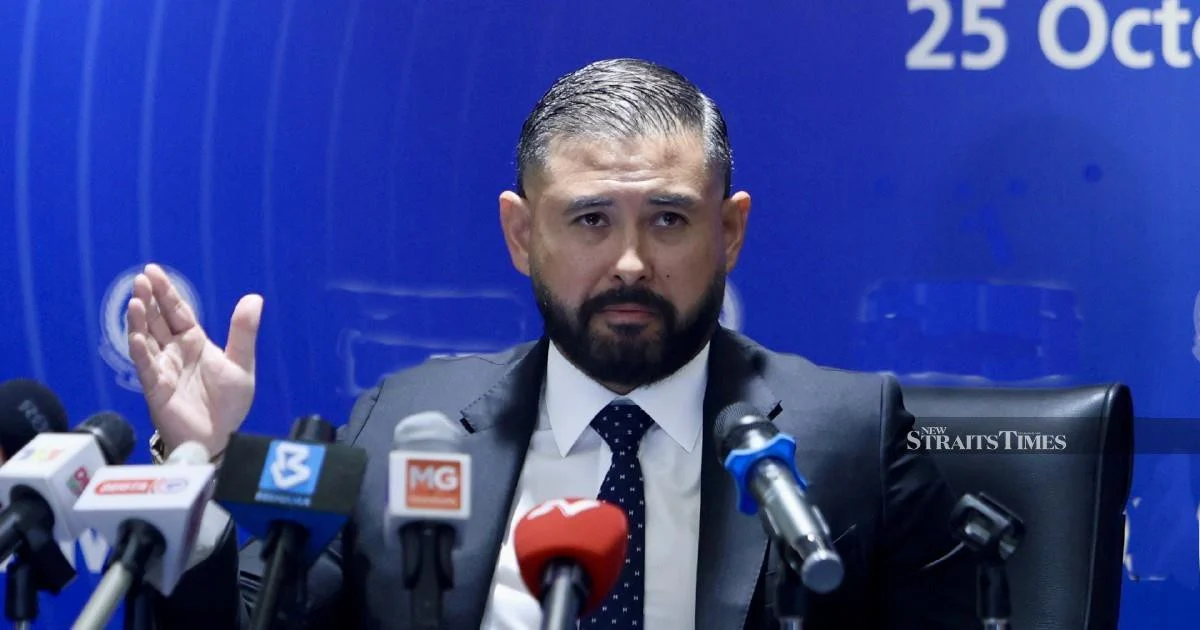
The Regent of Johor, Tunku Ismail Sultan Ibrahim, has forcefully disputed recent characterizations of the state as one beset by serious financial leakages. His remarks come as a direct rebuttal to statements made by the prime minister, who had described Johor as a prosperous region that nonetheless loses substantial sums to inefficiency and mismanagement. Rather than accepting this framing, the regent has reframed the issue entirely, arguing that the problem lies not within Johor's administration but instead at the federal level, where he contends that revenue generated by the state is being retained unfairly rather than returned.
This exchange highlights a persistent tension between state and federal governments in Malaysia regarding resource allocation and fiscal autonomy. Johor, as one of the nation's most economically productive states, generates considerable revenue through its port facilities, manufacturing base, agriculture, and tourism sectors. The dispute centres on how much of this wealth genuinely stays within the state to fund local development, and how much is transferred to federal coffers or distributed according to federal priorities. Such disagreements are not uncommon in federal systems, where states often feel that their economic contributions are undervalued by national governments.
The regent's intervention in this fiscal debate is significant because it represents a formal challenge to the federal narrative about Johor's financial health and management. By asserting that leakage is not the real issue, he is essentially arguing that the state's administrative systems are functioning adequately and that the problem lies elsewhere. This distinction matters considerably for policy discussions, as it shifts responsibility from state-level corruption or inefficiency to federal-level resource distribution mechanisms. If the regent's characterization is accurate, then solutions would require renegotiating revenue-sharing formulas rather than implementing stricter auditing within Johor.
For Malaysian readers across the region, this dispute carries implications beyond Johor itself. The federal-state fiscal relationship affects how development is distributed nationally and influences whether wealthy states like Johor can pursue autonomous economic agendas. States with strong leaders willing to challenge federal positions on resource distribution may eventually shape the trajectory of Malaysia's fiscal federalism. The manner in which this particular dispute is resolved could set precedents for how future disagreements between states and the federal government are handled.
Johor's economic significance amplifies the importance of this disagreement. The state accounts for a meaningful portion of Malaysia's gross domestic product and is a key contributor to federal revenue through various direct and indirect mechanisms. Port Klang's competitor in Johor, major manufacturing zones, and the state's role in regional trade networks all generate substantial government income. When the regent questions whether the state receives fair compensation for these economic contributions, he is essentially questioning the equity of Malaysia's fiscal architecture.
The concept of 'leakage' in government finance typically refers to funds that are allocated for specific purposes but fail to reach their intended targets due to corruption, administrative inefficiency, or bureaucratic delays. The prime minister's use of this term suggested that Johor's prosperity was being undermined by internal governance problems. The regent's response reframes this issue, suggesting instead that the leakage is metaphorical rather than literal—that the state is 'leaking' because money flows out to federal hands rather than because resources are being lost to mismanagement.
This rhetorical distinction carries real political weight in Malaysia's context. Johor has traditionally been one of the wealthier states, with a relatively stable political environment and established institutional structures. If the regent can successfully argue that the state's finances are well-managed and that federal retention of revenue is the real problem, this narrative could reshape public perception of state leadership and influence voter sentiment in future elections. It also potentially strengthens Johor's hand in negotiations over development projects and budget allocations.
The timing of this dispute is worth noting, as fiscal relationships between states and the federal government often become focal points during periods of political transition or when state governments seek greater autonomy. The regent's willingness to publicly challenge the prime minister's characterization suggests confidence in Johor's political position and possibly indicates broader disagreements about governance and resource allocation that extend beyond this single issue. Other states experiencing similar pressures may watch closely to see how federal leadership responds to such challenges.
From a regional perspective, this dispute also reflects broader patterns seen across Southeast Asia, where federal or quasi-federal systems frequently witness tensions over revenue distribution. States in Indonesia, Malaysia, and other countries regularly contest the fairness of tax-sharing formulas and resource allocation mechanisms. Johor's case offers insight into how Malaysian federalism functions in practice and reveals the limits of federal authority when confronted by economically significant states with determined leadership.
Looking forward, resolution of this dispute will likely require negotiations between state and federal authorities regarding revenue-sharing formulas, accountability mechanisms, and fiscal arrangements. The regent's public statement serves as an opening position in what may become protracted discussions. Whether the federal government responds by commissioning audits to demonstrate internal leakage or by engaging in dialogue about revenue distribution will significantly affect the credibility of both parties and the broader implications for Malaysian fiscal federalism.

