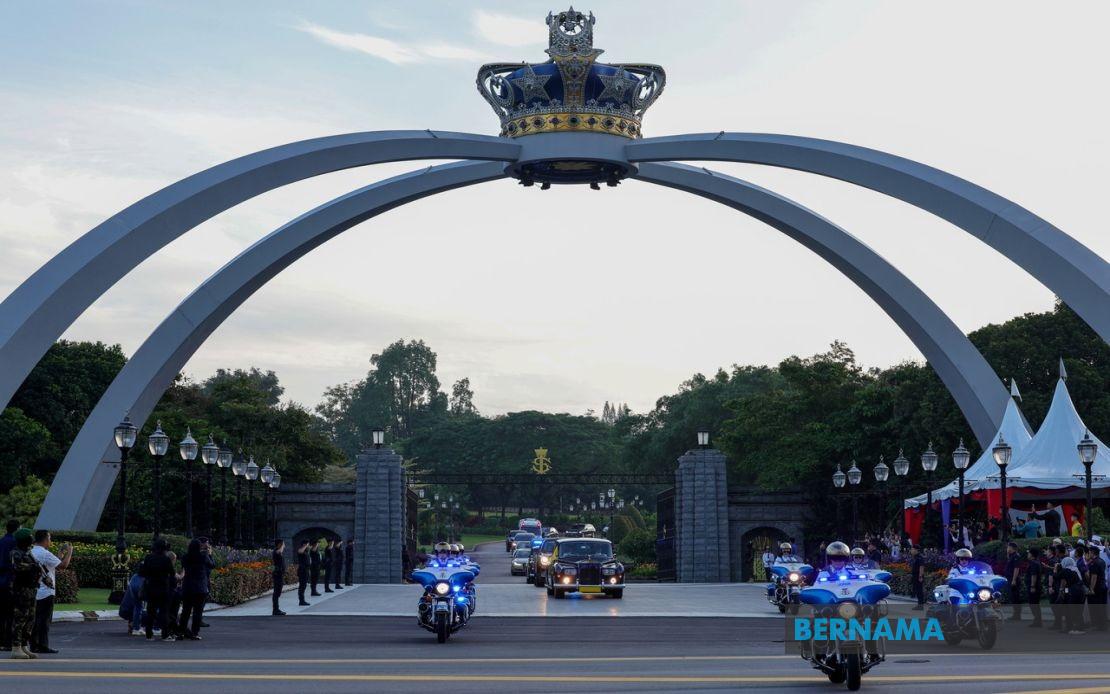
A new chapter in Johor's political leadership unfolds this afternoon as the state prepares to swear in its next Menteri Besar at Istana Bukit Serene. The ceremony, scheduled for 3 pm on July 12, marks the formal transition following Barisan Nasional's commanding performance in the state election held the previous day. The Johor Palace issued formal notification of the event through a WhatsApp invitation confirming the venue and time, though notably without identifying the appointee who would assume the office.
Media representatives were granted access to document the proceedings from the Crown Arch (Pintu Mahkota) entrance of the ornate royal residence. Journalists and photographers had already positioned themselves since midday at the Menteri Besar's official residence in Saujana and at the palace gates, anticipating developments and seeking to capture the historic moment. The gathering of press personnel underscored the significance of the transition, with anticipation building throughout the day about who would be named to lead Malaysia's southernmost peninsular state.
BN's stunning electoral performance provided the political foundation for the swearing-in. The coalition captured 48 of 56 contested state assembly seats, delivering an emphatic mandate that consolidated its control over Johor's governance. This decisive outcome gave BN clear authority to form the state government without requiring coalition negotiations or complex political maneuvering. The scale of the victory reflected voter confidence in the ruling coalition's direction and demonstrated its continued electoral appeal in a key state.
Proceedings at the palace moved swiftly following Sultan Ibrahim Iskandar's receipt of BN officials earlier in the day. The Johor ruler granted an audience to Datuk Seri Ahmad Zahid Hamidi, national chairman of Barisan Nasional, at Istana Pasir Pelangi. The meeting, which extended nearly an hour, was also attended by Datuk Onn Hafiz Ghazi, who leads BN's Johor division. This formal interaction between the Sultan and the senior BN leadership signified the monarchy's role in ratifying the state's political leadership transition and reflected constitutional protocols governing the appointment of the chief executive.
The composition of attendees at the palace meeting held particular importance for understanding the political dynamics at play. Ahmad Zahid Hamidi's presence as national party chairman highlighted the significance BN attached to the Johor transition and its implications for Malaysia's broader political landscape. His attendance, combined with that of the state-level BN chairman, suggested coordination between national and state party structures in determining who would lead the administration. The duration of the audience indicated substantive discussion about governance priorities and the incoming administration's direction.
Johor occupies a pivotal position within Malaysia's political and economic framework. As the nation's second-largest state by population and a crucial economic contributor, developments in Johor frequently reverberate across the country. The transfer of executive authority in the state thus carries implications beyond Johor's boundaries, affecting national political dynamics and economic policy coordination. BN's strengthened position in Johor following the election provided renewed momentum for the coalition nationally and demonstrated its resilience as Malaysia's dominant political force.
The absence of prior disclosure regarding the appointee's identity reflected constitutional practice in Malaysia's system of government. The Sultan, as the constitutional head of state, retains formal discretion in designating the Menteri Besar, even within the context of a parliamentary majority. This tradition, while typically exercised in alignment with the coalition's preferences following a decisive electoral outcome, preserves the monarchy's formal constitutional authority. The palace announcement process served as the official public revelation of the decision after private deliberations between royal officials and party leadership.
The ceremonial dimension of the swearing-in carries constitutional and symbolic weight extending beyond the administrative appointment. The oath administered by the Sultan to the incoming Menteri Besar represents the formal vesting of executive powers and embodies the constitutional relationship between the monarchy and the executive branch of state government. The use of Istana Bukit Serene, the state's principal royal residence, underscored the occasion's formal significance and the monarchy's active role in state governance. Such ceremonies reinforce constitutional continuity and the monarchy's position as custodian of democratic institutions.
For Malaysian observers and the Southeast Asian region, Johor's political transitions warrant close attention due to the state's strategic importance and influence on national politics. The state has historically served as a bellwether for broader political trends in Malaysia, and its electoral outcomes frequently foreshadow national patterns. BN's solid victory in Johor suggested the coalition's continued command over mainstream electoral opinion and its capacity to consolidate support across diverse constituencies. This consolidation could carry implications for upcoming national political developments and the interplay between different regional power centres.
The swearing-in ceremony represented the formal conclusion of Johor's electoral process and the commencement of the new administration's mandate. With control of 48 of 56 state assembly seats, the incoming Menteri Besar would enjoy substantial legislative authority to advance BN's governing agenda. The decisive majority provided flexibility in implementing policies without requiring extensive coalition negotiations or accommodation of independent voices. This parliamentary strength positioned the new administration to move forward with confidence on development priorities and administrative reforms.

