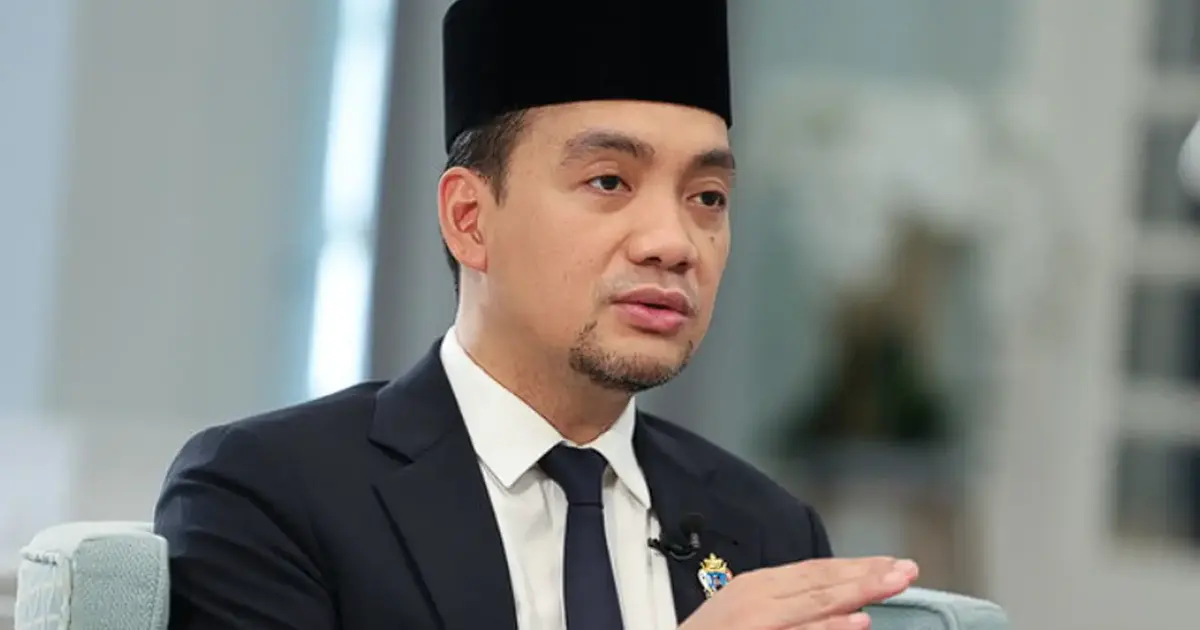
Onn Hafiz, serving as Johor's caretaker menteri besar, has moved to clarify the constitutional nature of the state assembly's recent dissolution, pushing back against any suggestions that the palace overstepped its institutional remit. His remarks underscore the delicate balance between royal prerogatives and political accountability in Malaysia's federal structure, where state rulers retain significant ceremonial and constitutional powers that occasionally become flashpoints in public discourse.
The distinction Onn Hafiz drew between royal assent and active political interference reflects a broader tension in Malaysian governance. While the Sultan's approval is technically required for such major constitutional acts, critics sometimes question whether rulers are passive signatories or active players in political manoeuvrings. By categorising the dissolution as a straightforward constitutional procedure, Onn Hafiz attempts to reframe the narrative away from allegations of palace influence over day-to-day governance. This framing is significant for Malaysian observers, as it reinforces the traditional model where royalty approves acts that governments have already decided upon, rather than dictating those decisions.
The Johor state assembly's dissolution represents a routine yet politically consequential event in the state's democratic cycle. Such dissolutions typically precede general elections, allowing voters to renew their mandate or withdraw it from the incumbent administration. The legal requirement for royal assent is embedded in Malaysia's constitutional architecture, particularly in how individual state constitutions mirror federal provisions. For Johor, which has historically been a powerhouse in national politics given its size and electoral significance, the dissolution signals the formal beginning of an electoral period that will reverberate beyond the state's borders.
Understanding this moment requires recognising Johor's outsized importance in Malaysian politics. The state has consistently delivered large parliamentary contingents and state assemblies that shape coalition mathematics at federal level. When Johor votes, national governments pay attention. The timing and manner of the assembly's dissolution thus carry implications for broader political calculations at the federal level, where various coalitions have competed for dominance. Any perception of improper palace involvement could delegitimise the electoral process or spark constitutional controversy that destabilises the political system.
Onn Hafiz's emphasis on constitutional propriety also serves a practical purpose for his administration. As caretaker menteri besar—a temporary role typically adopted once an election is called—he operates under constraints that limit his ability to make new policies or initiate fresh spending. His legitimacy during this interregnum period depends partly on public confidence that he is faithfully executing a constitutionally sound process. By publicly defending the dissolution as procedurally correct, he shores up his authority during a period when his powers are intentionally circumscribed by convention and law.
The relationship between Malaysia's rulers and elected governments has evolved considerably since independence. While the constitution grants significant powers to state sultans and the federal king, modern conventions have restricted these powers in practice. Rulers typically do not initiate or block legislation that commands majorities in their respective legislatures. When they do exercise discretionary powers—such as withholding assent or dissolving assemblies—it generates intense scrutiny and occasional constitutional crises. Onn Hafiz's defence suggests he is aware of these historical sensitivities and is preemptively addressing any public concern that the palace has overstepped.
Southeast Asian readers familiar with governance structures in Thailand, Cambodia, or other regional monarchies might find Malaysia's approach distinctive. Unlike some neighbours where military or palace-backed interventions periodically disrupt democratic processes, Malaysia has maintained relatively stable constitutional governance despite periodic tensions between royalty and elected officials. Onn Hafiz's insistence that the dissolution was purely constitutional reflects Malaysia's institutional commitment to maintaining this distinction, even when individual cases generate controversy.
The caretaker's statement also implicitly acknowledges that public perception matters in legitimacy politics. Even if the dissolution was technically constitutional, if significant segments of the population believed the palace had politically interfered, it could damage confidence in both the monarchy and the democratic system. By publicly clarifying the procedural correctness of the act, Onn Hafiz attempts to guide public interpretation of events in a way that preserves institutional credibility. This reflects a broader sophistication in Malaysian political communication, where defending constitutional processes is viewed as essential to maintaining system legitimacy.
For Johor voters approaching the polls, Onn Hafiz's clarification provides reassurance that the electoral machinery is functioning properly. An electorate concerned about improper interference—whether from palaces, security forces, or corporate interests—might otherwise question the validity of upcoming results. By explicitly divorcing the dissolution from allegations of political meddling, he frames the upcoming election as a straightforward democratic exercise rather than a contested constitutional moment.
Looking forward, Onn Hafiz's emphasis on constitutional procedure suggests that Johor's political contest will be fought in conventional electoral arenas rather than in constitutional disputes. Campaigns will focus on performance records, policy promises, and leadership qualities rather than on the legitimacy of the election process itself. This normality, while often overlooked by commentators, represents the foundation upon which stable democracies rest—the ability to conduct high-stakes political competition without simultaneously contesting the rules of the game.
The broader significance of this moment extends to how Malaysia manages the intersection of traditional institutions and modern democracy. Onn Hafiz's defence of the dissolution as purely constitutional, rather than as evidence of palace political engagement, reflects a mature approach to governance where ceremonial powers and substantive authority remain conceptually distinct, even when they occasionally overlap in practice. For a nation navigating the complexities of balancing hereditary authority with electoral democracy, such clarity matters considerably.

