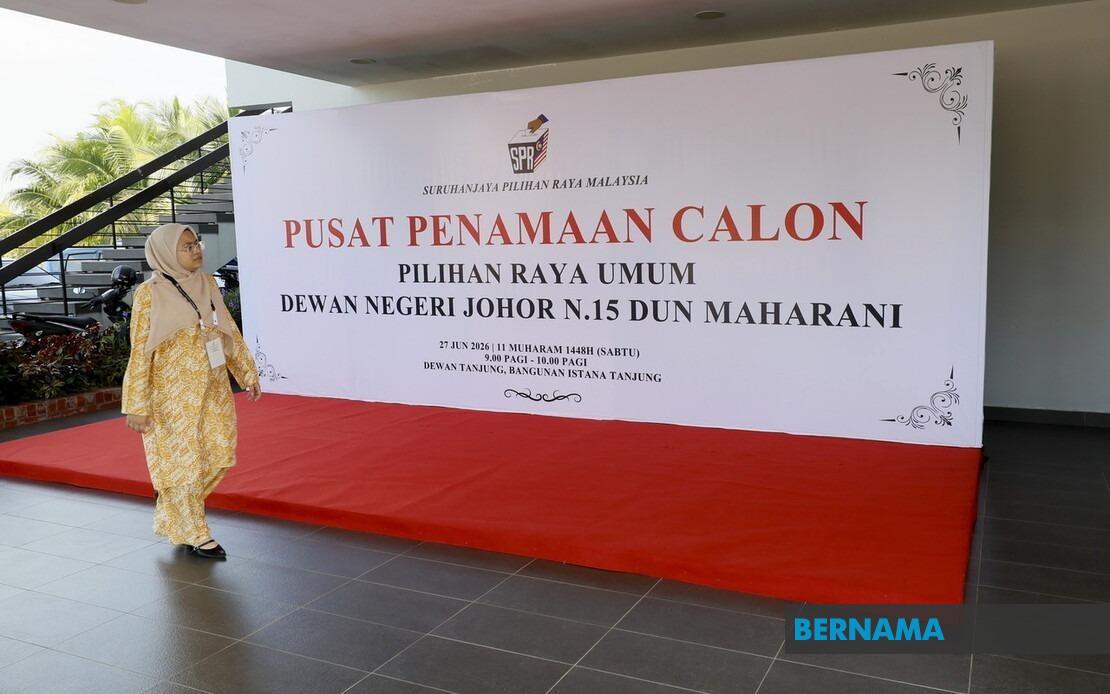
The 16th Johor State Election entered its formal phase today as nomination centres across the state began accepting candidate applications from 9 am. Prospective candidates faced a tight one-hour window to lodge their nomination papers at 56 designated centres spread throughout the state, with the Returning Officer deadline set for 10 am. This opening salvo marks the beginning of an intensely competitive electoral cycle that will determine representation in the state assembly following the legislative body's dissolution on June 1.
The scale of participation underscores the significance of this electoral contest for Malaysia's most economically developed state. The Election Commission reported that 593 nomination forms had been distributed to interested parties, with 133 prospective candidates having already confirmed their candidacy by submitting the required election deposits. These figures suggest substantial contestation across the 56 state seats, though the full picture will only emerge once the official candidate list is announced following today's nomination deadline.
The electoral calendar has been carefully structured to allow adequate campaign time while maintaining efficient administration. The official campaign period will run for 14 days, concluding at 11:59 pm on July 10, providing parties and candidates with a fortnight to reach voters through various channels. Early voting is scheduled for July 7, accommodating voters who cannot participate on the main polling day of July 11, when all registered electors will head to the polls.
Johor's electorate comprises approximately 2.73 million registered voters, a substantial constituency that will ultimately decide the state government's composition. This figure breaks down into 2.7 million ordinary voters, alongside 12,041 military personnel and their spouses, and 12,710 police personnel and their spouses who are eligible to vote. The size of this electorate reflects Johor's status as a major population centre and its economic importance to the nation.
The political landscape presents a competitive three-way contest involving major national coalitions and newer entrants seeking to make their mark. Pakatan Harapan is fielding candidates across all 56 seats through a combination of PKR (20 seats), Amanah (19 seats) and DAP (17 seats), presenting a united opposition front. Barisan Nasional, which held 40 seats in the outgoing assembly, is contesting through UMNO (36 seats), MCA (16 seats) and MIC (4 seats), seeking to maintain its dominant position in Johor politics.
Perikatan Nasional's approach demonstrates a more fragmented strategy, with PAS contesting 11 seats, Bersatu fielding 16 candidates, the Malaysian Indian People's Party (MIPP) standing in five seats, and Parti Pejuang Tanah Air presenting a single candidate. This distribution reflects the coalition's varied fortunes across different constituencies and demographic areas within the state. Additionally, several other parties are making significant efforts to gain parliamentary representation, including MUDA with four candidates, Parti Sosialis Malaysia fielding one candidate, and the newly established Parti Bersama Malaysia contesting 15 seats.
Nomination day has traditionally served as a visible expression of political enthusiasm and grassroots mobilization, with party supporters gathering at nomination centres to demonstrate their commitment to their chosen candidates. This year's proceedings are expected to follow that pattern, with various party machinery mobilizing supporters to show presence and energy at the 56 nomination points throughout Johor. Such displays often provide early indicators of momentum and organizational capacity, though they do not necessarily correlate with electoral outcomes.
The Election Commission has established clear parameters for campaign conduct, reminding all candidates and supporters to comply with the Election Offences Act 1954 and local authority regulations. Particular emphasis has been placed on restrictions regarding the use of musical instruments and loudspeakers mounted on vehicles during campaign activities, measures designed to prevent noise pollution and maintain public order during the intense campaign period. These regulations balance the need for parties to conduct vigorous campaigns with the requirement to maintain public peace and safety.
Logistical preparations for the election have involved substantial coordination between government agencies. The Malaysian Meteorological Department has forecasted rain in several parts of Johor during the morning hours, with thunderstorms expected in the afternoon, potentially affecting turnout and campaign activities. Security arrangements have been comprehensively organized, with 4,832 police personnel deployed throughout the state to maintain order and manage traffic flow. Planning includes road closures and diversions on 19 major roads adjacent to nomination centres, necessitating advance public communication to minimize disruption to general traffic.
The composition of the outgoing assembly provides important context for understanding the electoral dynamics at play. Barisan Nasional's 40-seat majority has been a dominant feature of Johor politics, with Pakatan Harapan holding 12 seats, Perikatan Nasional controlling three seats, and MUDA securing a single seat. This distribution means that any significant shifts in voter preferences or campaign effectiveness could materially alter the balance of power, making the 14-day campaign period critical for all competing parties and coalitions.
For Malaysian observers and regional political analysts, the Johor election carries significance beyond its immediate state-level implications. Johor's economic importance, geographic location adjacent to Singapore, and traditionally reliable voting patterns make it a bellwether for national political trends. The contest between incumbent Barisan Nasional and aspirant Pakatan Harapan, set against the backdrop of Perikatan Nasional's regional strategies and the emergence of new political parties, will provide important signals about voter sentiment and the effectiveness of different political messaging approaches in a major Malaysian state.

