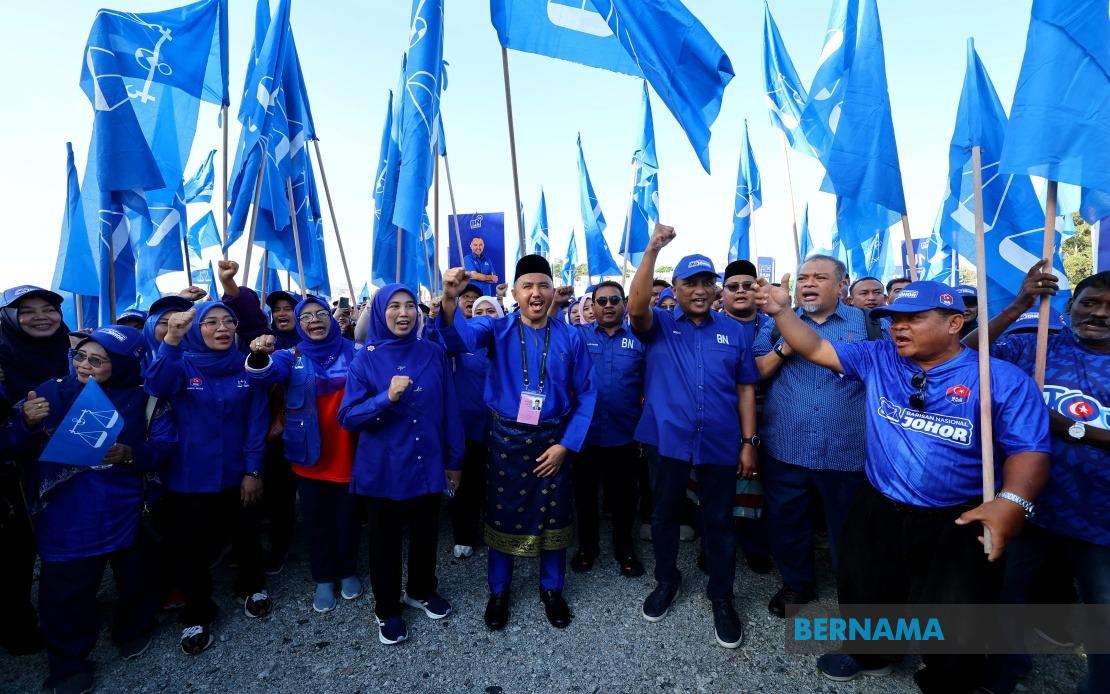
The nomination process for Johor's 16th State Election drew to a close at 10am on June 27, with returning officers across the state announcing the official shutdown of all 56 nomination centres. The hour-long submission window, which opened at 9am, allowed candidates from competing parties to lodge their nomination papers with minimal disruption, setting the stage for an intense fortnight of campaigning before voters head to the polls.
With nominations now sealed, attention shifts to the Election Commission's verification and publication of the final candidate list. Officials will confirm which aspirants successfully meet the statutory requirements and determine the number of contenders vying for each of Johor's state seats. This administrative phase remains crucial, as any technical deficiencies in submitted documentation can result in candidate rejection, a development that occasionally reshapes political dynamics in close contests.
The Election Commission has compressed the campaign period into a tight 14-day schedule, beginning immediately after nomination closure and extending until 11:59pm on July 10. This condensed timeframe demands that political parties mobilise resources swiftly, orchestrate ground operations across diverse constituencies, and manage media messaging effectively. For a state as geographically sprawling and demographically complex as Johor, the schedule presents logistical challenges in reaching voters across urban centres, suburban areas, and rural districts.
The nomination centres themselves witnessed steady activity throughout the morning, with party supporters assembling to escort their respective candidates to submission venues. The atmosphere remained notably civil despite competitive tensions inherent to electoral contests. Police personnel and members of the People's Volunteer Corps maintained heightened vigilance at all centres, preventing any outbreak of confrontation or intimidatory conduct. The security deployment underscored authorities' commitment to safeguarding the electoral process and ensuring candidates could complete their nominations without interference.
Johor's electoral roll reflects substantial growth in recent years, with 2,727,926 eligible voters registered across the state. This figure encompasses 2,703,175 ordinary voters drawn from the general population, alongside 12,041 military personnel and their immediate family members entitled to vote, and 12,710 police officers and their dependents participating in the electoral exercise. The inclusion of uniformed personnel within the voter base adds nuance to campaign strategy, as candidates must address concerns specific to defence and security communities while maintaining broader policy messages for the general electorate.
The Election Commission scheduled early voting for July 7, allowing registered voters unable to cast ballots on polling day to exercise their franchise in advance. This provision acknowledges the practical constraints facing workers, travellers, and individuals with mobility challenges, expanding democratic participation beyond the single designated polling day. Early voting also distributes electoral administration workload across multiple days, reducing congestion at polling stations and enhancing operational efficiency across Johor's constituencies.
Polling day itself falls on July 11, providing the conclusion point for an election cycle that began with nomination day. The two-week interval between campaigning and voting offers voters adequate time to evaluate candidates' platforms and policy proposals, weigh competing visions for Johor's future, and make informed electoral choices. For political parties, the window demands strategic messaging that resonates with diverse voter segments across income brackets, age groups, and geographic regions.
For Malaysian observers, the Johor election carries broader significance beyond the state's borders. As one of the federation's most economically significant states and a demographic bellwether, outcomes in Johor frequently foreshadow national electoral trends. Performance by incumbent coalitions and opposition blocs provides indicators of shifting voter sentiment, particularly among middle-class and working-class constituencies that form political kingmakers in competitive elections. Political analysts typically scrutinise Johor results for evidence of whether ruling administrations retain grassroots support or face emerging challenges.
The smooth execution of the nomination process itself demonstrates institutional capacity within Malaysia's electoral system. Despite periodic questions regarding electoral neutrality and procedural transparency, the Election Commission successfully administered a complex logistical operation involving simultaneous processing at 56 distinct venues across a large state. The absence of disruptions or administrative controversies suggests that stakeholders, regardless of political affiliation, respected the electoral framework and committed to orderly participation in democratic processes.
As candidates transition from nomination to campaign activities, the stakes intensify for all contenders. The ensuing fortnight will determine which political messages gain traction, which candidates establish voter connections, and ultimately, which parties secure sufficient seats to form Johor's next state government. Party strategists are already preparing targeted communications, organising grassroots mobilisation efforts, and positioning candidates in constituencies deemed winnable. The compressed campaign period means that every day carries exceptional significance, with momentum-building and voter outreach operating under tight temporal constraints that reward operational efficiency and rapid decision-making.

