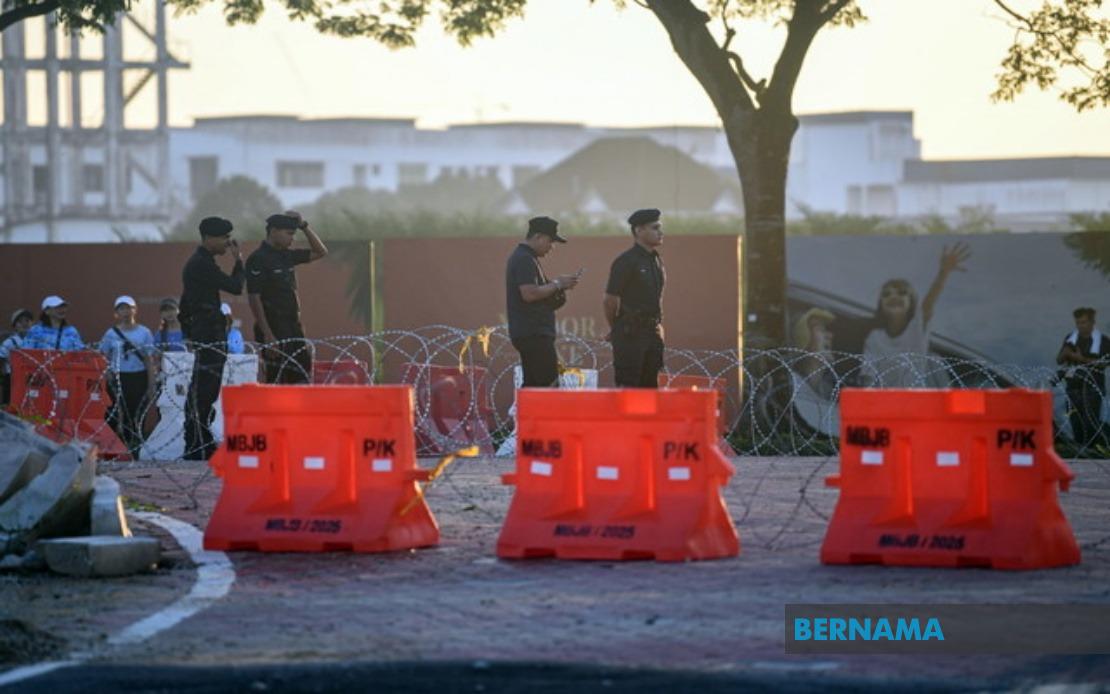
Nomination proceedings for Johor's 16th state election got underway across the state on June 27 in generally favourable atmospheric conditions, with the Election Commission reporting smooth operations at all 56 nomination centres spread throughout the region. The clement weather—dry conditions persisted through the morning hours at most locations—appeared to set a positive tone for what represented a crucial juncture in the electoral calendar, as candidates formally registered their bids to contest the upcoming ballot.
The logistical machinery of the Electoral Commission functioned efficiently throughout the day, with administrative personnel completing final preparation work before the official window for receiving nomination documents opened at 9am. Officers processed submissions until 10am, adhering to the strict timeframes that govern Malaysia's election procedures. The orderly nature of operations at various centres reflected careful planning and coordination, with adequate staffing deployed to manage the flow of candidates and their supporters through the registration process.
Maintaining order and security remained a central priority across all nomination venues. Personnel from security agencies were stationed strategically at each centre, their visible presence designed to prevent disruption whilst facilitating the peaceful conduct of democratic procedures. This preventive approach proved effective in ensuring that the day's activities proceeded without incident or significant complications, a critical consideration given the heightened tensions that often characterise election periods.
Party enthusiasm manifested visibly even before dawn broke over Johor. Supporters began arriving at numerous centres as early as 7.30am, several hours before formal proceedings commenced, demonstrating the considerable grassroots energy mobilised by political organisations contesting the election. Their presence underscored the competitive nature of the contest and the engagement of party machinery in supporting their nominated candidates through the crucial early stages of the electoral process.
Weather forecasting provided useful operational context for election officials planning resource deployment and logistics. The Malaysian Meteorological Department indicated that whilst most Johor districts would experience dry conditions through the morning period—ideal for outdoor gathering and movement of voters and supporters—afternoon developments would likely bring thunderstorms to selected areas. This pattern, typical for Malaysia's tropical climate during the southwest monsoon season, required contingency planning at nomination centres to accommodate potential disruptions from heavy rainfall.
The Johor State Legislative Assembly comprises 56 seats across the state, representing the total number of electoral contests being held. The assembly itself underwent dissolution on June 1, triggering the machinery that led to the nomination day proceedings. The Electoral Commission subsequently established the election calendar, designating July 7 as the date for early voting to accommodate voters unable to participate on the main polling day, with July 11 set as the final date when all voters would proceed to the ballot.
The electoral roll reflects Johor's substantial voting population. According to Electoral Commission figures, the state contains 2,727,926 registered voters across all categories. This total comprises 2,703,175 ordinary voters—the largest segment—supplemented by 12,041 military personnel and their spouses, and 12,710 police personnel and their spouses. These special categories reflect Malaysia's constitutional provision allowing defence and security personnel to vote in state and federal elections, ensuring their democratic participation despite operational commitments.
The nomination day process represents far more than bureaucratic routine in Malaysia's electoral system. It marks the formal moment when political ambitions crystallise into official candidacy, when party machinations yield concrete outcomes, and when the actual contest takes tangible shape. The orderly conduct witnessed across Johor's 56 nomination centres on June 27 suggested that despite the competitive intensity surrounding the election, electoral institutions retained capacity to administer the foundational elements of democratic process with competence and impartiality.
For Johor's political landscape, the nomination day results would shape the subsequent two-week campaign period leading to polling day. The slate of candidates emerging from the process would determine which personalities, which party combinations, and which visions would contest for control of the state assembly. The favourable conditions under which nominations proceeded seemed to augur well for a competitive but orderly campaign period, though the intensity of Malaysian state-level electoral contests frequently builds momentum as polling day approaches.
The election assumes significance within the broader Malaysian political context. Johor remains one of the country's most politically consequential states, given its size, population, and economic weight. State-level electoral outcomes increasingly influence national political dynamics, as Malaysia's federal system creates multiple arenas where power can be gained or lost. The nomination proceedings thus represented not merely a local administrative exercise but a moment of genuine national political consequence, as the registered candidates began their formal journey toward determining Johor's governance for the next five years.

