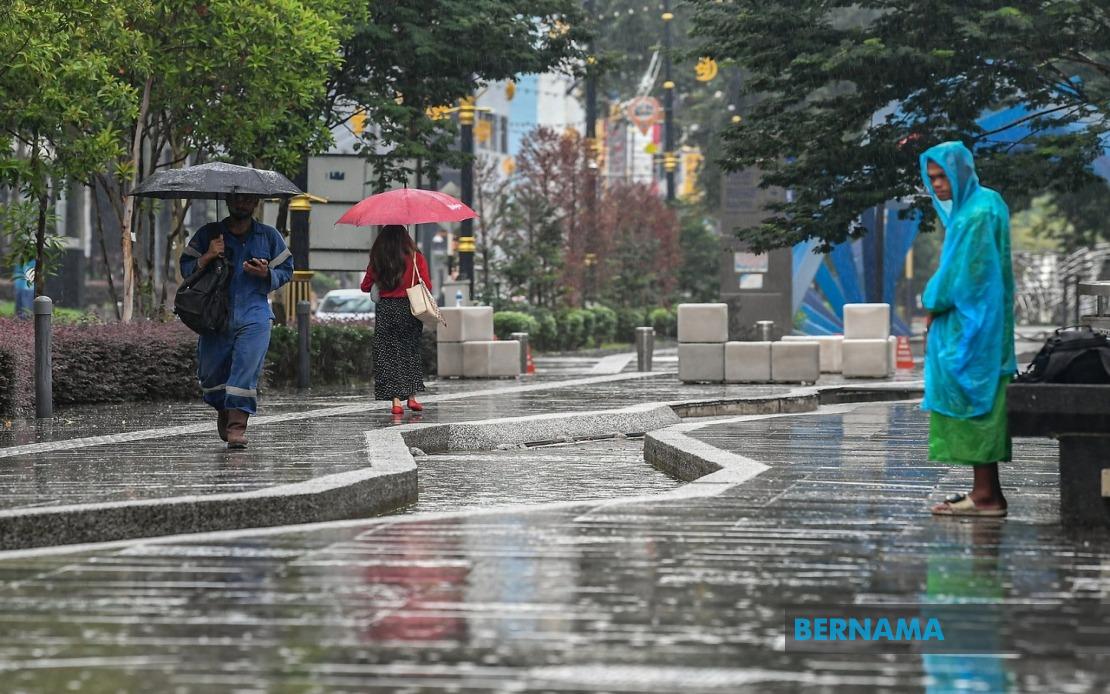
Voters and political candidates preparing for Johor's state election face wet conditions as the Malaysian Meteorological Department warned of rainy weather affecting most of the state during tomorrow's nomination process. The downpour is expected to influence seven of the state's ten districts, creating logistical hurdles for the thousands of supporters and campaigners converging on nomination centres across the region.
Azlai Ta'at, the Johor director of MetMalaysia, indicated that rainfall will dominate the morning hours in Johor Bahru, Muar, Batu Pahat, Kota Tinggi, Pontian, Tangkak and Kulai. By contrast, clear skies are anticipated in Segamat, Kluang and Mersing, offering at least partial relief from the wet conditions. The weather forecast underscores the unpredictable nature of electoral logistics in Malaysia's tropical climate, where seasonal rain patterns frequently intersect with major political events.
Temperature readings throughout Johor will hover between 24 and 25 degrees Celsius at their lowest point, climbing to between 31 and 34 degrees Celsius during peak afternoon hours. Segamat is positioned to experience the hottest conditions, potentially reaching 34 degrees Celsius. MetMalaysia has specifically cautioned the public and campaign supporters to monitor evolving weather patterns throughout the day, recognising that sudden changes could disrupt the carefully orchestrated nomination procedures.
The nomination exercise itself occupies a tight two-hour window beginning at 9 am and concluding at 10 am at 56 designated centres statewide. Once this narrow timeframe concludes, returning officers will formally announce which candidates have satisfied all regulatory requirements. Immediately following these announcements, the official campaigning period commences, and meteorological predictions suggest this transition will be marked by further atmospheric disturbance. Thunderstorms are anticipated across Johor Bahru, Segamat, Kluang, Kota Tinggi, Pontian, Mersing and Kulai during afternoon hours, while Batu Pahat and Tangkak are slated to receive moderate rainfall, and Muar is forecast to remain hot and humid.
The electoral contest represents a significant political battleground in Malaysia's federal landscape. Pakatan Harapan is mounting a comprehensive campaign by fielding aspirants across all 56 state constituencies. The opposition coalition has distributed its candidacies among PKR with 20 seats, Amanah with 19 seats, and DAP with 17 seats, reflecting the internal power-sharing arrangements established among coalition partners. This unified front indicates the coalition's ambition to consolidate gains and potentially expand its representation in Johor, historically a stronghold for the ruling establishment.
Barisan Nasional, the traditional governing bloc, is equally committed to contesting every available seat. UMNO is fielding 36 candidates, significantly outnumbering its coalition partners MCA with 16 candidates and MIC with four candidates. This distribution underscores UMNO's dominant position within the coalition's Johor structure. However, the emergence of Perikatan Nasional as a meaningful electoral force complicates the traditional two-coalition framework. Perikatan's participation spans 33 total seats through PAS contesting 11 seats, Bersatu fielding 16, the Malaysian Indian People's Party presenting five candidates, and Pejuang contributing one seat.
Smaller parties are also staking claims in the electoral arena. The Malaysian United Democratic Alliance will contest four seats, Parti Sosialis Malaysia is fielding one candidate, and notably, Parti Bersama Malaysia is making its inaugural electoral appearance with 15 candidates across the state. This proliferation of contesting parties reflects deepening political fragmentation within Malaysia's electoral ecosystem, potentially fragmenting voter preferences and creating unpredictable outcomes in marginal constituencies.
The Election Commission has established a detailed electoral calendar extending beyond tomorrow's nomination day. Early voting has been scheduled for July 7, allowing military and police personnel and their spouses to participate prior to the general polling day. The main election will occur on July 11, providing a three-week campaigning window for candidates and parties to mobilise their support bases and articulate their policy platforms. This timeline offers sufficient space for substantive political engagement despite the compressed nature of Malaysian state elections.
The electoral roll encompasses 2,727,926 registered voters participating in the sixteenth iteration of Johor's state elections. This figure comprises 2,703,175 ordinary voters representing the civilian electorate, supplemented by 12,041 military personnel and their spouses, and 12,710 police personnel and their spouses. The magnitude of this voter population underscores Johor's significance within Malaysia's political geography, containing approximately ten percent of the nation's total registered voters and representing an economically substantial and demographically diverse region.

