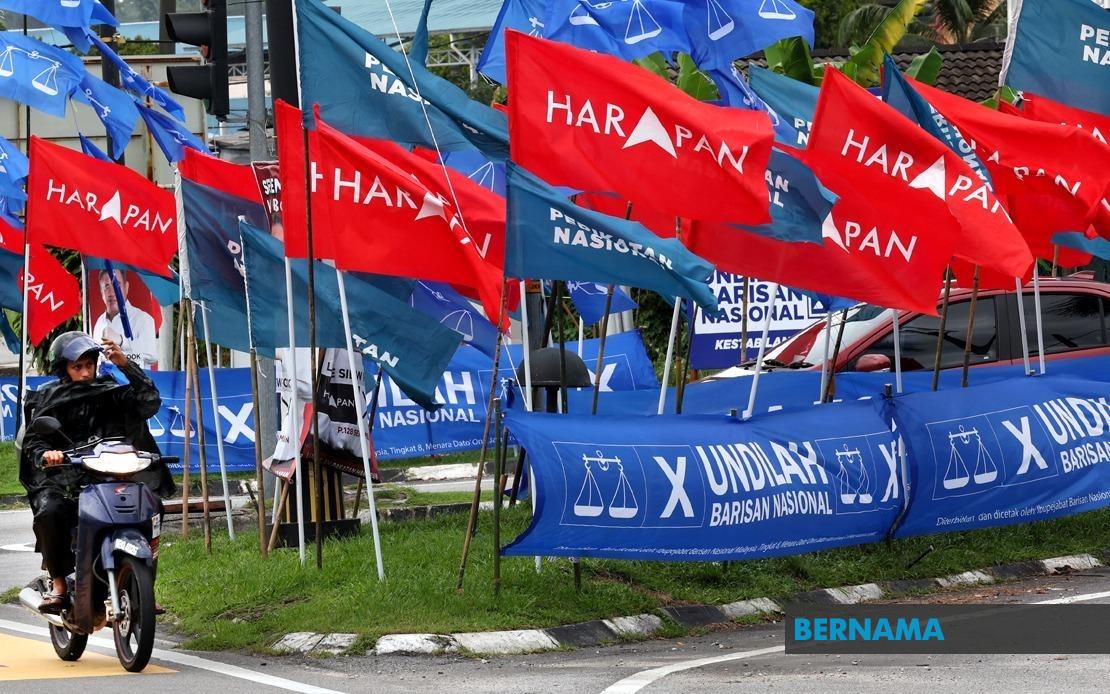
The Johor state election campaign has reached its decisive endgame, with candidates representing multiple political coalitions scrambling to mobilise voters in the final 48 hours before the midnight cutoff for campaigning. The intensity on the ground reflects the high stakes of this election, where 172 candidates will compete for 56 state legislative seats. The concentrated campaign activity across the state underscores how tightly contested many constituencies remain, prompting unprecedented levels of engagement from party machinery and senior national figures determined to leave no stone unturned before Saturday's polling day arrives.
Pakatan Harapan's campaign machinery has demonstrated particular momentum heading into the final stretch, leveraging the prominent presence of Prime Minister Datuk Seri Anwar Ibrahim to energise the coalition's base. The coalition's leadership recognises that the closing days of any election campaign often prove decisive for converting fence-sitters and mobilising supporters who might otherwise stay home. By scheduling the premier to appear at three separate locations in a single evening, with particular emphasis on the strategically important Puteri Wangsa constituency, PH is attempting to create a sense of climactic inevitability about its chances. The choice of Puteri Wangsa carries particular symbolic weight within PH's campaign narrative, suggesting the coalition views this seat as emblematic of its broader electoral prospects in the state.
Candidate Maszlee Malik's social media appeal for the "Grand Finale Harapan Johor Selatan" rally demonstrates how modern campaign techniques now integrate grassroots messaging with celebrity-level event promotion. By explicitly invoking the psychological phenomenon of fear of missing out, Malik taps into contemporary communication strategies that blur the lines between serious political engagement and entertainment culture. This approach reflects how Malaysian political campaigns have evolved to compete for voter attention in an increasingly crowded media environment where traditional ceramah rallies must now compete with social media content for audience engagement and political messaging.
Beyond PH's high-profile push, individual candidates across the state have maintained relentless ground-level activity that illustrates the granular nature of electoral competition in Malaysian state elections. Dr A. Ruban's determination to resume campaigning despite medical treatment illustrates the physical and psychological demands placed on those seeking elected office. His Facebook declaration that "the fight for Paloh will not stop" serves to maintain momentum within his constituency while signalling to supporters that personal difficulties will not derail his commitment. Such narratives of perseverance resonate particularly effectively during final campaign phases when voters are making definitive choices.
The Barisan Nasional coalition has similarly intensified its campaign apparatus, with coalition chairman Datuk Seri Dr Ahmad Zahid Hamidi conducting targeted visits to constituencies deemed strategically important. BN's approach emphasises continuity and stable governance, themes reinforced through Johor Menteri Besar Datuk Onn Hafiz Ghazi's continued presence across Machap and his social media messaging urging Johoreans to endorse BN's development record. The incumbency advantage that comes with controlling the state administration allows BN to frame the election around governance achievements rather than opposition promises, a positioning that becomes increasingly important as voters approach their final decision-making moments.
Perikatan Nasional's strategy reflects the three-way contest dynamic that characterises this election, with the coalition mounting a significant show of force through its scheduled mega-rally in Endau featuring both party chairman Datuk Seri Ir Dr Ahmad Samsuri Mokhtar and PAS president Tan Sri Abdul Hadi Awang. This concentration of senior Islamic party leadership in a single constituency signals PN's assessment of where it can achieve meaningful gains and where it believes its messaging about governance and Islamic values will resonate most strongly. The choice to feature two major PN figures suggests the coalition views Endau as winnable territory where a high-profile campaign climax could shift undecided votes.
The sheer diversity of campaign tactics evident across Johor illustrates how Malaysian political parties have become sophisticated practitioners of multi-channel voter engagement. Perikatan Nasional's Kahang candidate Mazlan Bujang's commitment to continuing ground contact until the final moment reflects an understanding that election outcomes often turn on which campaign organisation maintains superior voter contact through the final days. Similarly, smaller coalition Parti Bersama Malaysia's "Bersama Tour Truck" initiative and focus on small-group community dialogues demonstrate that even parties with limited resources can carve out distinct campaign identities through targeted, personalised outreach strategies.
The final campaign phase also reveals important geographical and demographic targeting patterns within each coalition's strategy. BN's focus on both the Endau and Kempas constituencies suggests these areas remain contested terrain where the outcome remains genuinely uncertain. PH's emphasis on southern Johor constituencies, particularly through the Puteri Wangsa rally, indicates where the coalition sees breakthrough opportunities against BN's traditional strongholds. These geographical patterns reflect broader transformations in Johor's electoral dynamics that have unfolded since the 2022 federal election, with different constituencies showing varying degrees of receptivity to the competing coalitions.
The involvement of grassroots party workers at scale also deserves emphasis when examining these final campaign days. Johor PKR chairperson Datuk Seri Dr Zaliha Mustafa's participation in a motorised convoy involving 120 motorcyclists for the Kemelah constituency illustrates how parties mobilise party machinery to create visible signs of organisational strength and voter enthusiasm. These convoy campaigns serve multiple simultaneous functions: they demonstrate party unity to supporters, generate social media content and word-of-mouth publicity, and provide direct voter contact opportunities. The scale of such mobilisations indicates substantial party resources committed to the Johor contest across all major coalitions.
From a Malaysian perspective, the Johor election carries implications extending well beyond the state itself. The state has long functioned as a bellwether for broader national electoral trends, and the results will significantly shape the political calculations of all major coalitions heading toward future federal elections. For PH, a strong Johor performance would validate the government's political strategy and provide momentum for maintaining national political dominance. For BN, retaining Johor would demonstrate residual strength in traditional heartland constituencies despite losing federal power in 2022. For PN, improved performance would validate its positioning as a credible opposition alternative. Consequently, the final campaign hours represent far more than a state-level competition; they constitute a crucial test of each coalition's capacity to mobilise supporters and articulate compelling visions for Malaysia's future governance.
The convergence of national and state-level political significance has undoubtedly attracted the intense resource commitments and high-level political engagement evident throughout this campaign's final phase. As midnight tomorrow approaches and candidates make their last public appearances, the question of whether such intensive final-stage campaigning materially shifts voter preferences remains open. Yet what remains certain is that all three major coalitions are leaving absolutely nothing to chance, treating these final hours as potentially election-deciding and applying every available campaign tool to maximise their support across the 56 contested state seats.

