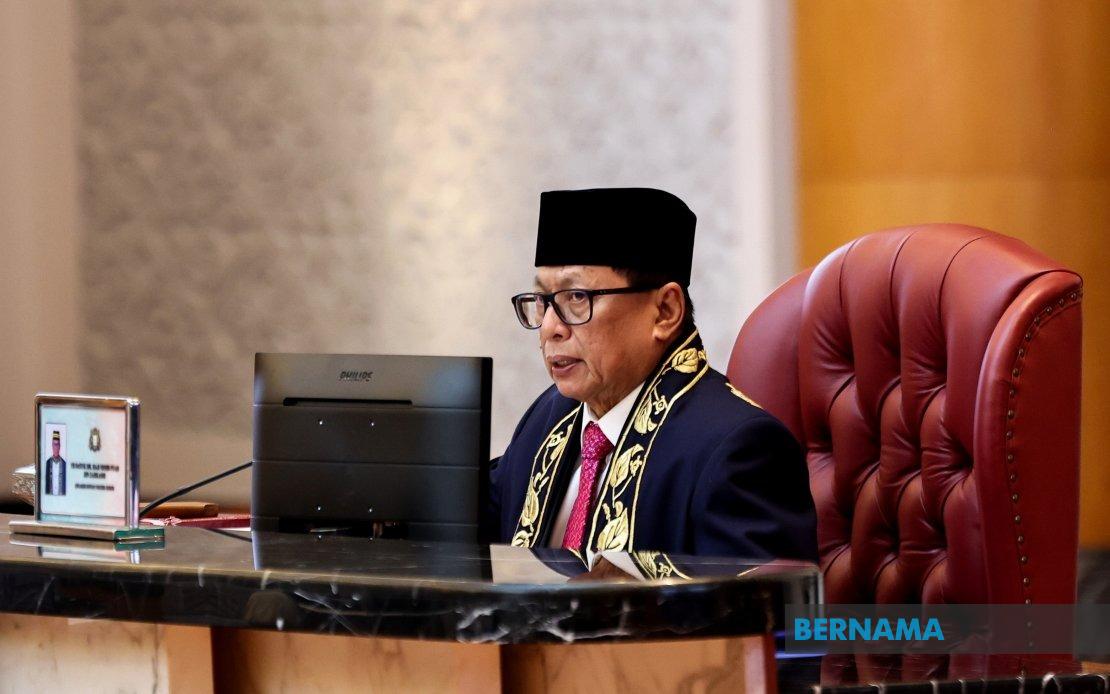
Datuk Dr Mohd Puad Zarkashi, the incumbent assemblyman for Rengit and current speaker of the Johor State Legislative Assembly, has announced his withdrawal from the upcoming state election scheduled for July 11. The announcement, made through a Facebook post on June 17, marks the end of his tenure representing the constituency after winning the seat with a 1,920-vote majority in the 2022 state election.
The 69-year-old lawmaker attributed his decision principally to age-related considerations. According to Mohd Puad, he made the determination to step down approximately a year before the election was called, and formally communicated his intentions to UMNO president Datuk Seri Dr Ahmad Zahid Hamidi and Johor UMNO chairman Datuk Onn Hafiz Ghazi just two weeks prior to his public announcement. His calculation was straightforward: at his current age, he would reach 74 by the conclusion of a five-year term, a juncture he believes is unsuitable for continued parliamentary duties.
This retirement decision reflects a deliberate strategic choice regarding generational leadership renewal within Johor UMNO. Rather than positioning himself as an obstacle to younger aspirants, Mohd Puad explicitly advocated for candidates aged 50 or below to be prioritised in the selection process. His public positioning of this step-down as enabling, rather than obligatory, suggests an attempt to frame the decision as part of a broader modernisation effort within the state party structure. By voluntarily vacating his seat, Mohd Puad positioned himself as supporting chairman Onn Hafiz's wider agenda of establishing a younger, more dynamic legislative representation.
Beyond his immediate electoral withdrawal, Mohd Puad utilised the announcement to articulate what he considered essential criteria for future candidate selection. He outlined a framework encompassing educational attainment, moral integrity, unwavering commitment to the party's ideological struggle, and a demonstrated understanding of national developmental trajectories. These recommendations suggest a concern that not all prospective candidates adequately meet baseline standards, and that the party leadership should implement more rigorous vetting mechanisms.
The timing of this announcement carries particular significance for the Johor electoral landscape. With nomination day scheduled for June 27, the declaration provides Johor UMNO leadership with sufficient runway to identify and field an alternative candidate for Rengit. The competitive margin in the previous election—a 1,920-vote margin—indicates that the constituency remained relatively contested despite UMNO's dominance in state politics. The party will need to ensure its replacement candidate possesses sufficient grassroots support and community standing to retain the seat without Mohd Puad's incumbency advantage.
For Malaysian political observers, Mohd Puad's exit represents a noteworthy instance of voluntary generational transition in a competitive electoral context. Unlike circumstances where long-serving politicians are forced out through internal party dynamics or electoral defeats, his decision reflects a more constructive narrative of planned succession. This approach contrasts with patterns in several Malaysian states where incumbent assemblypersons have clung to seats despite advanced age, often creating factional tensions and complicating party renewal efforts.
Mohd Puad's tenure as Johor speaker, a position granted with the consent of Sultan Ibrahim, King of Malaysia, lent him additional institutional prestige beyond his constituency representation. His stepping aside while retaining this prestigious role demonstrates that the withdrawal reflects electoral considerations rather than any broader loss of confidence or influence. The speaker's position carries constitutional weight in Johor's legislative functioning, and his retention of this post even while relinquishing his seat indicates continued recognition of his administrative capabilities.
The broader implications for Johor's political trajectory merit consideration. Under Onn Hafiz's leadership, the state coalition has sought to project a modernised, forward-looking image. Mohd Puad's voluntary retirement—particularly when framed as enabling younger leadership—aligns with this messaging. However, the Johor election will ultimately test whether replacing experienced incumbents with newer candidates actually strengthens the governing coalition's electoral performance, or whether voter familiarity and established community relationships prove decisive factors in a competitive state.
For Rengit constituency voters, Mohd Puad's departure opens the seat to new representation. The 1,920-vote winning margin from 2022 suggests reasonable electoral competitiveness, though UMNO's broader state dominance under the Perikatan Nasional framework means the seat is unlikely to shift from the coalition's control. Nonetheless, the specific candidate selected to replace him may determine whether the constituency remains a comfortable UMNO stronghold or becomes a marginal contest requiring intensive campaign resources.