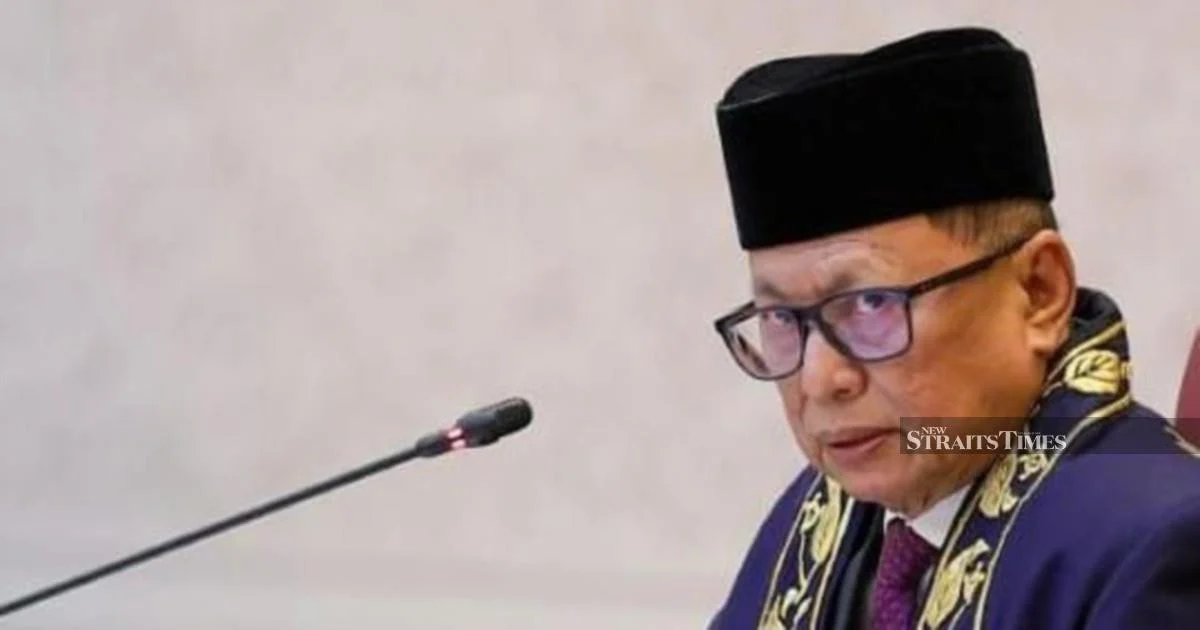
The Johor branch of PKR has mounted a direct confrontation with prominent former Umno figure Datuk Dr Mohd Puad Zarkashi, demanding that he furnish concrete evidence to support his assertion that the royal establishment has meddled in state political matters. Speaking from Pontian, party representatives insisted that such serious allegations require documentary proof and cannot be left as mere conjecture in public discourse.
This escalation comes amid ongoing tensions within Johor's political landscape, where questions about the influence wielded by traditional institutions over elected governments have periodically surfaced. The challenge from PKR reflects broader frustrations among opposition figures regarding what they perceive as an asymmetrical playing field in state governance. By calling for specificity rather than generalisations, the party is attempting to shift the conversation from rhetorical claims towards verifiable facts that could influence public opinion and potentially reshape political calculations.
Datuk Dr Mohd Puad Zarkashi, who held significant influence within Umno's upper echelons before his recent repositioning, carries considerable weight in Johor political circles. His pronouncements often resonate with party cadres and conservative segments that value institutional continuity. However, the sudden emergence of his interference narrative has raised eyebrows across the political spectrum, with observers questioning both the timing and substance of these revelations.
For Malaysian readers familiar with ongoing constitutional debates, this confrontation touches on fundamental questions about the separation of powers and the appropriate boundaries of royal influence in representative democracy. While constitutional scholars acknowledge the ceremonial and statutory roles of the Yang di-Pertuan Agong and state rulers, the practical exercise of these powers remains contentious. Allegations of direct interference in legislative or executive decision-making strike at the heart of democratic legitimacy.
PKR's aggressive posture in demanding evidence serves multiple strategic purposes. First, it shifts the burden of proof onto Datuk Dr Mohd Puad, making him justify claims rather than allowing them to circulate unchallenged. Second, it appeals to the party's base and moderate voters who value institutional propriety and democratic norms. Third, it creates an opening for the party to portray itself as defending parliamentary sovereignty against shadowy backroom influence.
The Johor context adds particular significance to this dispute. As the country's southernmost peninsular state and home to the Johor royal family, the state has long grappled with distinctive governance dynamics. Relations between the Johor palace, the state government, and federal authorities have occasionally generated friction, particularly during periods of divided political control or factional disputes within governing coalitions. This historical backdrop makes allegations of palace interference more credible to some observers, even as they remain contested.
Since the 2022 general election reorganised Malaysia's political map, Johor has emerged as a crucial battleground where PKR, Umno, and other parties compete for dominance. The state government's composition and policy directions directly affect the fortunes of each political movement. Against this backdrop, accusations about extra-democratic interference gain heightened currency, as they can be weaponised to delegitimise opponents and mobilise supporters who distrust institutional overreach.
Datak Dr Mohd Puad's positioning within post-Mahathir Umno politics deserves consideration as well. His emergence as a critic of certain trends within Umno, coupled with these new allegations, suggests potential factional realignments or positioning for influence within the party. Whether his claims represent genuine concerns about governance or tactical moves in internal Umno struggles remains unclear, underscoring why substantiation matters.
From a Southeast Asian comparative perspective, Malaysia's experience with royal influence in politics differs markedly from republics like Singapore and Vietnam, yet shares features with Thailand's constitutional monarchy. Regional observers frequently note how the Malaysian system's ambiguity regarding royal prerogatives can generate uncertainty and provide cover for various actors. Clear delineation of institutional boundaries strengthens democratic governance across the region.
The PKR challenge also reflects evolving standards regarding political discourse in Malaysia. Rather than accepting allegations at face value, the party is insisting on the documentary and testimonial evidence that serious claims demand. This represents a maturation of political debate, moving away from mere assertion towards substantiated argument. Such demands benefit the electorate by forcing greater rigour in how political claims are constructed and defended.
Looking ahead, the response from Datuk Dr Mohd Puad will be illuminating. Should he provide detailed documentation and corroborating testimony, the narrative surrounding Johor governance could shift dramatically, triggering investigations or public inquiries. Conversely, if he cannot substantiate his allegations, the episode may diminish his credibility and embolden PKR's argument that baseless claims about palace interference represent an attempt to delegitimise legitimate governance. Either outcome will carry implications for Johor's political trajectory and broader Malaysian democratic discourse.

