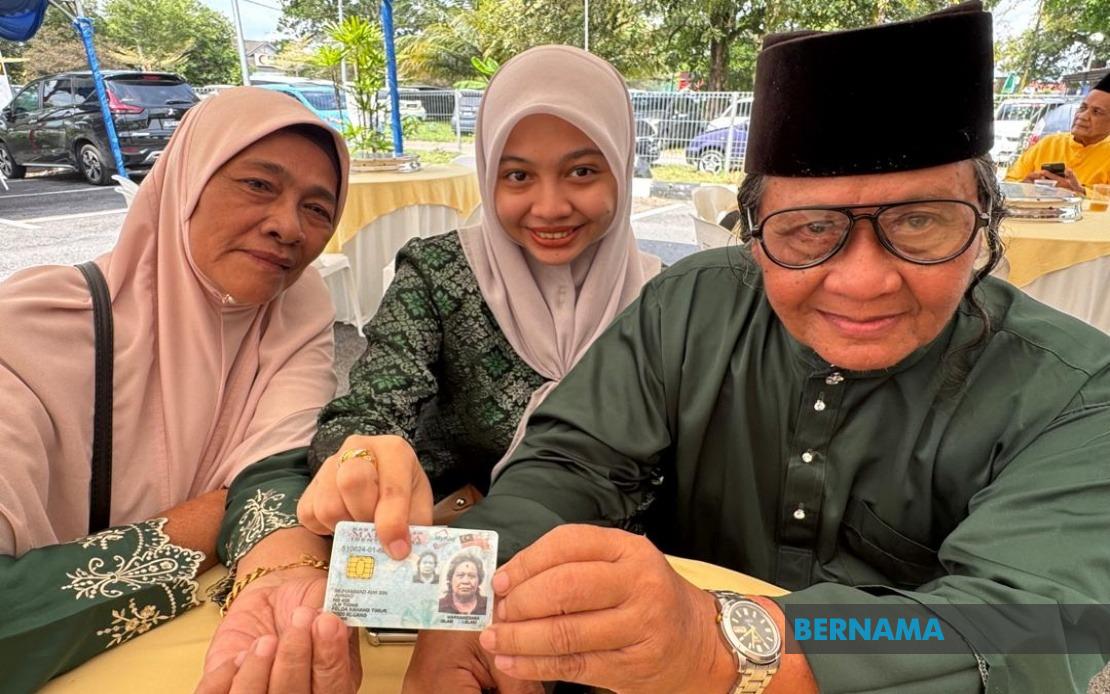
A milestone moment arrived in Kluang yesterday as the Johor state government handed over land ownership certificates to 210 Felda settlers, marking the culmination of decades-long efforts to formalize property rights across the state's plantation communities. The Felda Settlers Land Title Handover Ceremony, presided over by Menteri Besar Datuk Onn Hafiz Ghazi at Dewan Dato' Onn in Rumah Komuniti Parlimen Sembrong, represented a significant administrative achievement in a process that has stretched across multiple generations of farming families.
For Muhammad Awi Ahmad, whose 75th birthday coincided with the ceremony, the timing could not have been more symbolic. The Felda Kahang Timur resident has tended his 4.2-hectare plantation and homestead since 1986, yet formal ownership eluded him through two failed applications submitted in 1990 and 2000. When the Johor administration approved his third application within roughly a year, it effectively resolved a quarter-century of uncertainty about his family's most valuable asset. "All the worry and uncertainty are over now," he remarked, capturing the emotional weight that land ownership carries for settler families who have invested their working lives in cultivating these plots.
The broader context reveals why this handover matters beyond individual success stories. Across Johor, approximately 27,642 Felda settlers submitted applications for land titles, and the state has now successfully processed 27,639 of them—an achievement rate of 99.9 per cent. This near-complete resolution of a longstanding administrative backlog suggests meaningful institutional reform within the state government's land and survey departments. The relatively swift processing time for recent applications compared to the decades-long waits experienced by earlier applicants indicates that bureaucratic procedures have been streamlined, though it also raises questions about what caused the delays in earlier decades.
The involvement of younger settlers provides crucial perspective on why formalization matters beyond sentiment. Norliyani, Muhammad Awi's 25-year-old daughter representing the second generation of Felda families, articulated concerns that transcend individual plots of land. She noted that while first-generation settlers retain the option of returning to their original villages, subsequent generations have no such fallback. For these families, the Felda holdings represent their only home and their sole inheritance. Without formal titles, the risk of dispute or dispossession looms across their lifetimes, potentially affecting not only their generation but children and grandchildren yet to come.
Mohd Farhan Mohamad's experience illustrates how the title issue has become intergenerational. The 43-year-old resident of Felda Pasak in Kota Tinggi first applied for the land title in 2006 with the explicit goal of honouring his father Mohamad Masek's wish to secure the property that had been his livelihood since the 1980s. When their latest application, submitted last year, unexpectedly won approval in 2024, it represented vindication of a patience that had extended across nearly two decades. Such delays meant that some parents never saw their land rights formally confirmed before passing away, burdening their children with unresolved inheritance questions.
The systematic nature of the current resolution process reflects a policy shift at the state level. Rather than processing applications on an ad-hoc basis, the Johor administration has clearly committed resources to clearing the backlog comprehensively. The decision to hold a formal handover ceremony attended by the Menteri Besar signals political will to treat settler land rights as a priority rather than an administrative afterthought. This ceremonial aspect also serves to acknowledge the contributions of these farming communities, many of whom established Felda settlements under government schemes designed to develop land and provide rural livelihoods.
For Malaysian federalism and state governance, the Johor achievement offers a model worth examining. Federal Felda land schemes have historically created ambiguities about ownership, development rights, and inheritance, partly because settlers operated under conditions that blurred the line between occupancy and ownership. Resolving these questions comprehensively at the state level demonstrates that institutional will and adequate resource allocation can overcome legacy problems. Other states with substantial Felda populations might consider whether similar efforts could resolve comparable backlogs in their jurisdictions.
The economic implications extend beyond individual property security. Formal land titles enable settlers to use their holdings as collateral for agricultural loans, invest in improvements with confidence, and plan long-term developments. These economic functions have been constrained for many Felda settlers operating under de facto ownership but without legal documentation. With titles now in hand, this population gains access to formal credit markets and can make investment decisions with greater certainty about their returns.
From a rural development perspective, the completion of this titling process also strengthens the institutional foundation of Felda communities. Settlers with secure titles are more likely to maintain and improve their holdings, invest in modern farming practices, and plan for succession. The psychological shift from temporary occupant to confirmed owner generates commitment that benefits both individual farmers and community stability. In the context of rural-to-urban migration pressures affecting Malaysian agriculture, securing land rights may help retain experienced farming families within these communities.
The broader Southeast Asian context is relevant here. Land titling programs across the region have shown that formal documentation, while sometimes slow and frustrating to implement, generates substantial benefits for agricultural communities and rural economies. Indonesia, Thailand, and Vietnam have all undertaken large-scale land formalization efforts, each encountering bureaucratic challenges but eventually demonstrating that the process yields tangible results in terms of rural development and poverty reduction. Johor's near-complete success in processing its Felda settler applications aligns with these regional trends toward formalizing customary and occupancy-based land rights.
Looking forward, the main challenge involves ensuring that this administrative capacity can be sustained. Processing 27,639 applications required significant institutional effort, and maintaining the systems and staffing levels necessary to handle future applications—whether from settlers whose circumstances have changed or from other populations requiring land formalization—will require continued commitment. The state government's demonstrated ability to handle this workload suggests institutional competence that could be leveraged for other land administration improvements.
For the settler families who finally received their titles yesterday, the resolution represents vindication of their patience and persistence through an often frustrating bureaucratic process. Muhammad Awi Ahmad's birthday gift symbolizes not merely personal achievement but recognition that the state regards their claims seriously and is prepared to formalize the land rights of communities that have contributed substantially to rural development. As this generation of settlers enters retirement, knowing their land is legally and indisputably theirs provides the foundation for secure succession to their children and grandchildren.

