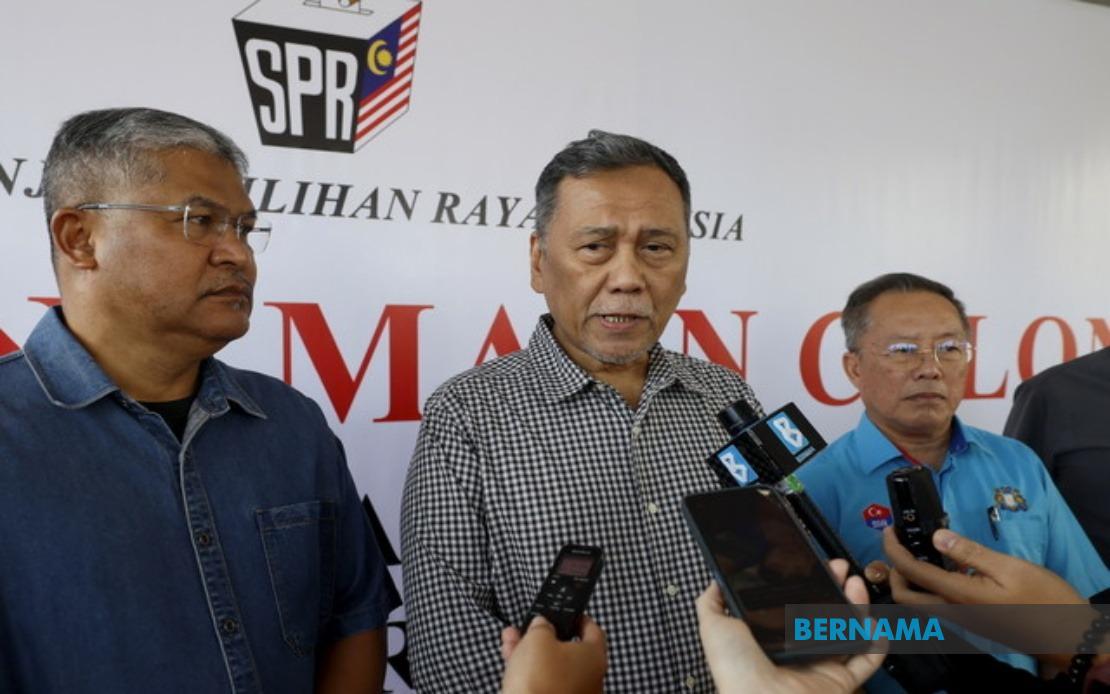
The machinery for the Johor state election is moving into high gear, with nomination activities accelerating on the eve of the official candidacy submission period. As of mid-morning on June 26, the Election Commission had distributed 593 nomination forms through returning officer offices scattered across the state, though only 133 hopefuls have taken the decisive step of lodging the required deposit to lock in their candidacies. Election Commission chairman Datuk Seri Ramlan Harun acknowledged the figures during a media briefing at the Muar District Office, where he was conducting inspections of voting infrastructure. He underscored that the window for final registrations remains open until the nomination process formally commences the following day, providing candidates a final window to complete their administrative obligations.
The relatively modest conversion rate from form sales to confirmed candidates reflects the deliberative nature of electoral participation at the state level. While 593 aspiring politicians have demonstrated preliminary interest by acquiring nomination papers, the transition to binding commitment through deposit payment signals genuine readiness to contest. Ramlan's observation that these numbers were anticipated to climb suggested the Election Commission anticipated a late surge in registrations, a phenomenon common in Malaysian electoral cycles where candidates often defer formal confirmation until the final permissible moment. This timing pattern places considerable pressure on returning officers and administrative staff to process applications efficiently during the crucial nomination day, particularly given the need to verify documentation and assess candidate eligibility against regulatory requirements.
Preparations across the 56 nomination centres scattered throughout Johor have reached an advanced stage following two consecutive days of operational dry runs orchestrated by the Commission. This methodical approach to testing procedures and identifying logistical bottlenecks reflects lessons learned from previous electoral exercises and represents a deliberate strategy to ensure smooth administration of what remains a high-stakes political exercise. The trial runs enabled staff to familiarize themselves with documentation flows, crowd management protocols, and technological systems that would support the nomination process. Ramlan's confirmation that all centres stood ready for deployment provided reassurance to stakeholders that the administrative machinery would function without significant disruption, a consideration particularly important given the compressed timeline between nomination and polling day on July 11.
Security and crowd management emerged as paramount concerns during Ramlan's briefing, reflecting legitimate anxieties about potential disruptions during nomination proceedings. Returning officers had been instructed to implement a carefully calibrated approach that would permit controlled participation by party supporters while maintaining order and preventing inflammatory confrontations. At the Maharani constituency nomination centre, returning officer Zainal Eran outlined protocols restricting access to the submission venue itself to the candidate, their proposer, and a single supporter, with remaining party backers directed to demarcated field areas separated by physical barriers. This graduated access system represents a pragmatic compromise between democratic inclusivity and administrative necessity, permitting supporters to witness proceedings while insulating the formal submission process from potential disruption. The emphasis on pre-positioned barriers and zone segregation reflected historical experience with heated nomination day proceedings across Malaysian constituencies, where rival party supporters occasionally engaged in provocative confrontations.
The coalition composition for the election reveals substantial shifts in political alignments and strategic calculations among Malaysia's major groupings. Pakatan Harapan committed itself to fielding candidates across all 56 seats, with internal distribution reflecting the coalition's post-2018 recalibration: PKR would field 20 nominees, Amanah 19, and DAP 17. This relatively balanced allocation within the opposition coalition contrasts with the more heavily concentrated Barisan Nasional approach, where UMNO shouldered the bulk of the 56-seat contest with 36 candidates, supplemented by 16 from MCA and four from MIC. The numerical disparity underscores UMNO's continued dominance within the traditional coalition, even as its absolute vote share has contracted during recent electoral cycles.
Perikatan Nasional's fragmented candidacy distribution reveals the coalition's operational challenges and the divergent strategic priorities of its constituent parties. PAS fielded only 11 candidates despite its strengths in the Malaysian peninsula, while Bersatu committed 16 candidates, the Malaysian Indian People's Party five, and Pejuang a solitary nominee. This unequal burden-sharing within Perikatan Nasional suggested either negotiated concessions to dominant partners or strategic decisions to concentrate resources in constituencies where component parties calculated higher success probabilities. The Malaysian United Democratic Alliance's decision to contest merely four seats positioned it as a marginal participant, while Parti Sosialis Malaysia's single candidacy reflected its limited organizational footprint in Johor.
The participation of Parti Bersama Malaysia in its inaugural electoral contest introduced a new variable into Johor's political dynamics. With 15 candidates fielded across the state, the newcomer demonstrated sufficient organizational capacity to achieve statewide coverage while operating outside established coalition structures. This emergence of additional political contestants fragments the electoral market and potentially reshapes vote distribution patterns, though historical evidence suggests electorally inexperienced parties typically secure modest aggregate support. The concentration of Parti Bersama Malaysia's candidacies throughout Johor suggested a deliberate state-level focus rather than dispersed national ambitions, a strategic choice that could influence outcomes in constituencies where opposition or ruling coalition votes face three-way or four-way competition.
The constitutional dissolution of the Johor State Legislative Assembly on June 1 initiated a compressed but manageable electoral timeline culminating in the July 11 polling date. Early voting had been scheduled for July 7, providing security personnel, election officials, and voters with mobility constraints opportunities to participate before the principal polling day. This compressed calendar—spanning just six weeks from assembly dissolution to final counting—compressed candidate recruitment, campaign organization, and voter engagement into an intensive period that advantaged incumbent administrations with established machinery and disadvantaged emerging challengers requiring organizational construction from foundational elements. The rapid progression from nomination through early voting to general polling represented logistical coordination of considerable complexity, demanding seamless coordination among federal and state electoral authorities, security establishments, and local government bodies.
The significance of the Johor contest extended beyond immediate state-level governance considerations, as the composition of the 56-member assembly would substantially influence Malaysia's broader political trajectory. Johor's electoral outcome would provide early indication of voter sentiment regarding coalition performance and policy priorities in the crucial pre-monsoon period following the preceding year's parliamentary elections. The state's historical role as a political bellwether meant that trends evident in Johor voting patterns typically presaged national tendencies, making the nomination process and subsequent campaign period subjects of intense scrutiny among federal political strategists. Momentum generated through either coalition victory or unexpected electoral surprises in Johor could reverberate across subsequent state election cycles and parliamentary by-elections scheduled throughout the following months.

