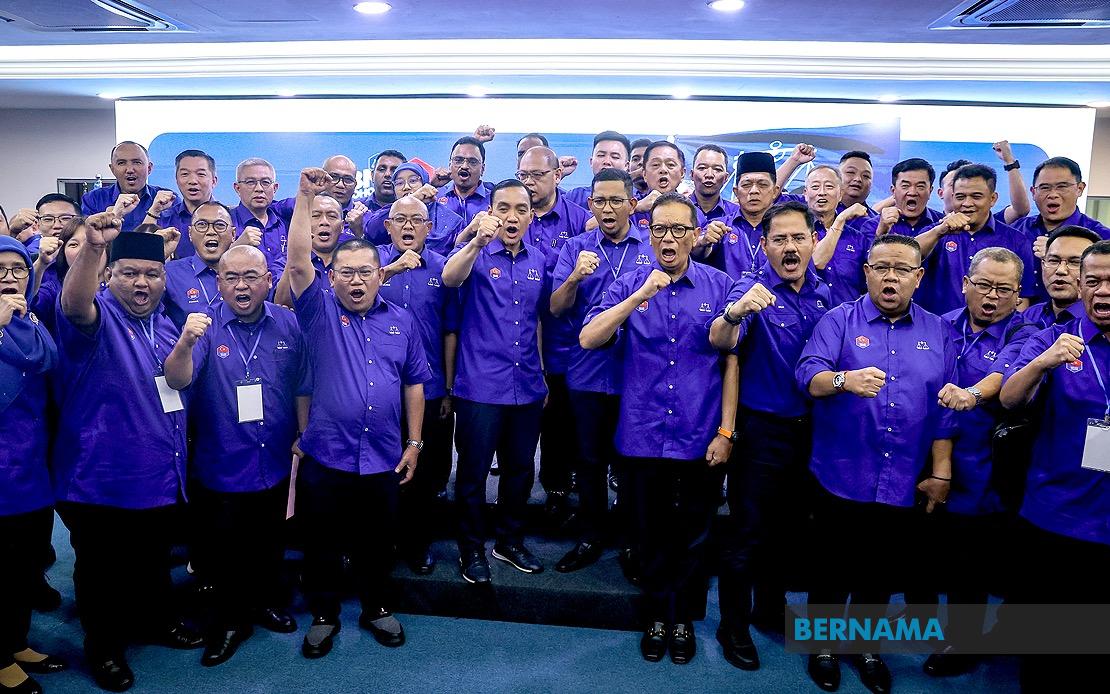
Johor Barisan Nasional has unveiled its comprehensive candidate roster for the 16th state election, fielding a mix of experienced incumbents and new challengers to contest all 56 state assembly seats in what analysts view as a critical test of the coalition's political fortitude in the southern state. The announcement ceremony in Johor Bahru saw Johor BN chairman Datuk Onn Hafiz Ghazi present the line-up comprising 37 UMNO representatives, 15 from the Malaysian Chinese Association, and four from the Malaysian Indian Congress—a composition that reflects the coalition's traditional ethnic-based party structure and voting patterns across the state's diverse constituencies.
The candidate selection drew explicit approval from national BN chairman Datuk Seri Dr Ahmad Zahid Hamidi, underscoring the centrality of federal coalition leadership in state-level nominations. This endorsement carries particular weight given the scrutiny surrounding seat allocations between component parties and the need for unity messaging ahead of the campaign proper. The distribution of nominations reflects UMNO's dominant position within the broader BN machinery in Johor, though the allocation to MCA and MIC constituencies suggests efforts to maintain inter-communal coalition cohesion in constituencies with significant Chinese and Indian electorates.
Among the most prominent inclusions is former health minister Datuk Seri Dr Adham Baba, who returns to electoral politics contesting the Pasir Raja seat. Adham's political trajectory demonstrates the volatility of Malaysian politics over the past two decades. Having represented Pasir Raja across two consecutive terms from 2008 to 2018, he transitioned to federal politics, serving as Tenggara MP for separate periods spanning 2004 to 2008 and again from 2018 to 2022. His tenure as health minister during the critical early phases of Malaysia's pandemic response positioned him as a national figure, though his portfolio tenure ultimately proved relatively brief. His return to state politics signals either strategic repositioning or a consolidation of his power base, and observers will closely watch whether his previous electoral dominance in the constituency remains intact.
Menteri Besar Onn Hafiz Ghazi has been retained to defend the Machap seat, which he first captured in the 2022 state election. As the state's chief executive, his re-nomination carries symbolic weight beyond individual electoral competition, representing BN's assertion that his administration merits continuation. The choice to field the sitting Menteri Besar in a single state seat rather than pursuing dual candidacy distinguishes Johor's political practices from some other states and reflects confidence in his personal electoral appeal within the constituency. His retention aligns with conventional wisdom that sitting chief ministers require legislative majorities to govern effectively.
Notable departures from the previous election cycle suggest both strategic recalibration and potential dissatisfaction with certain representatives. In the Benut constituency, former Menteri Besar Datuk Seri Hasni Mohammad, despite holding the incumbent assemblyman position from the 2022 election, has been excluded from the candidate list entirely. This exclusion, while presented matter-of-factly in official announcements, likely reflects internal coalition calculations regarding seat efficiency or factional considerations within UMNO's competitive internal politics. BN has nominated UMNO working secretary Datuk Mohd Sumali Reduan to contest Benut instead, positioning him as the coalition's standard-bearer in a seat previously held by a former chief executive. Such moves invite speculation about evolving power dynamics within the state party machinery and suggest that incumbency alone provides no guarantee of renomination.
The retention of nine of the ten former Johor executive councillors who contested in 2022 demonstrates the coalition's confidence in its experienced administrative cadre at the state assembly level. Executive councillors represent the apex of state-level governance, and their retention signals continuity in policy direction and administrative personnel. The single exception—Khairin-Nisa Ismail @ Md On, formerly State Women, Family and Community Development Committee chairman—will not defend the Serom seat she previously held. The non-renomination of a female executive councillor raises questions about women's representation within BN's state political structures and whether gender-based considerations influenced the decision or whether performance metrics drove the exclusion.
In his remarks at the candidate announcement, Onn Hafiz adopted a tone emphasising responsibility and ethical conduct, cautioning nominees that their selection constituted "trust and responsibility" rather than reward or privilege. This framing suggests awareness of public sensitivities surrounding political patronage and the importance of projecting an image of meritocratic governance. His exhortation that candidates conduct themselves with integrity and courtesy, aligned with "values upheld by the people of Johor," implicitly acknowledges that campaign conduct itself constitutes a competitive variable. Given Malaysia's history of combative state and federal election campaigns featuring personal attacks and inflammatory rhetoric, such appeals to restraint potentially signal BN's desire to project a more presidential, statesmanlike image during the campaign phase.
The Johor election assumes significance within Malaysia's broader political context as a bellwether for national coalition politics. The state, long considered a BN stronghold despite periodic electoral shocks, holds approximately 56 of the 222 state assembly seats across Malaysia and represents roughly one quarter of Johor's voting-age population. The composition of the candidate line-up and the results of the forthcoming campaign will illuminate whether BN's post-2022 federal election revival translates into sustained state-level dominance or whether opposition coalitions can challenge its traditional bastion. For observers tracking Malaysian federalism and state-versus-federal political dynamics, Johor's electoral performance will provide crucial data points regarding the sustainability of current power arrangements.
The strategic positioning of candidates across constituencies suggests BN's internal assessment of which seats require defensive effort and which can absorb innovation with less-established figures. The retention of experienced politicians in strategically critical constituencies, paired with the introduction of new faces in perhaps more secure areas, reflects classical campaign management. However, this equilibrium remains contingent on evolving electoral conditions, opposition campaign effectiveness, and the unpredictable salience of state-specific or national-level issues during the campaign period itself. The road to the election will reveal whether these calculations prove strategically sound or whether unexpected electoral dynamics reshape the competitive landscape.

