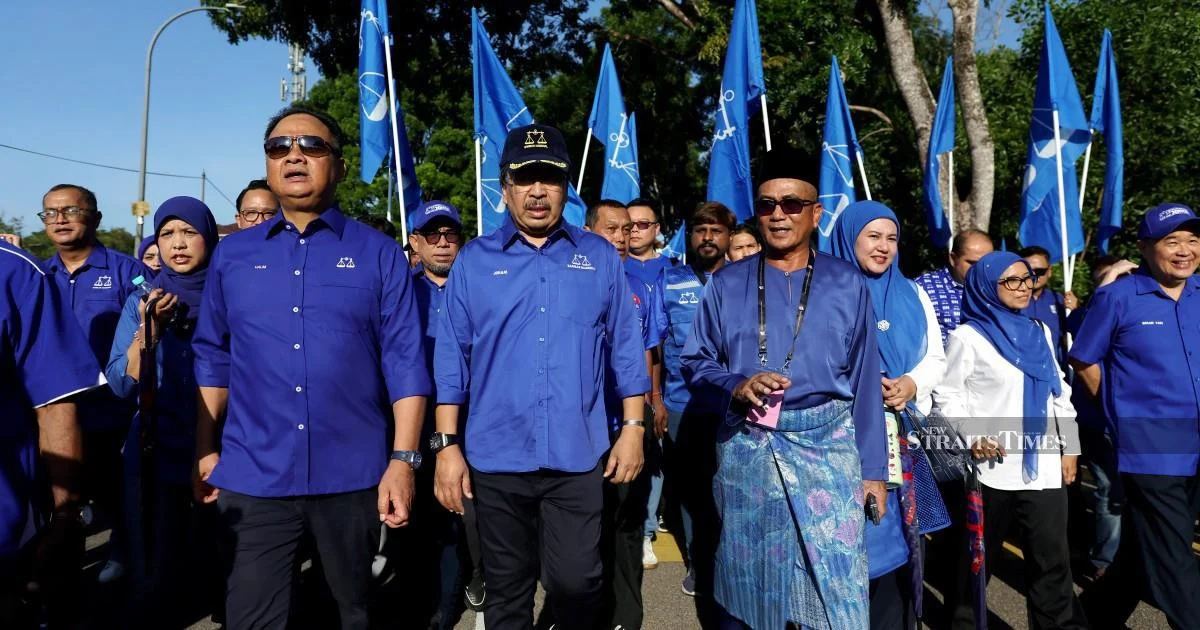
Umno vice-president Datuk Seri Johari Abdul Ghani made a campaign stop at the Taman Pelangi Indah community hall in Johor Baru to mobilise grassroots support for the Barisan Nasional candidate contesting the Tiram state seat, underscoring the coalition's determination to retain ground in the southern state's assembly elections.
The appearance of senior party figures in individual constituencies during campaign season reflects the strategic importance Umno places on specific seats within its traditional strongholds. Johari's presence at the gathering demonstrates Barisan Nasional's commitment to fielding competitive candidates and sustaining momentum across Johor's electoral landscape, where the coalition has historically held substantial influence. His participation also signals the party machinery's coordinated effort to energise supporters and reinforce messaging at the community level.
Tiram represents the type of state seat that often determines overall election outcomes in Malaysian assembly contests. These smaller electoral divisions, while less prominent in national headlines than parliamentary constituencies, collectively shape which coalition controls state government. Barisan Nasional's focus on such seats reflects the reality that state elections are frequently decided through accumulated victories in unglamorous residential and semi-urban constituencies rather than high-profile urban battlegrounds.
Johor's political landscape has undergone significant flux in recent years. The state, which Umno long considered an unshakeable base, experienced challenges during previous electoral cycles as voters experimented with alternative coalitions. The coalition's renewed emphasis on door-to-door campaigning and community hall gatherings suggests a strategic recalibration aimed at reconnecting with voters at grassroots levels and rebuilding trust in constituencies like Tiram that may have drifted during periods of political volatility.
The Taman Pelangi Indah gathering also reflects broader campaign strategies that Malaysian political parties employ during state-level contests. Senior leaders typically allocate their time across multiple constituencies, with their participation carefully scheduled to coincide with campaign phases targeting specific voter demographics. Johari's involvement in a community-centred event indicates Barisan Nasional's recognition that victory often hinges on persuading ordinary residents through personal connection rather than relying solely on media messaging or national-level party rhetoric.
Johor's elections carry particular significance within Malaysia's broader political equilibrium. As one of the nation's most populous states with substantial economic activity, the state's political orientation influences national dynamics and coalition arithmetic in parliament. Moreover, Johor's electoral outcomes often set precedents that opposition and coalition parties analyse to calibrate strategies for subsequent contests elsewhere in the country. A strong performance in Johor provides political momentum extending well beyond the southern state itself.
Barisan Nasional's campaign approach in constituencies like Tiram emphasises direct engagement with voters on issues affecting their daily lives—local infrastructure, community services, and constituency-level development projects. By dispatching senior figures such as Johari, the coalition aims to convey that party leadership takes each seat seriously rather than assuming automatic victory in traditionally friendly territories. This ground-focused approach contrasts with periods when Umno relied heavily on institutional advantages, and reflects lessons learned from electoral upsets in previous contests.
The Tiram seat itself forms part of the broader electoral geography that will determine whether Barisan Nasional maintains or improves its position in the Johor state assembly. As Malaysia's political landscape continues fragmenting into multiple viable electoral options for voters, no seat can be taken entirely for granted regardless of historical voting patterns. Candidates contesting under the Barisan Nasional banner must actively build support coalitions among diverse voter groups rather than banking on partisan loyalty alone.
Johari's background as Umno vice-president makes his campaign appearances particularly valuable as signals of party commitment. Senior leaders' participation in constituency campaigns serves multiple functions simultaneously: they energise local party activists, attract media attention amplifying the campaign message, and demonstrate to voters that central party leadership values their support. For the Tiram electorate, Johari's visit underscores that Barisan Nasional views their seat as consequential within the broader strategic picture.
The community hall format chosen for the campaign event proves significant as well. Unlike large rallies held in stadiums, intimate gatherings at neighbourhood facilities enable more meaningful voter interaction, allow candidates to address specific local concerns, and create photographs suitable for social media targeting neighbourhood residents. This tactical approach has become standard across Malaysian political campaigns as parties refine their understanding of how different voter segments respond to various campaign mechanisms.
Looking forward, the campaign dynamics in Tiram will likely reflect broader patterns emerging across Johor's constituencies. Barisan Nasional faces the dual challenge of consolidating traditional support while recovering votes lost to opposition parties or splinter movements during previous elections. Campaign events like the Taman Pelangi Indah gathering provide platforms for party messaging while simultaneously generating grassroots intelligence about voter sentiment that informs resource allocation and strategy refinement as the election nears.
For Malaysian observers monitoring Johor's political trajectory, the active participation of senior party leaders in individual constituency campaigns demonstrates that the coalition takes the electoral contest seriously and recognises that state-level contests demand sustained, focused effort across numerous individual seats rather than relying on national figures or abstract party appeals.

