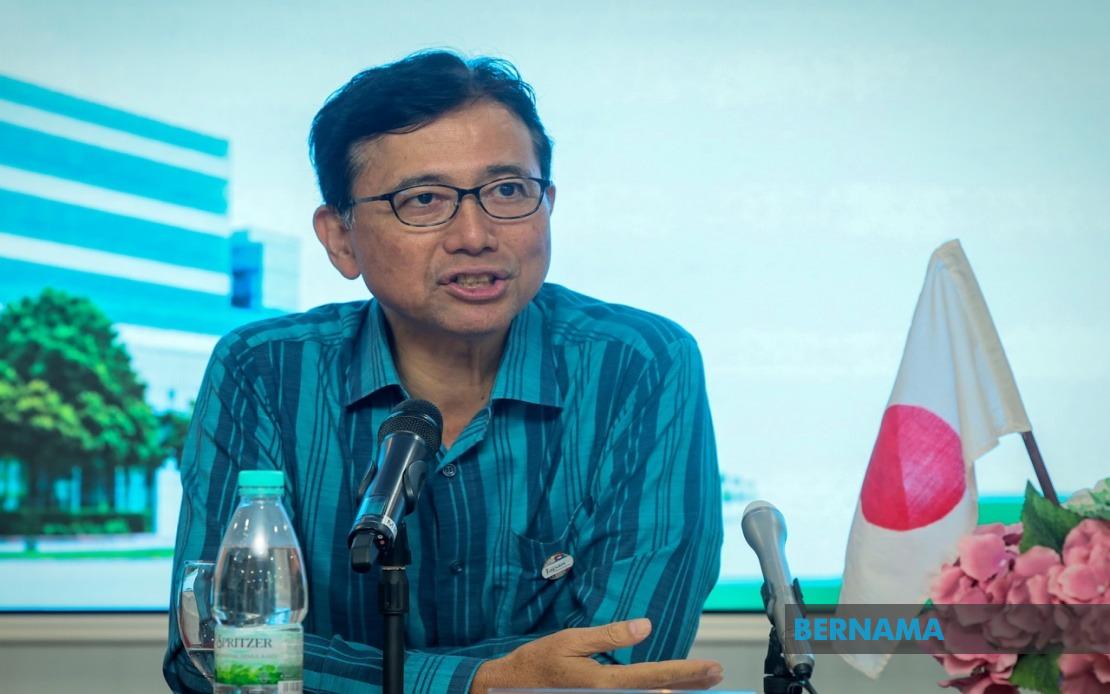
Japan's recalibrated approach to regional engagement through its updated Free and Open Indo-Pacific (FOIP) framework represents a significant opportunity for Malaysia's ambitions to establish itself as Southeast Asia's premier technology and digital innovation centre, according to Japanese Ambassador to Malaysia Noriyuki Shikata. The framework, unveiled by Prime Minister Sanae Takaichi in May, marks a substantial shift in how Tokyo envisions its role in shaping the Indo-Pacific region's economic and strategic future.
Originally introduced by former Prime Minister Shinzo Abe in 2016, the FOIP concept has evolved considerably from its initial focus on promoting broad regional peace and stability. The updated iteration reflects Japan's pragmatic recognition that sustained prosperity in the region requires concrete investment in emerging technologies and critical infrastructure. Rather than remaining a largely aspirational diplomatic framework, the new FOIP emphasises measurable capacity building and substantive cooperation across sectors that will define competitive advantage over the coming decade, including artificial intelligence, secure data management systems, undersea cable networks and satellite communications infrastructure.
Ambasador Shikata characterises this evolution as a natural progression that positions Japan as a partner aligned with Southeast Asian priorities rather than imposing external strategic visions. The updated framework directly complements the ASEAN Outlook on the Indo-Pacific (AOIP), demonstrating Tokyo's commitment to working within regional consensus rather than pursuing parallel initiatives. This alignment is particularly significant for Malaysia, which has championed AOIP as the guiding framework for regional cooperation and has sought to avoid geopolitical fragmentation that competing Indo-Pacific strategies might create.
Underpinning the diplomatic framework is substantial financial commitment. The POWERR Asia (Partnership on Wide Energy and Resource Resilience Asia) initiative brings US$10 billion in dedicated funding to support ASEAN nations in addressing critical vulnerabilities in energy security and supply chain resilience. For ASEAN members including Malaysia, this translates to tangible assistance in securing fuel supplies, expanding energy reserves and protecting access to rare earth elements and other materials essential for manufacturing and technology production. The initiative acknowledges that regional stability depends on reducing economic vulnerabilities that could be exploited during periods of global tension.
For Malaysian business operations and the Japanese corporate presence within the country, the framework signals a meaningful shift in investment priorities and operational strategy. Japanese enterprises operating in Malaysia have traditionally concentrated on conventional manufacturing sectors. The updated FOIP encourages these companies to reorient towards higher-value technology partnerships and next-generation industrial activities. This transition aligns with Malaysia's own strategic imperative to move beyond low-cost assembly operations towards activities that generate greater economic value and employment quality.
Malaysia's position as a regional semiconductor hub figures prominently in this recalibration of Japanese investment strategy. The country has developed considerable expertise in chip manufacturing, particularly in advanced packaging and related specialisations. Japanese corporations, including some of the world's leading technology firms, see significant opportunity to deepen engagement with Malaysia's semiconductor ecosystem. Beyond traditional chip production, investment flows are expected to expand into artificial intelligence infrastructure, cloud computing capabilities and quantum computing research and development, areas where Malaysia is positioning itself for expanded participation.
The bilateral relationship between Japan and Malaysia has entered what Ambassador Shikata describes as a new phase following establishment of the Comprehensive Strategic Partnership in December 2023. This arrangement moves beyond the historical Look East Policy framework that characterised earlier decades of cooperation. Instead of a primarily manufacturing-focused relationship centred on technology transfer and industrial development, the partnership now emphasises innovation co-creation, knowledge sharing and strategic alignment on emerging challenges. This represents a more balanced relationship where Malaysia is positioned not simply as an investment destination but as an active partner in developing next-generation technologies and solutions.
Recent high-level Malaysian engagement with Japan's major industrial corporations illustrates the practical dimensions of this strategic evolution. Prime Minister Datuk Seri Anwar Ibrahim's recent Japan visit included substantive meetings with executives from Mitsubishi Corporation, ENEOS, DENSO, IBM and Marubeni, among others. These interactions laid explicit groundwork for Malaysian participation in Japanese corporate strategies across energy, automotive components, information technology and trading sectors. The discussions signal Japanese confidence in Malaysia's capacity to participate in value-added industrial activities beyond traditional manufacturing roles.
The framework's emphasis on artificial intelligence and quantum computing reflects recognition of technologies that will define competitive position throughout the 2030s. Both Japan and Malaysia face common challenges in developing domestic capabilities in these domains while navigating significant investment requirements and talent competition from larger economies. Through coordinated development initiatives, the two countries can pool expertise and resources more efficiently than pursuing separate strategies. Malaysian participation in Japanese-led research and development projects offers opportunities to build technical capabilities and attract specialised talent to the country.
Critical infrastructure protection and supply chain security represent another crucial dimension where bilateral cooperation will expand. Recent global disruptions to semiconductor supply chains, energy flows and rare earth material access have underscored the importance of securing alternative sourcing and production arrangements. Japan and Malaysia, with complementary strengths in different segments of critical supply chains, stand to benefit significantly from joint initiatives designed to reduce exposure to single-source dependencies and geopolitical vulnerabilities. Such cooperation enables both nations to navigate global strategic uncertainties with greater confidence.
Ambassador Shikata's commitment that Japan will serve as Malaysia's most reliable partner in industrial transformation reflects genuine strategic interest rather than mere diplomatic courtesy. Japan's own economic challenges, including demographic decline and labour shortages, create strong incentives for the country to develop deepening partnerships with dynamic Southeast Asian economies. Malaysia's young population, growing technical capabilities and strategic location make the country a natural focal point for Japanese corporate expansion and strategic investment in the region.
The implications for Malaysia extend beyond bilateral relations to encompass the broader Southeast Asian technological development agenda. As Japan repositions itself as a partner in innovation and capacity building rather than simply exporting mature technologies, other ASEAN members will likely seek similar collaborative arrangements. Malaysia's ability to effectively leverage the FOIP framework and bilateral partnership with Japan could establish a model that demonstrates concrete benefits of strategic alignment with developed Asian economies while maintaining ASEAN cohesion and the primacy of the AOIP framework.