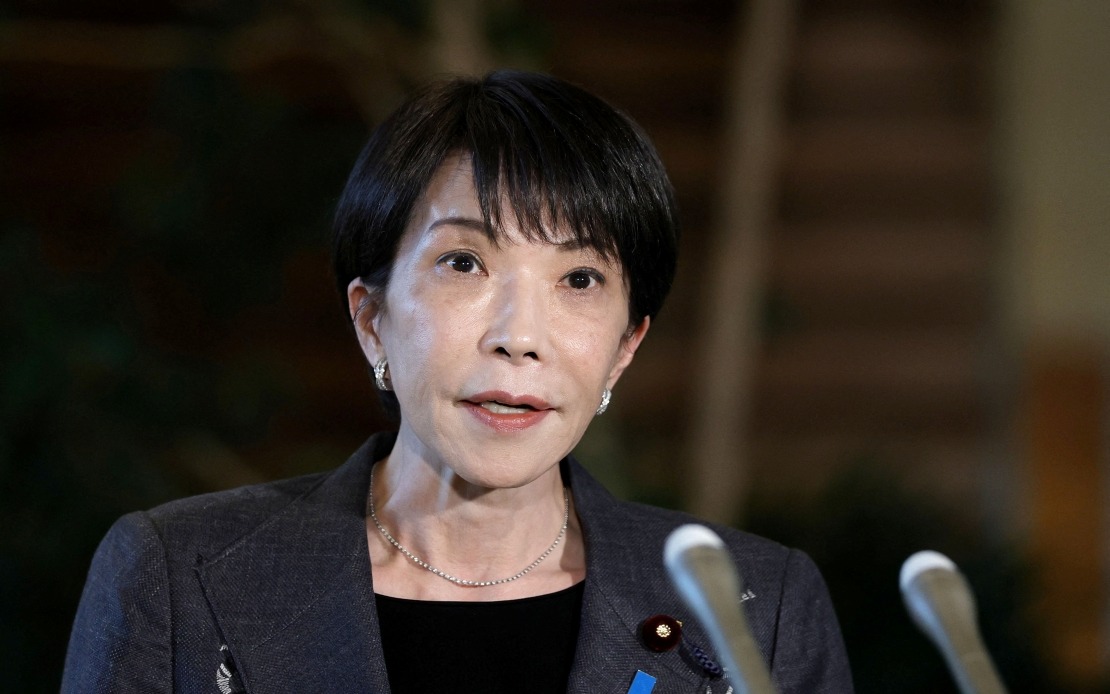
Prime Minister Sanae Takaichi has made an explicit pledge to restore Japan's consumption tax on food to 8 per cent following a planned two-year reduction beginning April 2027, underscoring the government's determination to manage the nation's deteriorating fiscal position even as it attempts to provide relief from persistent inflation. Speaking before the House of Representatives committee on Monday, Takaichi confirmed that the tax would revert to its original rate after the temporary cut expires, framing the measure as time-limited rather than permanent policy reform.
The commitment represents a significant clarification of the ruling Liberal Democratic Party's economic strategy following months of internal debate over how to deliver on campaign promises. During February's general election, the LDP had pledged to eliminate consumption tax on food entirely, a pledge echoed by coalition partner Japan Innovation Party and various opposition blocs seeking to help households navigate rising living costs. However, practical implementation concerns have since prompted a recalibration of that position, with the party now proposing a reduction to just 1 per cent instead of zero.
Opposition lawmaker Ken Tanaka raised a prescient concern during parliamentary questioning, noting that once lowered, tax rates become politically difficult to restore because restoration appears as a tax increase rather than a policy normalisation. This observation reflects the genuine challenge facing any government attempting to unwind temporary fiscal stimulus in democratic systems, where public perception often diverges sharply from technical economic reasoning. Takaichi's explicit pre-commitment to the restoration timeline represents an attempt to neutralise such criticism by establishing expectations from the outset.
The reduced rate stems from a cross-party national council on taxation and social security that has been deliberating the issue for months. Rather than implementing a zero rate, which would require substantial modifications to retailer point-of-sale systems nationwide, the LDP identified 1 per cent as a more administratively feasible threshold. This pragmatic adjustment highlights how technical constraints can reshape policy outcomes, even when political will exists to pursue more ambitious measures.
To offset the difference between a 1 per cent rate and complete elimination, the government has proposed annual cash handouts totalling approximately 600 billion yen, equivalent to the revenue forgone from maintaining that 1 per cent levy. This approach essentially disguises what would effectively be a zero-rate outcome through a combination of reduced taxation and direct compensation, a mechanism gaining favour among policymakers seeking to honour campaign commitments while managing fiscal impacts.
The timing of this initiative coincides with mounting concerns about Japan's macroeconomic stability, creating significant tension in policy formulation. Government bond yields have surged to their highest levels in decades, while the Japanese yen has remained persistently weak, both signalling market anxiety about the nation's fiscal trajectory. Japan's government debt already represents the worst ratio among Group of Seven economies, and additional revenue forgiveness through the food tax cut will inevitably exacerbate those structural imbalances.
Takaichi has signalled her intention to move the tax reduction forward as expeditiously as possible once the national council finalises its interim report, expected later this month. This momentum suggests the government views the measure as sufficiently important to prioritise despite fiscal headwinds, reflecting the political salience of inflation relief in Japanese public consciousness. The announcement that the cut would begin in April 2027 provides roughly nine months for retailers and systems providers to prepare infrastructure adjustments, though opinions differ on whether that timeline proves adequate for nationwide implementation.
For Malaysian and Southeast Asian observers, Japan's fiscal dilemmas offer instructive parallels regarding the constraints facing inflation-fighting governments throughout the region. Japan's experience demonstrates how electoral commitments to consumer relief can prove difficult to calibrate against macroeconomic stability imperatives, particularly when external factors such as currency weakness and bond market dynamics constrain policy space. The willingness to deploy temporary measures with predetermined expiration dates represents a middle path between permanent fiscal stimulus and no relief whatsoever.
The episode also underscores how administrative and technical considerations increasingly shape tax policy formulation. The shift from zero to 1 per cent reflects not ideological preference but practical acknowledgment that point-of-sale system modifications require time and investment. This technical dimension, often overlooked in political discourse, can meaningfully influence implementation feasibility and ultimately determine whether policy intentions translate into effective outcomes.
Looking forward, the success of this arrangement will depend substantially on whether the two-year timeframe proves sufficient to establish the restoration as credible rather than aspirational. Political commitments made today frequently unravel when implementation arrives, particularly if economic conditions deteriorate or electoral calculations shift. Takaichi's explicit parliamentary commitment suggests awareness of this dynamic, with the premature signalling potentially serving as a binding constraint on future reversals, though such commitments have proven malleable in other jurisdictions facing similar pressures.

