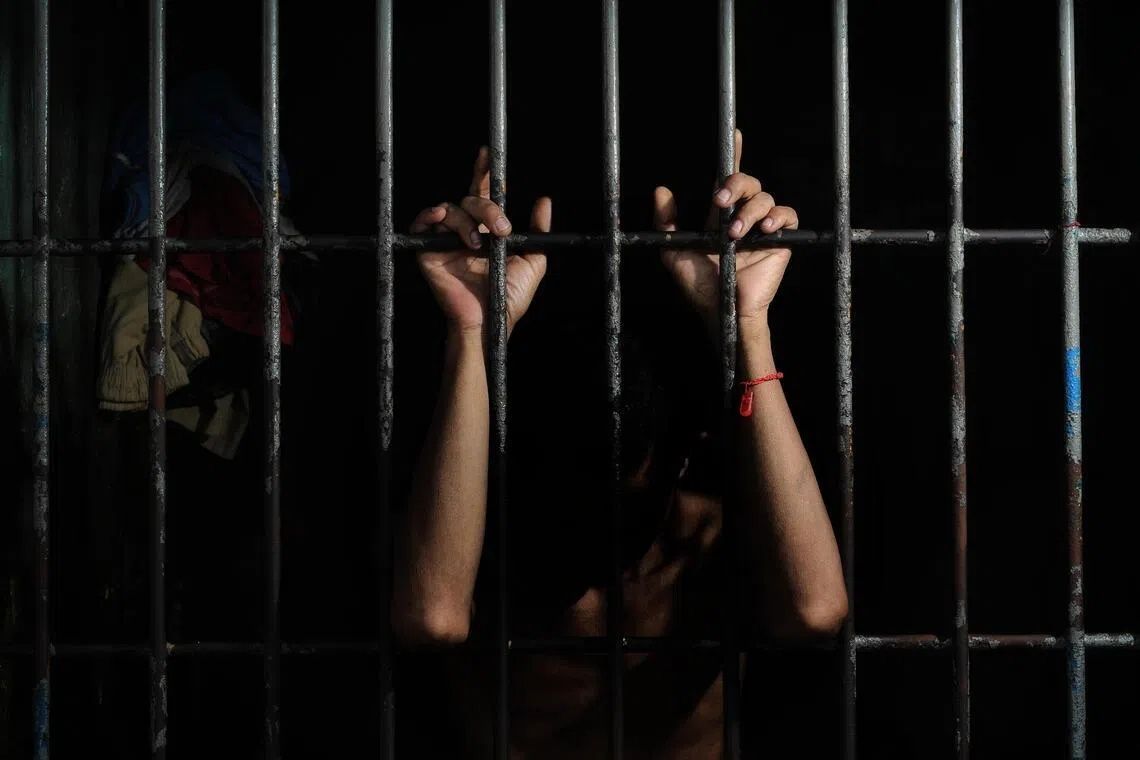
A grieving Japanese mother has filed a lawsuit against the state, seeking 100 million yen in compensation following the death of her 16-year-old daughter, who succumbed to severe emaciation months after being released from police detention. The case, filed in Kobe district court in mid-June, represents one of the most harrowing examples yet of what critics call Japan's "hostage justice" system—a criminal justice framework that places enormous weight on extracting confessions from suspects rather than building cases on evidence.
The teenager, identified by the pseudonym Runa in court documents, was detained for 18 days in June of the previous year after being arrested on suspicion of assaulting a patient at a care facility for people with disabilities where she worked in Hyogo region. According to the complaint, the alleged incident occurred during a Valentine's Day party and involved Runa gently pressing her hand against the patient's chin to prevent the person from biting another resident—an action prosecutors would later decide was entirely unfounded, dropping all charges without pressing formal prosecution. Yet those 18 days would prove devastatingly consequential for the young woman's health and life.
During interrogations, Runa faced relentless psychological pressure to confess to a crime she maintained she did not commit. Police investigators reportedly told her she would be sent to a reformatory and prevented from seeing her mother unless she admitted guilt. According to Masahiro Sasaki, the lawyer representing Runa's mother, one investigator repeatedly stated, "You did it, didn't you? Just tell the truth," a phrase drawn from a journal the girl kept while incarcerated. She was denied family contact, permitted only to communicate with her legal representatives, and subjected to interviews designed to wear down her resistance rather than establish actual facts.
The consequences of this ordeal manifested immediately and catastrophically. Following her release, Runa was diagnosed with acute stress disorder, eating disorders, and post-traumatic stress disorder. Within five months, her physical condition had deteriorated to such an extent that she weighed merely 20 kilograms—approximately 44 pounds—and her mother reportedly could not recognise her own daughter. By December, she was dead. At her daughter's funeral, the mother expressed bewilderment and anguish: "I want to know what happened to her, and why she was arrested, detained and had to die."
The case illuminates fundamental structural problems within Japan's criminal justice apparatus. Japan's system historically operates on assumptions fundamentally different from Western legal frameworks that prioritise the presumption of innocence. Instead, the Japanese system relies overwhelmingly on confessions as the lynchpin of prosecution, with interrogations conducted in ways that critics argue are designed to obtain admissions rather than uncover truth. Pre-trial detention, which can be extended repeatedly on prosecutors' requests, becomes a tool to pressure suspects into confession rather than a mechanism for ensuring public safety or preventing flight.
Runa's circumstances typified these systemic abuses. She was a 16-year-old with no previous history of delinquency, living under parental supervision, with no identifiable risk of fleeing or destroying evidence. Her alleged "assault" was described even by prosecutors as extremely trifling in nature. Yet prosecutors successfully requested extension of her detention twice, while simultaneously blocking her lawyer's petitions to the court to end her confinement. The detention continued until a day after Runa collapsed and vomited so severely that she required brief medical attention at an outside hospital—only then was she released on non-prosecution.
Lawyer Sasaki has questioned the entire validity of Runa's arrest, arguing that detention of a minor should only be considered "absolutely necessary" in circumstances far more grave than those presented here. The absence of meaningful probable cause, combined with her age and circumstances, should have rendered prolonged detention legally and ethically indefensible. Yet the system permitted—indeed, facilitated—her continued incarceration despite these factors.
International human rights organisations have repeatedly condemned what they term Japan's "hostage justice" system. The phenomenon receives its name from the implicit bargain presented to detainees: confess and be released, maintain innocence and face indefinite detention. Confessions become the de facto condition for release rather than genuine admissions of culpability obtained through fair investigation. This inverts fundamental principles of justice by incentivising false confessions from innocent people desperate to escape custody.
A landmark illustration of these systemic failures emerged in the case of Iwao Hakamada, who held the grim distinction of being the world's longest-serving death-row inmate before his convictions were quashed in 2024. The Supreme Court determined that Hakamada's convictions, which had trapped him on death row for decades, rested partly on confessions obtained through what the court itself characterised as "inhumane" interrogations. His exoneration represents a belated acknowledgment of justice system failures that had already consumed much of his life.
Runa's mother seeks not only financial redress but also accountability and transparency regarding the state's conduct. The Kobe District Public Prosecutors Office has declined to provide substantive comment, stating they had not yet formally received the complaint. This response itself reflects a broader pattern within Japan's justice system: institutional resistance to external scrutiny and a culture that prioritises preserving the system's functioning over examining its failures.
For Malaysia and other Southeast Asian nations observing Japan's legal framework, Runa's case offers cautionary insights into the dangers of justice systems that prioritise confession-gathering over evidence-building, and that permit indefinite pre-trial detention as a tool of interrogation. As regional nations grapple with balancing security concerns and rights protections, the Japanese experience demonstrates how institutional incentives can become corrupted, transforming procedures designed for legitimate purposes into instruments of abuse.