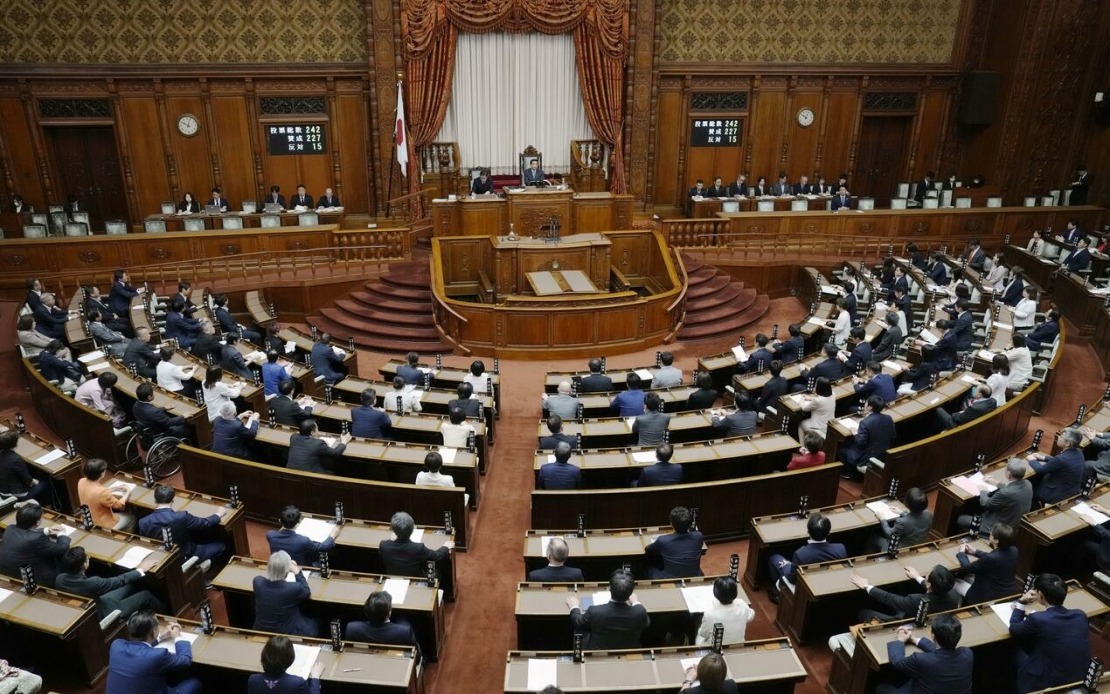
Japan has taken a significant strategic step in modernising its defence apparatus, with parliament endorsing legislation on Friday to restructure the Air Self-Defence Force by adding space operations to its mandate. The move marks a pivotal shift in how Tokyo approaches national security in an era where satellite infrastructure underpins everything from civilian infrastructure to military command and control. The restructured force, which will become operational during the fiscal year ending March 2027, signals Japan's determination to establish itself as a capable space-faring defence actor in the face of unprecedented regional challenges.
The centrepiece of the reform involves establishing a dedicated space operations group that will operate under the command of a lieutenant general. This unit will focus on enhancing space domain awareness—the ability to track objects and detect threats in orbit—while simultaneously upgrading Japan's satellite surveillance capabilities. For a nation that depends heavily on space-based systems for weather forecasting, disaster response, and critical infrastructure management, developing indigenous expertise in space operations represents both a strategic necessity and an economic imperative. The creation of this command structure acknowledges that space has transitioned from a purely scientific or commercial frontier into a contested military domain.
Defence Minister Shinjiro Koizumi framed the reforms in terms that resonate beyond security circles. He emphasised that ordinary Japanese citizens already depend on space-based systems daily, from the global positioning networks embedded in smartphone mapping applications to the meteorological satellites that provide weather forecasts. This framing is particularly significant for the Malaysian context, where citizens face similar vulnerabilities to space-dependent infrastructure while the region grapples with its own maritime security challenges. Koizumi's comments underscore how space defence is not merely about military hardware but about protecting the foundational systems that enable modern economic and social functioning.
The legislation went beyond space reforms to address longstanding institutional challenges within Japan's Self-Defence Forces. Parliament authorised the creation of a second senior vice defence minister position, a move designed to distribute workload more effectively during emergencies and natural disasters. Given Japan's vulnerability to seismic activity and typhoons, this administrative expansion acknowledges the reality that the SDF increasingly operates across multiple domains simultaneously—from disaster response to humanitarian assistance to conventional defence operations. The position is expected to be filled as early as summer, suggesting urgency in implementing these changes.
Recognising that institutional reform means little without personnel to execute it, the legislation also addresses a recruitment and retention crisis that has plagued the SDF. By enhancing post-retirement benefits for Self-Defence Force members, the government hopes to make military service more attractive as a career option. This challenge mirrors workforce sustainability issues across Southeast Asia, where military establishments struggle to retain skilled personnel in an era of competitive labour markets. The SDF's mandatory retirement ages, which typically arrive earlier than civilian civil service positions, have created complications for personnel planning and continuity. Improved benefits represent a concrete response to these structural pressures.
A particularly notable dimension of the reforms involves strengthening Japan's southwestern defensive posture. The legislation upgrades the Ground Self-Defence Force's 15th Brigade, stationed in Naha on Okinawa Prefecture, to full divisional status. This elevation directly reflects Tokyo's escalating concerns about maritime security in the region, particularly regarding China's increasingly assertive naval activities. For Malaysian policymakers watching developments in contested waters from the South China Sea to the East China Sea, Japan's decision to reinforce its remote island garrisons carries significant implications. It demonstrates how regional powers are responding to changed security dynamics by enhancing territorial defence capabilities.
The timing of these reforms cannot be separated from broader geopolitical currents. Japan faces an environment characterised by North Korean nuclear proliferation, Chinese military modernisation, and Russian military cooperation with other powers. Within this context, developing space capabilities represents a calculated effort to maintain technological advantage and ensure that Tokyo retains the ability to conduct surveillance, navigation, and secure communications independent of potentially unreliable external systems. For Southeast Asian nations, Japan's trajectory offers both a model and a cautionary tale—a model of how middle powers develop sophisticated defence capabilities, and a cautionary tale about the security dilemma that such developments can trigger.
The legislative package also reflects Japan's commitment to deepening defence cooperation with established security partners. The expanded institutional capacity created by the additional senior vice minister position will facilitate higher-level defence exchanges with the United States and other allied nations. These connections are essential for Japan's ability to integrate its space operations into broader security architectures and access intelligence resources that might otherwise be unavailable. For regional stability, the nature and transparency of these defence partnerships matter significantly, as they shape how countries interpret one another's military movements and intentions.
From a technological standpoint, Japan's space operations group will need to develop or acquire sophisticated capabilities for tracking objects in orbit, detecting anti-satellite threats, and maintaining secure space-based communications. This may involve both indigenous development and international partnerships. Malaysian defence planners should note that space capabilities increasingly represent a dividing line between advanced and emerging defence establishments, with significant implications for regional power balances. Nations that successfully develop space operations expertise gain asymmetric advantages in surveillance and communications that are difficult to counter with conventional military means.
The broader implications of these reforms extend beyond Japan itself. As Tokyo signals its determination to become a more capable space power, neighbouring countries face incentives to either enhance their own space capabilities or rely on allied systems. This dynamic could reshape the technological landscape across East and Southeast Asia in coming years. For Malaysia, which operates surveillance and communications satellites but has not developed dedicated military space operations infrastructure, Japanese developments underscore the growing premium on space-based capabilities in modern security environments. Whether regional nations develop indigenous space operations capacity or depend on partnerships with larger powers will influence regional stability and autonomy for decades to come.
The institutional changes outlined in the legislation also suggest that Japan is preparing for a prolonged period of strategic competition rather than viewing current tensions as temporary. By building permanent organisational structures, establishing senior leadership positions, and enhancing personnel incentives, the government is signalling long-term commitment to space defence. This institutional permanence carries symbolic weight beyond its practical implications—it represents a judgment that space security requires the same level of sustained attention and investment as traditional military domains. As regional powers absorb this message, they may recalibrate their own defence priorities accordingly.

