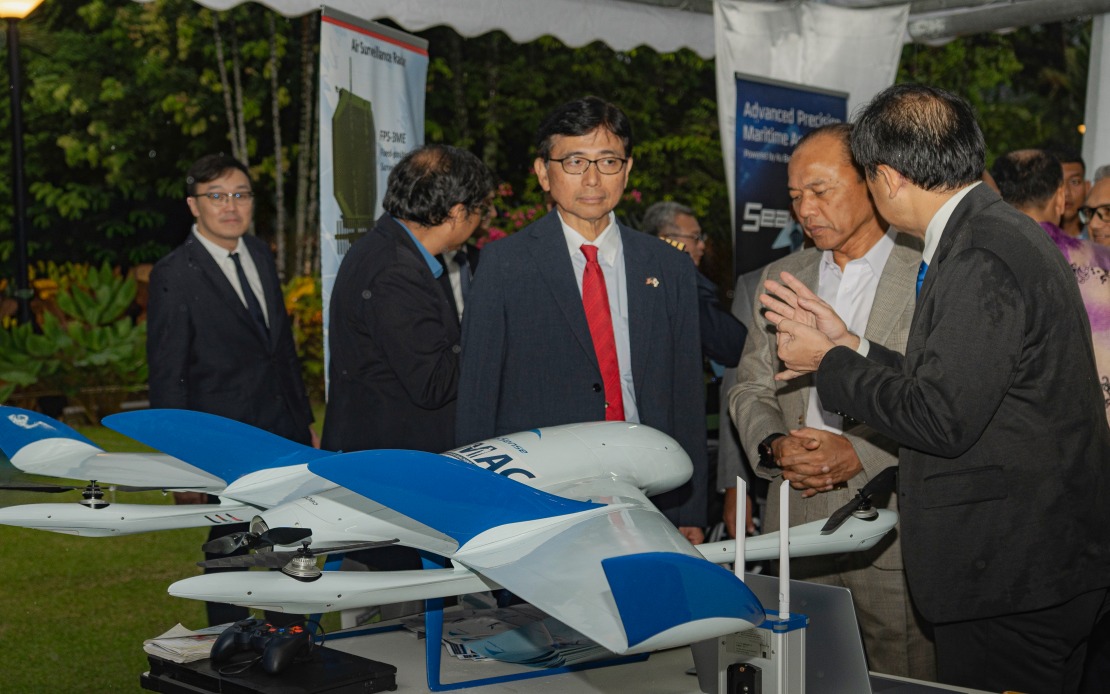
Japan is positioning itself for a significantly expanded security partnership with Malaysia, leveraging military-to-military engagements and strategic alignment in an increasingly volatile Indo-Pacific region. Japan Ambassador to Malaysia Noriyuki Shikata made this declaration at the 72nd Japan Self-Defence Forces Day Reception in Kuala Lumpur on Wednesday, underscoring Tokyo's commitment to transforming security ties into a cornerstone of bilateral relations as both nations navigate shifting geopolitical pressures.
The push for closer defence cooperation follows Prime Minister Datuk Seri Anwar Ibrahim's recent visit to Japan, during which he and Prime Minister Sanae Takaichi reaffirmed their determination to deepen strategic collaboration. The two leaders used the occasion to signal that defence and security would form the central pillar of expanding ties, reflecting a deliberate shift in how Tokyo and Kuala Lumpur calibrate their relationship in response to regional uncertainties. This elevation of defence matters reflects broader Asian concerns about maintaining stability as external powers increase their footprint in contested waters.
Central to Japan's strategic vision is its Free and Open Indo-Pacific (FOIP) framework, which the ambassador emphasised must harmonise with ASEAN's own Indo-Pacific Outlook. This convergence is not merely rhetorical—it represents a calculated attempt by Japan to anchor itself within regional multilateral structures while simultaneously promoting its security architecture to like-minded partners. Malaysia's receptiveness to this alignment carries significance beyond bilateral relations, as it signals ASEAN's willingness to engage with Japan's strategic preferences at a moment when the bloc faces pressure to choose sides on critical security questions.
The relationship itself has undergone formal upgrading, having achieved Comprehensive Strategic Partnership status in 2023. This technical designation carries practical implications for how the two nations structure defence exchanges and coordinate military activities. Looking toward the 70th anniversary of diplomatic relations next year, Ambassador Shikata indicated that Japan intends to leverage this milestone to accelerate cooperation across multiple domains, with security prominently featured among the priorities.
Maritime cooperation represents the most tangible expression of this deepening security engagement. The bilateral exercise MALPAN, conducted regularly in the South China Sea and Strait of Malacca, serves as the operational testing ground for interoperability between the Japan Maritime Self-Defence Force and the Royal Malaysian Navy. These waters remain economically vital and politically sensitive, making the presence of trusted partners—and demonstrations of coordinated capability—diplomatically significant. The April iteration of MALPAN marked a notable expansion by incorporating the Royal Malaysian Air Force, effectively creating a three-dimensional security engagement that moves beyond traditional naval-focused cooperation into air defence coordination and broader maritime domain awareness.
Japan's Official Security Assistance programme, launched in 2023 with Malaysia among its inaugural beneficiaries, exemplifies how Tokyo translates strategic rhetoric into material support. The provision of unmanned aerial vehicles and rescue boats in the previous year addressed concrete Malaysian operational needs while simultaneously deepening defence ties through familiarity with Japanese equipment and operational philosophies. The 2025 iteration of this assistance programme introduces a diving support vessel for the Royal Malaysian Navy—a capability with immediate practical applications for search and rescue operations, mine clearance, and underwater infrastructure protection in a region where such skills hold strategic value.
The provision of ceasefire monitoring equipment to the ASEAN Observer Team demonstrates how bilateral security cooperation extends into regional peace operations. This contribution positions Malaysia as a beneficiary of Japanese technical capacity while allowing Japan to expand its influence over regional conflict management mechanisms. Such assistance builds institutional relationships that can prove decisive when consensus-building is required on sensitive regional security matters.
Defence industry dialogue marks another dimension of this partnership architecture. The participation of ten Japanese companies in Defence Services Asia 2026 in Kuala Lumpur, combined with the signing of Terms of Reference for a bilateral defence industry dialogue, creates frameworks for commercial defence relationships to flourish. These mechanisms allow Japanese defence contractors to establish footholds in Malaysian procurement processes while enabling Malaysia to access advanced technologies without the political complications that might arise from engaging with other potential suppliers. For Malaysian defence planners, Japanese solutions offer technological sophistication without the heavier geopolitical baggage that accompanies closer ties with certain other major powers.
This comprehensive security engagement strategy reflects Japan's recognition that its influence in Southeast Asia depends on demonstrating commitment through sustained, practical cooperation. By embedding itself in Malaysia's maritime security architecture, providing tangible equipment and training, and creating institutional forums for ongoing dialogue, Japan cultivates a stakeholder in its strategic vision for regional order. For Malaysia, the arrangement offers access to Japanese technological capacity and military expertise while allowing flexibility in managing relationships with other powers—a calculus that Malaysian policymakers have historically valued.
The heightened focus on security cooperation also implicitly acknowledges concerns shared by both nations regarding maintaining freedom of navigation and preventing any single power from achieving hegemonic control over critical sea lanes. The emphasis on upholding international law and keeping shipping routes open and secure suggests coordinated messaging on challenges to the existing maritime order, even if neither nation explicitly names the strategic competition driving this emphasis.
As Southeast Asia grapples with managing great power competition while preserving strategic autonomy, Malaysia's deepening security partnership with Japan offers a model of engagement that distributes influence among multiple partners rather than concentrating dependency on any single power. The rolling expansion of joint exercises, equipment transfers, and institutional cooperation mechanisms creates facts on the ground that make the relationship increasingly difficult to reverse, effectively cementing Japan's role as a permanent security stakeholder in Malaysia's strategic calculations for the foreseeable future.

