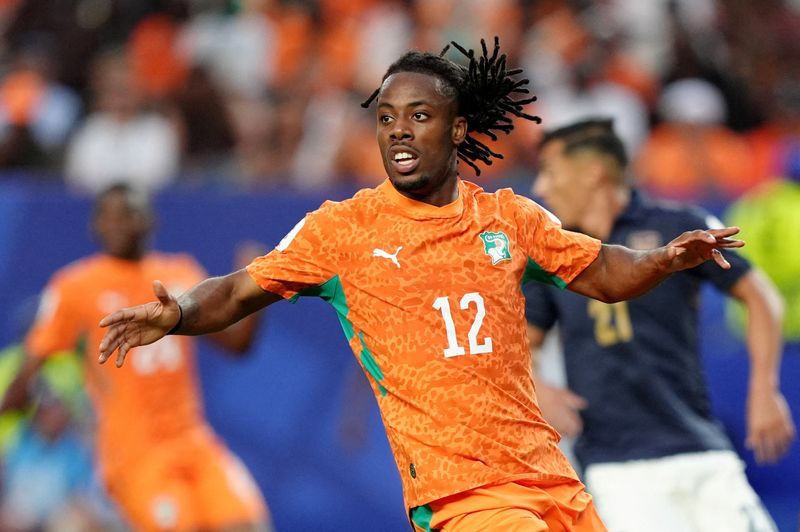
Ivory Coast's talented forward Elye Wahi will not join his national team for this weekend's crucial World Cup qualifier against Germany in Toronto, the Ivorian Football Federation announced on Thursday. The absence comes just one day after French authorities initiated a corruption investigation into suspicious betting patterns linked to a disciplinary incident involving the player during a Ligue 1 fixture in May.
According to the FIF's official statement, the decision to keep Wahi out of the Canada trip stems from administrative complications rather than disciplinary action. The federation explained that necessary travel authorisations for Wahi to enter Canadian territory have not yet been secured, preventing him from accompanying the delegation across the border. Rather than sidelining the player, the FIF indicated that Wahi will remain in the United States pending the team's return from North America, maintaining his connection to the squad.
The underlying controversy centres on a Ligue 1 match played last month in which Wahi, then representing Nice, received a yellow card. French betting regulators detected anomalous wagering activity around this disciplinary moment, raising questions about whether the incident had been subject to manipulation or prior knowledge by unscrupulous bettors. Such investigations are part of broader efforts to combat match-fixing and sports corruption across European football leagues.
The FIF moved swiftly to defend its player, issuing a statement emphasising that the federation has not been formally notified of any legal or administrative proceedings against Wahi. The federation reiterated its confidence in the striker, describing the current situation as a difficult period requiring institutional support. By framing the Canada absence as purely logistical rather than punitive, the FIF sought to protect Wahi's reputation while acknowledging the sensitive nature of ongoing investigations.
This development carries particular significance for Ivory Coast's World Cup campaign, as the team looks to consolidate its position in Group E. The Ivorians opened their qualifying campaign with a hard-fought 1-0 victory against Ecuador, demonstrating their defensive solidity but also their reliance on clinical finishing. Wahi's absence removes a potent attacking option from the squad, forcing coach Jean-Louis Gasset to recalibrate his tactical approach for the high-profile clash against the Germans.
Germany, meanwhile, has struck an imposing statement of intent by demolishing Curacao 7-1 in their opening match, signalling their intention to dominate Group E. The reigning World Cup champions possess considerably greater depth in attacking resources compared to their Ivorian counterparts, making the numerical disadvantage caused by Wahi's absence potentially more damaging to Ivory Coast's prospects. The psychological edge derived from such a lopsided scoreline often carries weight into subsequent fixtures.
The betting investigation itself underscores the ongoing vulnerability of professional football to manipulation and fraud. Even as leagues implement increasingly sophisticated monitoring systems to detect irregularities, determined individuals continue to identify opportunities within the sport. A single yellow card may seem a minor matter, yet its predictability to betting syndicates represents a fundamental breach of the integrity that underlies competitive sport. The fact that such schemes can be detected retrospectively provides some reassurance, though their prevention remains elusive.
For Malaysian and Southeast Asian football observers, this episode serves as a reminder of the global challenges facing professional sport in the digital age. As betting markets expand across Asia and domestic leagues attempt to professionalise, exposure to corruption schemes grows correspondingly. Wahi's predicament, though unfolding in Europe, reflects vulnerabilities that extend throughout football globally, including emerging markets in the region.
The situation also highlights the complex interplay between national team obligations and individual player circumstances in modern football. Governing bodies must balance their duty to support players facing investigation with their responsibility to maintain competitive integrity and comply with international regulations. The FIF's approach—backing Wahi publicly while citing administrative barriers—represents a delicate navigation of these competing pressures.
Wahi himself faces a test of character and resilience as he awaits clarification from French authorities. His status as an important member of the Ivory Coast setup suggests the federation views the betting matter as separate from his footballing ability and commitment. However, any formal charges or findings would fundamentally alter the narrative surrounding his career trajectory.
Looking ahead, Ivory Coast must prepare for Germany without relying on their absent forward, potentially deploying alternative attacking formations or adjusting their overall strategic approach. The Canadian match represents a pivotal moment in Group E, with both teams seeking to establish momentum heading into subsequent qualifiers. How effectively the Ivorians adapt to Wahi's absence could determine whether the administrative inconvenience proves merely a temporary setback or a more consequential rupture in their World Cup ambitions.

