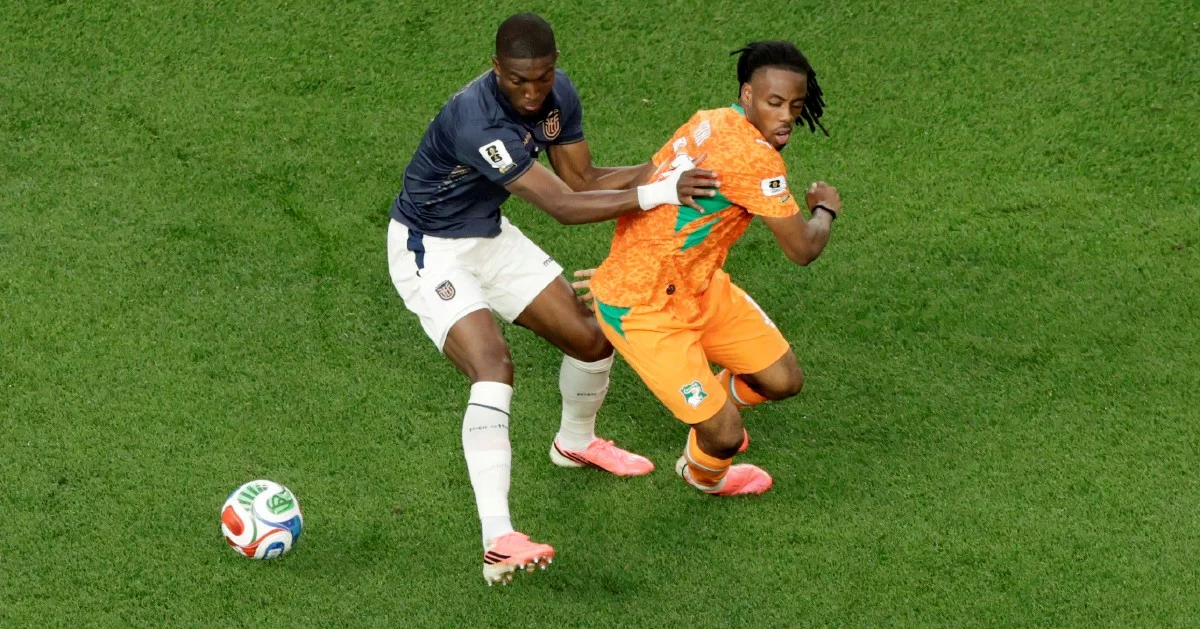
Ivory Coast has made the controversial decision to keep striker Elye Wahi away from its World Cup showdown against Germany in Canada this weekend, the Ivorian Football Federation announced on Thursday. The move comes just one day after the promising attacker became entangled in an investigation targeting suspected match manipulation within France's Ligue 1 competition, marking a significant disruption to the West African nation's World Cup campaign at a critical juncture.
The investigation into potential sports corruption has sent shockwaves through European and African football circles, raising serious questions about the integrity of matches played in one of world sport's most prestigious leagues. While official details remain sparse, the targeting of a player of Wahi's calibre suggests the probe extends beyond minor administrative irregularities, potentially implicating multiple parties and drawing scrutiny to how matches are being administered at the highest levels of French football.
Wahi's absence represents a tactical blow to Ivory Coast's preparations for what promises to be a fiercely contested fixture. The forward has emerged as a key offensive asset for the national squad, and his removal from the squad roster removes an important weapon from the team's attacking arsenal. For a nation seeking to make meaningful progress in the tournament, losing access to such a prominent player during crucial group-stage matches fundamentally alters strategic options and squad balance.
The federation's decision to exclude Wahi rather than defend his participation underscores the gravity of the situation and reflects institutional pressure to demonstrate zero tolerance toward players implicated in corruption allegations. Such a move, while potentially damaging to competitive prospects, signals a commitment to protecting the sport's reputation and shows willingness to prioritise integrity over short-term sporting interests. The message to fans, sponsors and football governance bodies is unmistakable: involvement in suspected match-fixing carries immediate, tangible consequences.
French football authorities have come under mounting pressure to address systemic integrity concerns, with this latest investigation adding to a growing catalogue of suspicious incidents. For Southeast Asian football observers, the case illustrates how even established European leagues remain vulnerable to corruption, a sobering reality as regional competitions expand and financial stakes rise substantially. The Ligue 1 episode serves as a cautionary tale about the need for robust anti-corruption mechanisms and proactive enforcement across all competitive levels.
The timing of this investigation creates additional complications for multiple stakeholders. Ivory Coast must now reorganise its attacking formation without a proven contributor, potentially forcing adjustments that could disadvantage the team against a formidable German side. Simultaneously, French football's governing bodies face mounting reputational damage at a time when the sport seeks to attract investment and talent globally. Match-fixing scandals erode public confidence and complicate efforts to market the league internationally.
For players currently navigating investigations of this nature, the professional and personal consequences extend far beyond missing a single match. Career trajectories can be permanently altered, earning potential diminished, and reputational standing compromised regardless of ultimate investigative outcomes. Young athletes face intense scrutiny and uncertainty during protracted inquiries, pressures that can destabilise mental health and undermine focus on sporting performance.
The broader context reveals how interconnected modern football corruption has become. Investigations frequently uncover networks spanning multiple countries, jurisdictions and actors, from players and agents to betting syndicates and criminal enterprises. Authorities tackling these schemes must coordinate across borders and navigate complex legal frameworks, slowing enforcement even as public suspicion grows. This case will likely reveal similar complications as authorities piece together evidence and interview relevant parties.
Ivory Coast's decision may also reflect internal squad politics and Federation calculations about managing player morale during an already tense period. Retaining a player under investigation could have fractured team cohesion, prompted complaints from other squad members, or created distracting media narratives. By acting decisively to suspend Wahi's participation, Federation leadership establishes clear expectations and maintains institutional authority.
The investigation's implications extend beyond the immediate World Cup campaign. Should evidence prove substantial, Wahi's career could face long-term damage through bans or sanctions imposed by French authorities or international football bodies. Insurance against corruption represents an increasingly significant cost element for clubs and federations, while reputation recovery from major scandals demands sustained effort and investment.
For Malaysian football administrators watching developments, the case underscores how critical comprehensive integrity frameworks have become. As the sport in Southeast Asia develops economically and competitively, establishing robust anti-corruption protocols now will prove far more cost-effective than managing crises later. Investment in education, monitoring systems and investigative capacity protects leagues from the reputational and financial damage now confronting French football.
The road ahead remains uncertain for Wahi personally and for Ivory Coast's tournament prospects. Germany presents a daunting challenge even with a full squad available, and the psychological impact of this controversy may reverberate through the team's collective mindset. What remains clear is that match-fixing allegations, whenever they surface, demand serious institutional response—a lesson resounding across every corner of the football world.