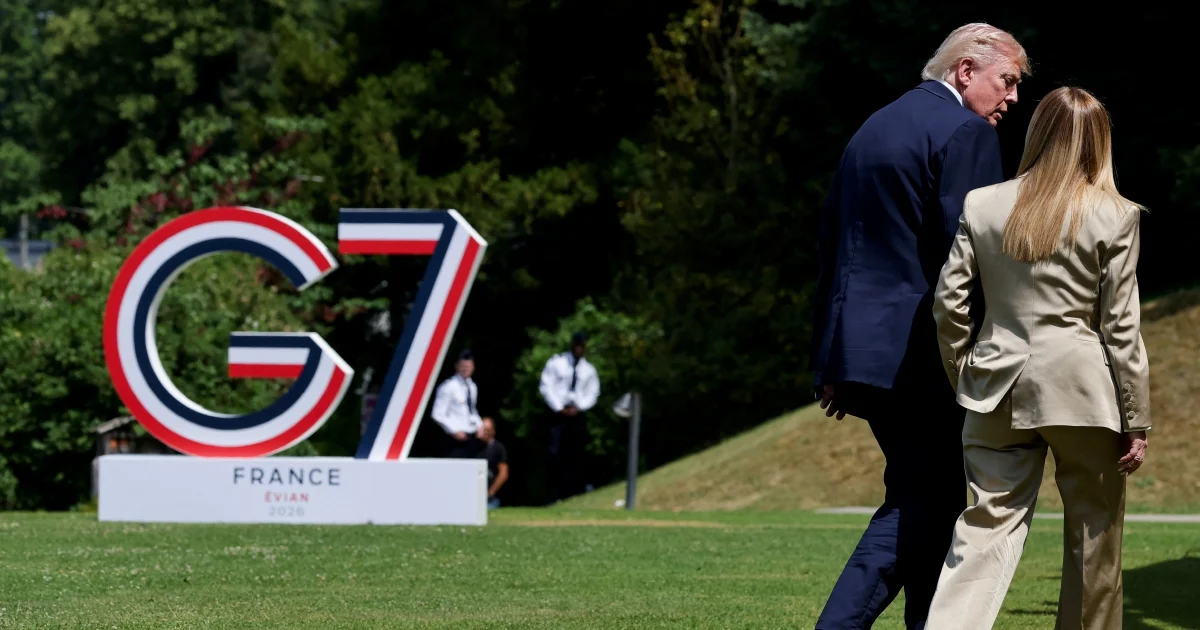
Italy's diplomatic relations with the United States have hit a visible rough patch following reported remarks by President Donald Trump that characterised Prime Minister Giorgia Meloni as seeking out photo opportunities with desperation. The comments, attributed to the American leader at a private gathering, sparked widespread indignation across Rome's political establishment on Friday, prompting Foreign Minister Antonio Tajani to shelve a planned trip to Washington in protest.
The incident reflects the delicate positioning that Italian leadership must navigate in its relationship with Washington. Meloni's government has generally maintained strong ties with the United States, viewing the NATO alliance and transatlantic partnership as cornerstones of Italian security policy. Yet Trump's reported mockery of the Italian premier reveals potential friction points in what has been presented as a cordial working relationship, particularly as the American president reclaims the White House and shapes his administration's approach to European allies.
Tajani's decision to postpone his visit carries symbolic weight beyond the immediate diplomatic calendar. Foreign ministerial trips are rarely cancelled without careful consideration of political messaging, and Rome's move signals that Italian officials view Trump's reported characterization as sufficiently offensive to warrant a visible response. The cancellation serves both as a rebuke to perceived disrespect and a reminder that even close allies have limits to the criticism they will tolerate from Washington.
The nature of Trump's remarks—suggesting that Meloni sought media attention with the enthusiasm of someone desperately pursuing recognition—touches on sensitive territory in international relations. Leaders of economically significant nations with substantial military capabilities do not typically endure sustained mockery from fellow heads of state without consequence. Italy's 60 million population, G7 membership, and position as a NATO anchor in the Mediterranean make Meloni a consequential figure in European and Western strategic calculations.
The timing of this diplomatic flare-up matters considerably for broader European-American dynamics. The European Union is navigating an era of uncertainty regarding American commitment to the transatlantic partnership, with questions about NATO contributions, trade relations, and security guarantees generating ongoing concern in Brussels, Berlin, Paris, and Rome. Individual incidents of presidential ridicule directed at allied leaders can compound these anxieties and fuel perceptions that the American administration views its allies as subordinates rather than equals.
Meloni herself has cultivated a public image of strength and capability, presenting herself as a decisive leader capable of managing Italy's significant economic and social challenges. Comments implying that she desperately pursues personal recognition undermine the carefully constructed narrative of confident leadership that forms the foundation of her political brand. The reported mockery therefore carries implications beyond mere interpersonal friction between leaders.
For Malaysian readers and broader Southeast Asian observers, this incident illustrates the complex terrain that middle-power nations navigate when dealing with the United States. Countries throughout Asia that maintain security partnerships with Washington must balance strategic necessity against the preservation of national dignity and leadership credibility. The Italian case demonstrates that even wealthy, NATO-aligned European nations can find themselves subjected to dismissive commentary from American presidents, raising questions about how smaller Asian partners might fare in similar circumstances.
The cancellation of Tajani's visit suggests that Rome intends to pursue quiet diplomacy rather than escalate the confrontation into a full-blown crisis. This approach reflects recognition that Italy cannot afford to fundamentally rupture ties with Washington, given the country's NATO commitments and reliance on American security guarantees. The postponement therefore functions as a calibrated message—firm enough to register disapproval, but measured enough to leave space for eventual reconciliation.
Italian political figures from across the spectrum voiced criticism of Trump's reported remarks. The unity of response underscores how such comments, regardless of their context or intent, can temporarily bridge domestic political divides when national honour appears to be at stake. In contemporary politics, where partisan polarization typically dominates domestic discourse, incidents involving perceived disrespect from foreign powers occasionally produce moments of national consensus.
The incident also raises questions about the mechanics of international communication in the Trump era. Reported private remarks that eventually reach the media can create diplomatic complications that might have been avoided through more careful management of presidential speech. The question of how these comments became public, and whether they accurately reflect Trump's actual views, remains secondary to the reality that Italian officials now feel compelled to register formal protest.
Looking forward, Italy will likely seek to normalize relations with the Trump administration while maintaining its position that allies deserve respectful treatment from Washington. The cancellation of Tajani's visit provides a clear signal without burning bridges. How the American administration responds—whether through clarification, apology, or dismissal of the matter—will shape the trajectory of this diplomatic disagreement and potentially influence how other NATO members calibrate their own relationships with Trump.

