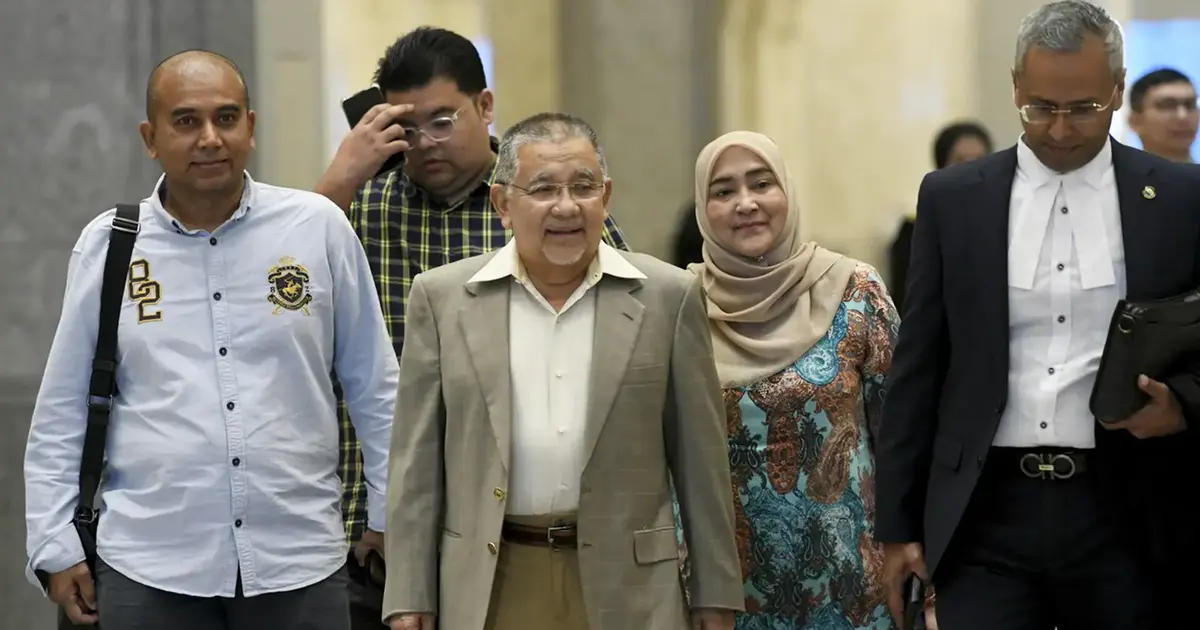
Isa Samad, the former menteri besar of Negeri Sembilan, has exhausted his judicial remedies after a three-member Federal Court panel declined to intervene in his case. The court determined that the circumstances surrounding his conviction did not constitute a miscarriage of justice that would warrant the exercise of its review jurisdiction, effectively closing the regular appellate avenue for the prominent politician.
The ruling marks the end of a protracted legal battle for Samad, whose political career was derailed by corruption charges that culminated in his conviction. The Federal Court's decision to decline review jurisdiction is particularly significant because it represents the highest level of judicial scrutiny available through ordinary appeal processes. Without grounds to find procedural or substantive injustice, the court concluded that further judicial intervention would be inappropriate.
With conventional legal pathways now exhausted, Samad's sole remaining option rests with Malaysia's prerogative of mercy. Article 42 of the Federal Constitution grants the Yang di-Pertuan Agong the power to extend royal pardon, remit sentences, or suspend punishments in cases where the holder of the office deems it appropriate. This executive clemency mechanism operates independently of the judiciary and is typically invoked in circumstances deemed extraordinary or where considerations beyond strict legal matters come into play.
The political implications of this development extend beyond Samad's personal circumstances. His case represents a broader pattern in Malaysian politics where high-ranking officials have faced corruption-related prosecutions, and subsequent efforts to navigate the legal system have drawn public attention. The pathway from conviction through appeals to potential clemency has become a familiar trajectory for several political figures in recent years, reflecting ongoing tensions between accountability mechanisms and political redemption.
Samad's original conviction stemmed from charges related to his tenure as chief minister, a position he held in Negeri Sembilan with considerable political influence. The legal proceedings that followed maintained considerable public interest, partly due to his standing within UMNO and his historical significance in Negeri Sembilan's political landscape. His initial conviction and subsequent appeals have all been subject to intense scrutiny from both political allies and observers tracking Malaysia's accountability frameworks.
The Federal Court's reasoning—that no miscarriage of justice had occurred—suggests that the judges found the original trial procedures and legal reasoning to be adequately conducted and justified. This assessment carries weight because review jurisdiction represents an extraordinary remedy rather than a standard appellate process. Courts invoke this jurisdiction sparingly, typically only when grounds exist to question fundamental aspects of the legal process or when new evidence emerges that could substantially alter the case's outcome.
For Malaysian legal observers, this decision underscores the finality that Federal Court determinations carry when refusing to exercise review powers. Unlike appellate decisions that can theoretically be revisited through different legal arguments, a rejection of review jurisdiction typically represents a definitive endpoint for court-based remedies. The implication is that Samad's case has been substantially resolved from a judicial perspective, even though the question of his ultimate punishment remains subject to executive discretion.
The strategic options available to Samad now centre on executive advocacy rather than legal argumentation. Petitions for clemency typically involve demonstrating to the Yang di-Pertuan Agong that exceptional circumstances warrant executive intervention. Such circumstances might include considerations related to age, health, the length of time served, the person's contributions to society, or other factors that lie beyond the court's purview to consider during sentencing or appellate review.
This case also reflects broader questions about Malaysia's approach to dealing with high-ranking officials accused of corruption. While the judicial system has processed the charges and reached determinations, the availability of executive clemency at the conclusion of legal proceedings means that political considerations can ultimately influence outcomes. This dynamic has prompted ongoing debate among legal scholars and civil society observers regarding the balance between accountability and proportionality in how Malaysia handles corruption cases involving prominent figures.
The timing and context of any potential clemency petition would undoubtedly carry political significance. Royal pardons and clemency decisions are rarely made in isolation from broader political circumstances and public sentiment. Samad's supporters may point to his political stature and long career as mitigating factors, while critics might argue that extending clemency to a convicted politician would undermine public confidence in Malaysia's anti-corruption efforts and suggest that accountability measures apply unequally.
As Samad pursues this final avenue, his case will likely remain in the public consciousness as an example of how Malaysia's legal and political systems intersect when addressing misconduct by prominent officeholders. Whether the executive ultimately decides to intervene through clemency will send signals about how the state perceives accountability, political rehabilitation, and the proper exercise of the prerogative of mercy in contemporary Malaysia.
The conclusion of this particular legal chapter does not necessarily mark the end of Samad's influence on Malaysian politics or public discourse. His experience navigating the judicial system and potentially seeking executive intervention has already influenced conversations about governance standards and institutional independence. The outcome of any clemency petition, whenever it may come, will likely prompt further reflection on these fundamental questions about how Malaysia balances justice, mercy, and political tradition.

