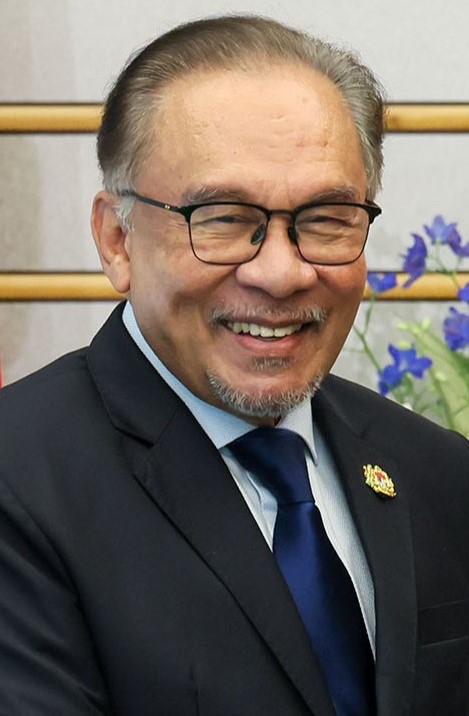
A formative brush with state detention in his twenties set the trajectory for what would become a distinguished career in education and mentorship for Dr Shukri Abdullah, the 76-year-old Kedah Tokoh Maal Hijrah who received formal recognition at a state-level celebration in Alor Setar this week. Detained under the Internal Security Act for a fortnight in 1974 as a student leader at Universiti Sains Malaysia, following his participation in the Baling Demonstrations, the episode proved a watershed moment that redirected his youthful idealism toward more constructive pursuits.
The consequences of that detention were immediately punitive—his scholarship was revoked upon release—yet Dr Shukri characterizes the loss as paradoxically galvanizing. In recounting the episode to reporters at the Kedah State-Level Maal Hijrah Celebration, he explained that the rupture forced upon him a psychological reckoning. Rather than succumb to bitterness or abandonment, he resolved to rebuild his life through uncompromising commitment to academic excellence. This determination reflected a broader philosophical conviction that has since animated his career: people possess the capacity for profound transformation provided they cultivate sufficient awareness and resolve to pursue self-improvement.
Following his release from detention, Dr Shukri channeled his energies entirely into his university studies, ultimately achieving a position that few attain in Malaysian higher education—graduating as the overall best student at USM and earning the privilege of delivering the valedictory address as the institution's top graduate. The achievement carries heightened resonance given his academic trajectory. He was not a standout performer during his secondary schooling; his middling grades initially saw his university application rejected. Undeterred, he took employment as a journalist with Utusan Melayu in 1980, spending a year in the profession before reapplying to USM and securing admission.
Having demonstrated his capacity to excel within the university system, Dr Shukri pressed ahead with postgraduate studies in the United Kingdom, completing a PhD from the University of Essex in just over two years—a remarkably compressed timeline that speaks to both intellectual capability and singular focus. Upon returning to Malaysia, he undertook academic work as a lecturer at USM before a pivotal career shift away from conventional academia toward motivational speaking and youth guidance, a field in which he has maintained active involvement for more than three decades. This transition reflects a deepening commitment to addressing what he identifies as systemic lacunae in how young Malaysians navigate life direction and personal development.
Dr Shukri's evolution from politically engaged student activist to establishment-recognized mentor illuminates a particular strand of Malaysian intellectual history—the channeling of youthful idealism through institutional frameworks rather than its suppression or permanent alienation. His personal narrative offers a counterpoint to those for whom state detention represents an irreversible rupture with institutional authority. Instead, he construed the episode as impetus toward demonstrating mastery within systems of recognition and achievement, using educational attainment as both personal vindication and platform for subsequent influence.
The formal recognition extended to Dr Shukri this week—a certificate of appreciation and RM15,000 presented by Raja Muda Tengku Sarafudin Badlishah Sultan Sallehuddin—represents institutional acknowledgment of his decades-long contribution to youth development and adult mentorship across Malaysia. Yet the award arrives at a historical juncture when questions about motivation, discipline and personal agency among younger Malaysians have acquired new urgency. Rising concerns about youth unemployment, mental health challenges, and lack of clear life direction across Southeast Asia lend contemporary relevance to Dr Shukri's core message: that excellence emerges from disciplined self-awareness and purposeful goal-setting.
As a father of ten and grandfather of twenty-two, Dr Shukri has embedded his philosophy within multiple generational layers, a living model of intergenerational knowledge transmission. His particular emphasis on parental responsibility for guiding children toward clear life direction addresses a gap he has evidently identified through decades of mentoring work. In the Malaysian context, where educational achievement remains heavily weighted toward examination performance but where guidance around broader life navigation remains inconsistent, such messaging carries substantive implications for how families conceptualize their pedagogical role.
The transformation narrative that Dr Shukri embodies—from detained student activist through academic distinction to influential mentor—encapsulates particular possibilities within Malaysian institutional history. His success depended partly on individual resilience, but equally on the accessibility of pathways within tertiary education, the existence of scholarship mechanisms, and ultimately the openness of society to individuals who had experienced state detention to pursue conventional professional advancement. These enabling conditions cannot be assumed as constants across all Malaysian contexts or all historical periods.
Dr Shukri's three-decade involvement in motivational programming positions him within an emerging ecosystem of private mentorship and development services that has grown as formal institutional guidance structures have proved insufficient to address young Malaysians' navigation challenges. His message—that clarity of purpose, disciplinary commitment, and genuine self-awareness can overcome initial disadvantage or setback—offers encouragement; yet it demands careful calibration to avoid suggesting that individual determination alone suffices to overcome structural barriers that constrain opportunity.
Looking forward, Dr Shukri's continued engagement with youth guidance reflects both his personal philosophical commitments and an implicit recognition that Malaysian society requires ongoing investment in mentorship beyond conventional schooling. As economic transitions and technological disruption reshape employment landscapes across Southeast Asia, the premium on clear life goal-setting and adaptability will likely intensify. His emphasis on discipline and self-direction as precursors to excellence provides counterweight to narratives that privilege credentials or luck, grounding development firmly in individual agency while acknowledging—through his own biographical arc—that agency operates within particular historical and institutional contexts.