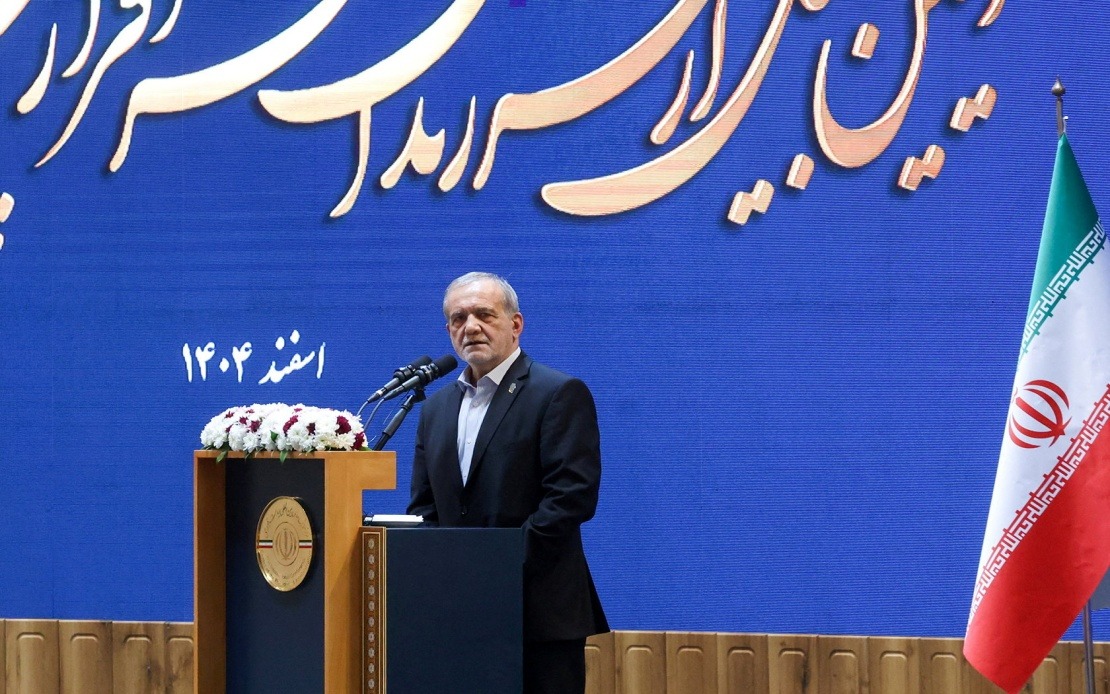
Iranian President Masoud Pezeshkian has signalled that Tehran may be prepared to issue a formal written declaration pledging that the country will not develop nuclear weapons, marking a potentially significant shift in the Islamic Republic's long-standing position on its nuclear programme. Speaking to state media, the president said his government could put such a commitment in writing if deemed necessary as part of broader diplomatic efforts to resolve one of the most contentious issues in Middle Eastern geopolitics.
The timing of Pezeshkian's remarks carries particular weight given that diplomatic representatives from Iran and the United States have resumed talks in Switzerland as of Sunday, with both nations working towards establishing a comprehensive long-term agreement on Iran's nuclear activities. These negotiations follow the signing of a memorandum of understanding earlier this week, which set a 60-day window for finalizing the details of any agreement regarding Tehran's nuclear programme. The framework represents a carefully structured diplomatic pathway aimed at bridging decades of mistrust and conflict between the two nations.
For observers of Middle Eastern affairs and regional stability, Pezeshkian's willingness to consider formalizing Iran's nuclear intentions through written declaration could indicate a pragmatic shift in Tehran's negotiating posture. The Iranian leadership has consistently maintained in public statements that the Islamic Republic does not harbour intentions to acquire nuclear weapons, yet the lack of binding written commitments has long frustrated Western powers and regional allies. A formal declaration, if implemented, would represent a concrete step towards transparency and verification mechanisms that international stakeholders have repeatedly demanded.
The president did not explicitly confirm whether this option is being actively pursued as part of the ongoing Switzerland-based negotiations, leaving some ambiguity about how central such a declaration might be to the final agreement. Nevertheless, the fact that Pezeshkian felt compelled to publicly mention this possibility suggests that Tehran recognizes the symbolic and practical value that a written commitment would carry in international diplomacy. Such declarations, while not necessarily immune to future reinterpretation, do establish clear benchmarks against which compliance can be measured.
Pezeshkian reinforced Iran's established theological and ideological position by referencing the late Supreme Leader Ali Khamenei's stated opposition to weapons of mass destruction on religious grounds. Khamenei, who was killed in strikes attributed to US and Israeli forces at the beginning of recent regional hostilities, had frequently articulated Islamic religious arguments against nuclear weapons development. By invoking this principle, Pezeshkian seeks to frame Iran's nuclear restraint not merely as a tactical diplomatic concession, but as a fundamental commitment rooted in the Islamic Republic's foundational values and religious jurisprudence.
The broader political leadership structure across Iran's government establishment has consistently reiterated publicly that the nation does not pursue nuclear weaponization. This messaging, repeated across multiple administrations and diplomatic channels, has attempted to position Iran as a responsible actor within the international system while simultaneously maintaining the right to develop civilian nuclear technology under international frameworks. However, the persistent gap between these declarations and international suspicions regarding Iran's true intentions has remained a central obstacle to normalizing relations with Western powers.
Pezeshkian expressed cautious optimism about the trajectory of negotiations with Washington, characterizing the agreements achieved thus far as being substantially aligned with Iranian interests. This framing is significant as it suggests Tehran believes the current diplomatic process, despite its complexity and the historical animosity between the two nations, is yielding outcomes that address Iranian concerns and grievances. The president's confidence in the negotiations may reflect behind-the-scenes progress that has not yet been fully disclosed to the public.
As a concrete first step in any eventual agreement, Pezeshkian mentioned that unfrozen Iranian assets totalling US$6 billion, currently held in Qatar, could be released to Tehran. This financial component addresses one of Iran's immediate material concerns and would provide tangible economic relief to a nation struggling under the weight of international sanctions. The ability to access these frozen funds would signal meaningful progress in sanctions relief and demonstrate to Iran's domestic constituencies that the government has secured genuine benefits from engaging in diplomatic negotiations.
For Malaysia and other Southeast Asian nations, the Iran-US nuclear negotiations carry implications that extend beyond the immediate parties involved. A successful resolution could stabilize global energy markets, particularly regarding oil price volatility that affects regional economies heavily dependent on energy imports. Additionally, reduced Iran-US tensions would diminish the risk of military escalation in the Middle East, which could disrupt global shipping routes through which much of Asia's trade transits. Malaysia, as a maritime trading nation with significant exposure to Middle Eastern affairs, has a vested interest in seeing these negotiations succeed and produce a durable agreement.
The 60-day timeframe established in the memorandum of understanding places considerable pressure on negotiating teams to resolve technical details that have stalled previous attempts at nuclear diplomacy. These discussions will likely centre on verification mechanisms, the scope of permitted nuclear activities, sanctions relief schedules, and enforcement procedures that would apply if either party is found to violate the agreement's terms. The complexity of these issues means that while Pezeshkian's statement on written declarations offers encouraging symbolism, substantial work remains before a comprehensive accord can be finalized.
The evolution of Iran's public diplomacy stance, as evidenced by Pezeshkian's recent comments, suggests that the Islamic Republic may be repositioning itself towards greater accommodation with international norms regarding nuclear non-proliferation. Whether this represents a genuine transformation in Iran's strategic calculations or merely tactical maneuvering designed to secure sanctions relief remains a question that international observers will continue to assess as negotiations progress. The coming weeks will prove crucial in determining whether Tehran and Washington can bridge their remaining differences and establish a framework capable of enduring beyond the immediate political circumstances.

