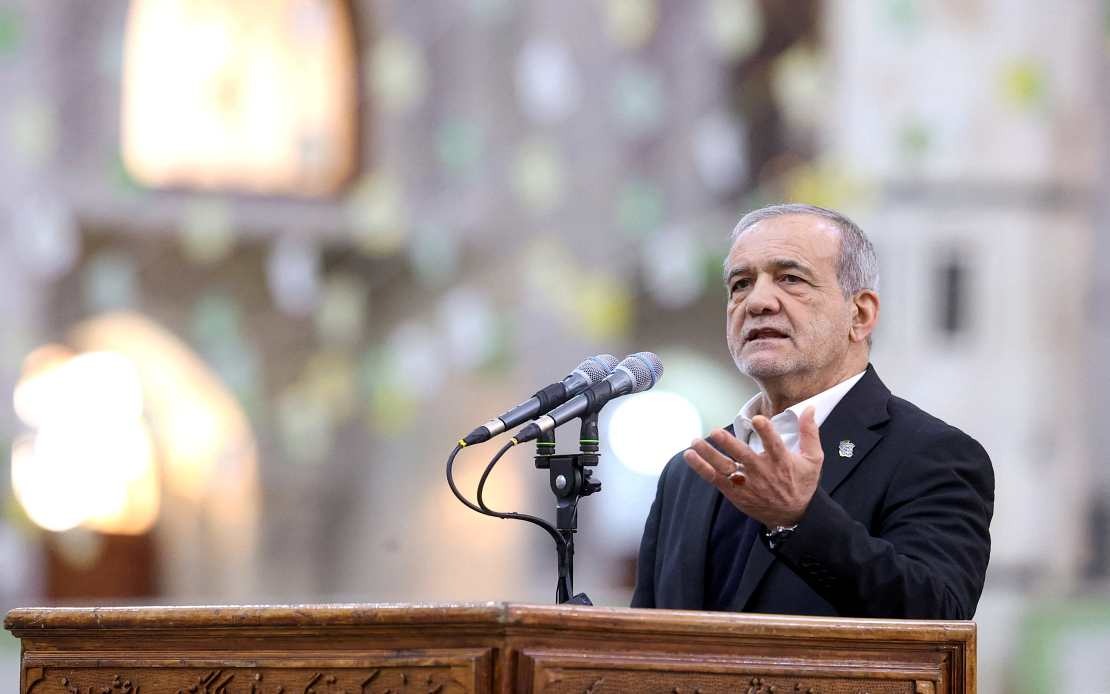
Iranian President Masoud Pezeshkian declared on Sunday that Tehran will recover US$6 billion in frozen assets currently held in Qatar as part of a freshly negotiated preliminary accord with the United States. The announcement, delivered through state broadcaster IRIB, signals a meaningful shift in a relationship marked by decades of hostility and sanctions warfare. The released funds represent a tangible financial relief for Tehran at a time when Iran's economy continues to labour under the weight of international restrictions.
The preliminary agreement marks the culmination of mounting diplomatic efforts aimed at de-escalating regional tensions that have threatened global energy security. Under the terms of the initial deal, the financial thaw accompanies broader negotiations designed to conclude months of heightened conflict across the Middle East and to facilitate reopened shipping lanes through the Strait of Hormuz, one of the world's most critical maritime chokepoints through which approximately one-third of seaborne traded oil passes annually.
Technical negotiations commenced early this week in Burgenstock, Switzerland, following the signing of a memorandum of understanding on Wednesday that laid the groundwork for the comprehensive talks. The US delegation was led by Vice President JD Vance, while the Iranian side fielded Parliament Speaker Mohammad Bagher Qalibaf and Foreign Minister Abbas Araghchi. Pakistan assumed a mediation role throughout the negotiations, reflecting its longstanding interest in regional stability and its diplomatic ties with both parties.
Pezeshkian's statement contained a notable assertion regarding Iran's nuclear programme, explicitly stating that Tehran would not abandon its right to uranium enrichment and that the American side would be compelled to acquiesce to this position. This declaration underscores a fundamental point of contention in any broader settlement: Iran's insistence on maintaining indigenous nuclear capabilities despite international concerns about proliferation risks. The positioning suggests that Iranian negotiators view the asset release as a preliminary concession by Washington rather than a quid pro quo for nuclear restraint.
The timing of this announcement carries particular weight within Southeast Asia, where nations like Malaysia remain acutely sensitive to disruptions in global energy markets. Any prolonged conflict in the Middle East directly impacts regional energy costs, maritime insurance premiums, and broader economic stability. Malaysia's economy, with its significant dependence on imported energy and its reliance on free passage through critical sea lanes, faces tangible consequences from Middle Eastern instability. The prospect of reopening the Strait of Hormuz therefore extends beyond Iranian-American relations to touch the vital interests of trading nations across Asia.
The frozen assets in Qatar represent years of accumulated Iranian reserves that became inaccessible following successive rounds of international sanctions. The decision to unblock these funds signals that at least one lever of financial coercion has been relinquished as a bargaining tool, suggesting a fundamental reorientation of negotiating positions. However, the preliminary nature of the agreement leaves numerous details unresolved, including the precise timeline for fund transfers, the mechanisms for verifying compliance, and the scope of what constitutes successful conclusion of the broader talks.
Qatar's role as custodian of these assets reflects the small Gulf state's historical position as a neutral interlocutor and financial hub capable of holding disputed resources. The emirate has cultivated relationships across the region and beyond, positioning itself as a trusted intermediary in conflicts where direct bilateral engagement proves difficult. This arrangement underscores how smaller states can exercise disproportionate influence by controlling financial flows and offering neutral territory for sensitive negotiations.
The involvement of Pakistan as mediator adds another layer of complexity to the diplomatic architecture. Islamabad maintains strategic relationships with Iran while simultaneously managing partnership obligations with various Western powers. Pakistan's mediation role signals its growing influence in Gulf affairs and its interest in preventing the kind of regional conflagration that could destabilise its own borders and disrupt its access to key trade routes through the Indian Ocean.
The broader implications of this preliminary accord extend to the international sanctions regime and the effectiveness of financial coercion as a diplomatic tool. For nearly two decades, successive administrations have relied upon asset freezes, banking restrictions, and secondary sanctions to compel Iranian compliance with nuclear and other demands. The willingness to unblock significant reserves suggests either a recalibration of strategy or an acknowledgment that existing approaches have reached diminishing returns.
For Malaysia and other Southeast Asian economies, the reopening of the Strait of Hormuz holds immediate practical significance. Approximately 90 percent of the region's energy imports transit through this and other Middle Eastern waterways. Maritime insurance costs, shipping delays, and supply chain disruptions ripple through Southeast Asian manufacturing and trade networks. A sustained easing of tensions promises to stabilise these critical corridors and reduce the risk premiums built into energy and transportation costs.
The preliminary nature of the agreement also warrants caution regarding premature optimism. Technical negotiations in Burgenstock represent only an initial phase in what could prove a lengthy process. Historical precedent suggests that moving from preliminary agreements to comprehensive, durable settlements involves navigating numerous stumbling blocks, including verification mechanisms, sequencing of mutual concessions, and domestic political constraints on both sides.
Observers across Southeast Asia will watch the trajectory of these talks with keen attention, recognising that regional energy security and maritime stability depend substantially on whether initial diplomatic progress translates into substantive, lasting agreements. The return of Iranian assets from Qatar, while significant, represents merely the opening move in a much larger negotiation that will ultimately determine whether the Middle East moves toward stability or continued volatility.

