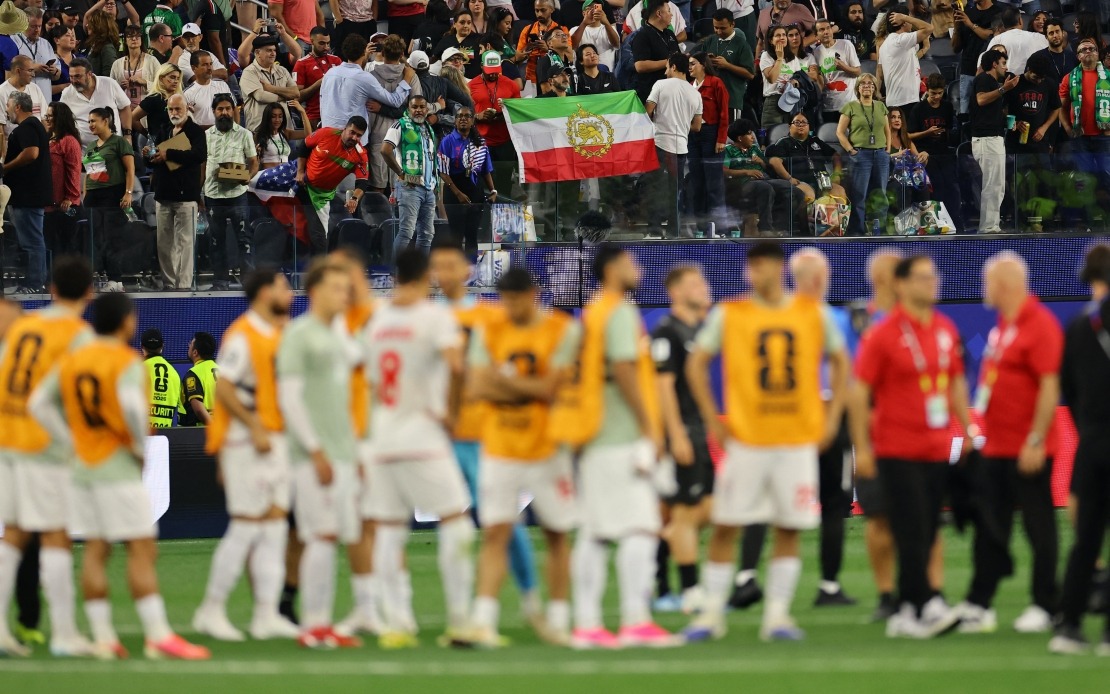
Tensions between Iran and the United States spilled into the football pitch during the World Cup when Iranian national team manager Amir Ghalenoei levelled accusations that his squad was subjected to unusual restrictions not imposed on other participating nations. Speaking from Istanbul, Ghalenoei characterised Iran as the "most repressed team in the whole World Cup," describing how the coaching staff expected their players to spend the night recovering in Los Angeles following their Monday evening opener against New Zealand, only to be told they must immediately relocate to their training facility in Mexico.
The abrupt relocation directive came within hours of the final whistle, according to Ghalenoei's account to US sports media outlets. The manager highlighted the physical toll of this unexpected travel requirement, emphasising that his players had already invested considerable time in air travel and deserved adequate recovery protocols before their next fixture. "We spent so much time in the air commuting, they didn't even give us time to recover. After the game today, they said to us: 'You have to leave immediately," Ghalenoei explained through an interpreter, underscoring the disruptive nature of the last-minute decision.
Although Ghalenoei refrained from explicitly naming who issued the departure order, Iran's captain Mehdi Taremi provided a potential clue by referencing a visit from FIFA President Gianni Infantino to the locker room immediately after the New Zealand match. Taremi's comments carried loaded implications, suggesting that pressures extending beyond football governance may have influenced the situation. "For sure, he wants to try to help us, but it's about other things, too. Everyone knows it," Taremi stated, in what appeared to be a veiled allusion to the longstanding geopolitical animosity between Washington and Tehran.
The Iranian skipper's remarks gained added weight given the broader context of US-Iran relations at the time of the World Cup. While Taremi noted that he need not elaborate further—"I don't need to mention that because you know where we are"—his cryptic statements invited interpretation through the lens of decades-old bilateral tensions. For Malaysian and Southeast Asian observers familiar with regional geopolitical dynamics, the episode reflected how international sporting events can become venues where diplomatic and political friction surfaces, sometimes constraining athletes caught in the middle of larger national disputes.
Iran's preparation for the tournament had already been complicated by logistical challenges that forced multiple relocations. The national squad had originally planned to establish their World Cup base in Tucson, Arizona, positioning themselves conveniently within the United States for their group-stage matches. However, facing unspecified visa complications and other administrative obstacles, Iranian football officials made the decision in late May to shift their training operations to Tijuana, Mexico, a move that substantially increased travel distances and preparation inconveniences.
This earlier relocation to the Mexican border town already indicated that Iran's World Cup participation faced procedural hurdles distinct from those encountered by most other competing nations. The subsequent demand to vacate Los Angeles immediately after their New Zealand fixture appeared to compound these difficulties, suggesting a pattern of constraints rather than isolated incidents. For a team already operating from a distant base in Mexico, the sudden order to abandon their California rest period and undertake additional travel created operational disadvantages that potentially affected their tournament performance and subsequent matches.
The timing of Infantino's locker room visit merit further consideration. While FIFA's president regularly conducts courtesy meetings with national team delegations throughout major tournaments, Taremi's suggestion that his presence correlated with the departure order invited questions about whether diplomatic considerations factored into tournament logistics. The broader context—a reference to ongoing US-Iran hostilities that Taremi indicated was near resolution—suggested that geopolitical factors may have influenced decisions typically governed by sporting protocol alone.
For Malaysian readers attuned to how regional powers navigate international spaces, the Iran situation resonated as a cautionary tale about how political tensions can infiltrate apparently neutral sporting forums. Southeast Asia itself hosts nations with varied diplomatic alignments, and the precedent of national teams facing restrictions or unusual treatment during international competitions carries relevance. The episode underscored how World Cup participation, nominally a purely athletic endeavour, can intersect with state interests and bilateral relations in ways that disadvantage affected athletes.
Ghalenoei's public criticism represented a rare instance of a national coach explicitly airing grievances about World Cup working conditions, suggesting that the treatment his squad received was sufficiently extraordinary to warrant breaking traditional diplomatic protocols. Most national team managers maintain tactful public silence regarding tournament organisation to avoid antagonising FIFA or host authorities, making his candid remarks particularly significant. The fact that he characterised Iran's situation as distinctly restrictive implies that the constraints imposed transcended standard tournament protocols.
The incident also reflected the specific vulnerabilities of Iranian participation in major international sporting events hosted by Western nations. Historical tensions, combined with contemporary geopolitical competition, create environments where Iranian delegations navigate heightened scrutiny and administrative complications that other nations rarely encounter. Whether these obstacles stem from formal policy decisions or informal pressure remains unclear, but the practical effect was manifest in the disruptions to Iran's World Cup preparation.
Looking forward, Ghalenoei's allegations may influence how football administrators and FIFA address concerns about equitable treatment for all participating nations in future tournaments. The principle that teams should compete under comparable conditions represents a foundational sporting ideal, yet the Iran example illustrated how political considerations could compromise this standard. For Malaysian football officials and those across Southeast Asia, the episode served as a reminder that diplomatic complexities sometimes extend into domains ostensibly governed by neutral sporting rules.