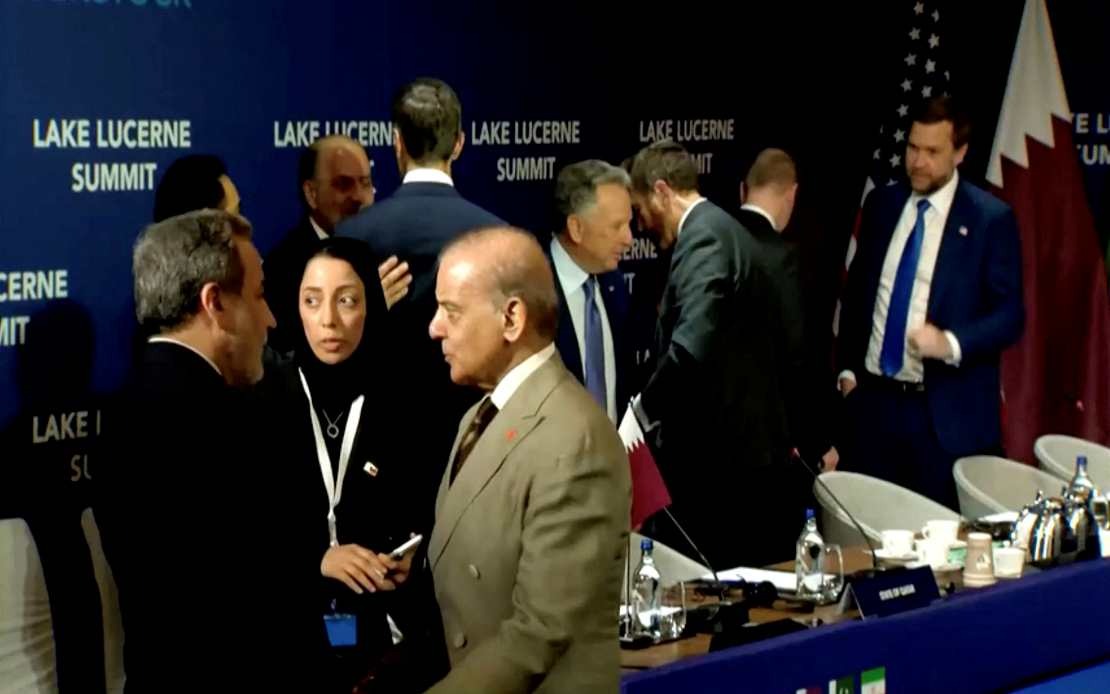
Iran and the United States have moved closer to normalising economic relations following the completion of a draft agreement addressing the temporary easing of sanctions on Iranian oil exports, according to Hossein Ghorbanzadeh, a member of Tehran's negotiating delegation. The breakthrough emerged from ongoing talks at the Burgenstock resort in Switzerland, where both nations have been working to implement the framework established under the Islamabad Memorandum of Understanding signed earlier this month.
The diplomatic engagement represents a significant shift in the relationship between Washington and Tehran after years of heightened tensions. The draft agreement on oil sanctions relief signals potential economic reopening, which carries substantial implications for global energy markets and regional stability. For Malaysia and other Southeast Asian economies, any relaxation of sanctions affecting Iranian crude could influence regional oil pricing dynamics and trading patterns, particularly given Iran's historical importance as an energy supplier to various Asian markets.
Ghorbanzadeh clarified that the memorandum's remaining provisions will remain inoperative pending a final comprehensive settlement to end the war in Lebanon. This conditional language reveals the complex interconnection between multiple regional conflicts and the broader normalisation process. The Iranian negotiator indicated that the agreement encompasses not merely headline provisions but also technical specifications governing implementation, which were addressed through separate technical working sessions beyond the main negotiations.
The specifics of the oil sanctions relief represent only one component of a broader diplomatic architecture. During parallel discussions with the Qatari delegation, Iranian representatives also addressed the question of frozen Iranian assets, a contentious issue that has long complicated economic relations. These frozen assets, accumulated through years of international sanctions, represent substantial capital that Tehran views as crucial for economic recovery and development initiatives.
The Islamabad Memorandum itself, which entered into force on June 18 following electronic signatures from Iranian President Masoud Pezeshkian and US President Donald Trump, encompasses considerably broader objectives than oil sanctions alone. The understanding, brokered through Pakistan's mediation efforts and formalised through 14 negotiated points, seeks to establish conditions for permanent cessation of hostilities across multiple fronts and to resolve long-standing disputes through dialogue mechanisms.
Provisions within the memorandum address several critical regional issues that have directly affected international stability and commercial activities. The reopening of the Strait of Hormuz, through which approximately one-third of globally traded petroleum passes, would normalise shipping in one of the world's most strategically vital waterways. Additionally, the lifting of the US naval blockade imposed on Iran would restore Iran's ability to engage in international maritime commerce without restriction, fundamentally altering regional economic dynamics.
For Southeast Asian nations, particularly those dependent on energy imports and engaged in regional trade, these developments carry material significance. Malaysia, as an important trading hub and energy consumer, has vested interests in stable Persian Gulf conditions and predictable energy supply channels. The potential expansion of Iranian oil supplies to international markets could introduce competitive pressures affecting crude pricing and availability for Asian refineries and importers.
The negotiation process itself demonstrates the value of sustained diplomatic engagement and third-party mediation in resolving deep-seated international disputes. Pakistan's central role in facilitating these discussions underscores how regional powers can constructively contribute to conflict resolution. The technical sophistication evident in the discussions—encompassing not merely headline agreement but detailed implementation mechanisms—suggests both parties recognise the complexity of translating diplomatic understanding into operational reality.
However, the explicit conditioning of the memorandum's full implementation on resolution of the Lebanon conflict introduces significant uncertainty. The ongoing instability in Lebanon, which has resisted easy resolution through multiple international initiatives, creates a potential bottleneck for broader normalisation. This contingency structure means that despite progress on oil sanctions and other measures, the overall framework remains subject to developments in a separate but interconnected conflict zone.
The timing of these announcements also reflects broader international dynamics. The engagement between Washington and Tehran, mediated through Pakistani channels, occurs within a context of shifting global alignments and competing regional interests. For Southeast Asian observers monitoring these developments, the implications extend beyond immediate energy considerations to encompass broader questions about international order, the viability of sustained diplomatic resolution to major conflicts, and the evolving balance of power in regions beyond Southeast Asia that nonetheless influence regional interests.
Looking ahead, the successful formalisation of oil sanctions relief provisions could establish momentum for addressing other contentious issues outlined in the memorandum. However, execution risks remain substantial, given the complexity of dismantling decades of sanctions architecture and the institutional interests within both nations that may resist rapid normalisation. The coming months will test whether this diplomatic framework can weather implementation challenges and whether peripheral issues like the Lebanon conflict can be adequately resolved to unlock the memorandum's full potential.

