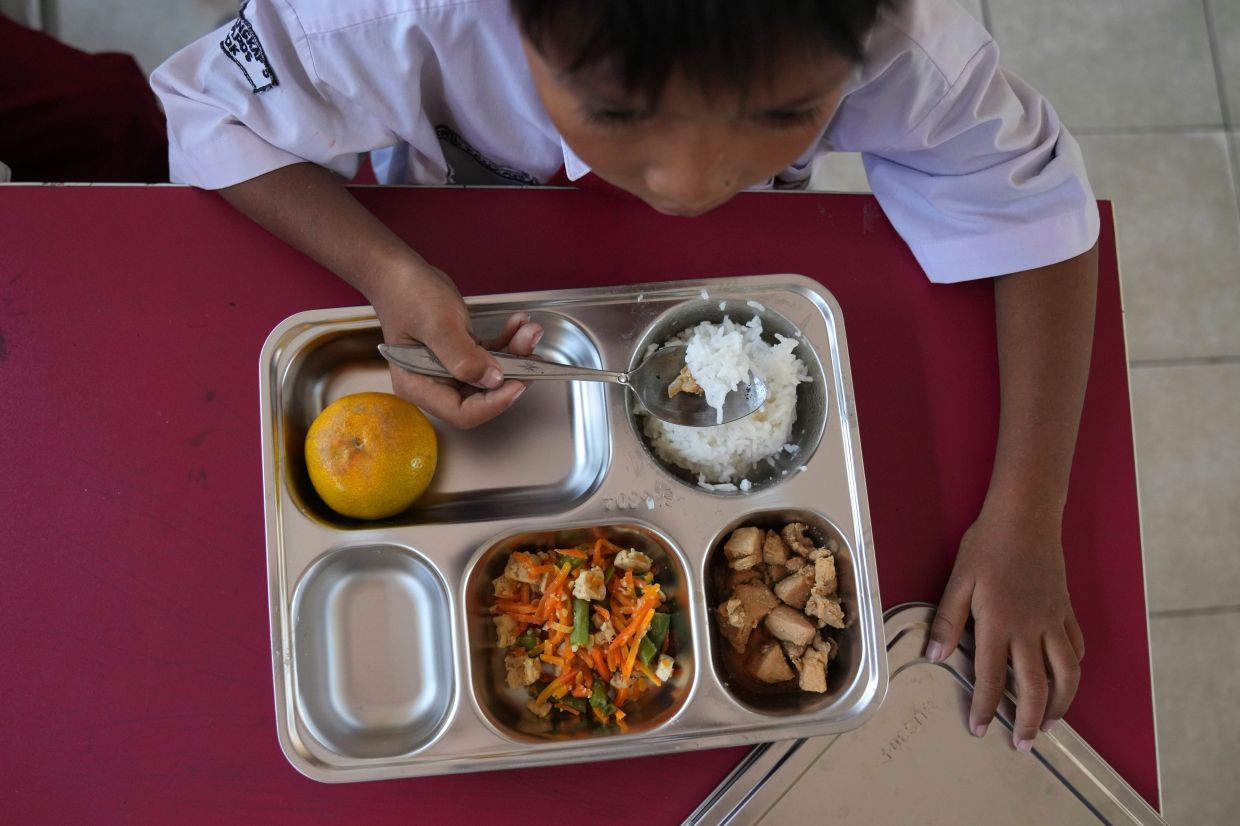
President Prabowo Subianto's ambitious free meals programme, a cornerstone policy aimed at combating malnutrition across Indonesia's 60 million-plus schoolchildren, faces an escalating accountability crisis as anti-corruption advocates demand its temporary halt and a comprehensive investigation into alleged mismanagement. The National Nutrition Agency, which oversees the roughly US$15 billion nationwide initiative, should be dissolved entirely, according to Wana Alamsyah, head of the law and investigation division at Indonesia Corruption Watch, a prominent civil society organisation focused on establishing transparent governance and equitable economic systems.
The crisis deepened this month when authorities launched a formal corruption probe against Dadan Hindayana, the agency's former chief, following his abrupt removal from office. Four additional individuals, including two of Hindayana's deputies, have since been detained as investigators expand the scope of their examination. Indonesia Corruption Watch contends that scrutiny must penetrate far deeper than the senior echelon of an organisation established less than two years ago but already serving as the operational backbone for distributing meals to millions of Indonesians nationwide. The watchdog argues that enforcement agencies should systematically examine vendor networks, procurement committee participants, and all institutional actors whose decisions shaped programme implementation.
Wana articulated serious concerns about the programme's foundational architecture, characterising the rollout as hasty and insufficiently planned. He emphasised that investigators must cast a wide net to identify every stakeholder who gained advantage through administrative deficiencies or regulatory gaps. The Attorney-General's office, when approached for comment, provided no immediate response to these damning accusations. This silence suggests the magnitude of the investigation may extend further than initially acknowledged, potentially implicating figures across multiple government departments and private sector interests.
Despite the corruption allegations, the agency's new leadership has attempted to salvage the initiative's reputation and fiscal sustainability. Nanik S. Deyang, who now heads the free meals programme, has repositioned its strategic focus toward efficiency and geographic concentration rather than universal coverage. The agency intends to spend considerably less than the 268 trillion rupiah (US$14.9 billion) allocated for the current year, redirecting resources toward underserved remote regions where nutritional deficiencies are most acute. Deyang has explicitly signalled a departure from the original target of serving 82.9 million recipients, instead prioritising food quality and nutritional value over expansive reach—a tacit acknowledgment that the programme's original conception was unworkable.
Prabowo himself has publicly declared zero tolerance for any financial impropriety within the meals initiative, addressing thousands of programme partners and officials shortly after Hindayana's detention. His emphatic statement that "the people's money" must not be stolen and his warning that there are "no exceptions" to integrity standards appear designed to reassure the public and restore confidence in state institutions. Yet such declarations ring hollow to critics who question why governance failures went unaddressed for months despite mounting evidence of mismanagement and public concern.
The political and social backlash has been substantial. In mid-June, police clashed with student protesters in Jakarta who were demanding the meals programme's complete termination and opposing the government's broader spending priorities. Subsequent demonstrations erupted across multiple major urban centres, prompting authorities to deploy over 6,000 police and military personnel throughout the capital alone. These scenes of confrontation underscore a fundamental tension between the administration's ambitions and public scepticism about both the programme's feasibility and its financial justification.
For the broader business community and financial analysts monitoring Indonesia's fiscal health, the free meals initiative represents a significant concern amid competing budgetary pressures. Global energy market volatility, particularly related to regional tensions, has inflated fuel subsidy costs substantially, placing considerable strain on the national budget. Economists and research institutions have raised fundamental questions about whether the programme will deliver the promised returns in employment generation, public health improvements, and economic development. This scepticism reflects legitimate doubts about implementing such an enormous initiative across all Indonesian schools simultaneously, when more targeted approaches concentrating resources in impoverished rural regions might generate superior outcomes.
Wana has pointed to a troubling timeline discrepancy that suggests political calculation rather than genuine governance reform. Complaints about the programme—ranging from food poisoning incidents to reports of low-quality ultra-processed meals—circulated widely on social media and through civil society networks throughout 2025. The government, according to Wana's assessment, disregarded these early warnings, taking enforcement action only after formal legal complaints materialised. He speculates that deteriorating fiscal conditions prompted a sudden reassessment, necessitating the "sacrifice" of senior officials to legitimise programme restructuring without triggering public backlash from communities already dependent on the meal kitchens.
Structural vulnerabilities in the kitchen network have been extensively documented by civil society researchers. Indonesia Corruption Watch published a report examining 102 foundations operating meal preparation facilities across 38 provinces, uncovering numerous connections to politically-connected actors including parliamentarians, bureaucrats, military officers, law-enforcement figures, and commercial interests. A separate study by the Jakarta-based Centre of Economic and Law Studies revealed that nearly 79 percent of surveyed respondents identified potential conflicts of interest in the direct appointment mechanisms for vendors, while earlier research flagged risks of uneven geographic distribution, inconsistent food quality standards, and budgetary waste.
In response to these documented vulnerabilities, Deyang has announced a temporary moratorium on establishing additional meal kitchens, implementing enhanced vetting procedures for new applicants. The revised strategy emphasises utilising existing institutional infrastructure, particularly school canteens, rather than constructing parallel kitchen networks. This pragmatic adjustment acknowledges that the original design was architecturally flawed and operationally unsustainable at its initially envisioned scale. For Malaysian observers, this episode offers instructive lessons about the risks of rapidly scaling massive social programmes without adequate due diligence, institutional capacity assessment, and anti-corruption safeguards—considerations increasingly relevant as Southeast Asian governments pursue ambitious welfare initiatives.
The unfolding situation demonstrates how even high-profile policy initiatives backed by presidential authority remain vulnerable to institutional failure and corrupt practices when governance frameworks are underdeveloped and oversight mechanisms are weak. As Indonesian authorities continue their investigation, questions persist about how extensively graft permeated the programme and whether systemic reforms will be sufficient to restore public confidence. The balance between maintaining popular support for nutrition assistance and ensuring fiscal responsibility remains unresolved, suggesting prolonged political and bureaucratic tension.